Trump’s Economic Fallout: Voters Feel the Sting
Recent economic data reveals a concerning downturn under Donald Trump's presidency, impacting employment, cost of living, and the value of higher education. Disillusioned voters and rising national debt signal a challenging economic future.

Trump’s Economic Fallout: Voters Feel the Sting
The economic landscape under Donald Trump’s presidency is facing increasing scrutiny, with recent statistics revealing a concerning downturn that is impacting Americans across the board. While the administration has struggled to frame these numbers favorably, a closer look at key indicators suggests a challenging economic reality for many, particularly young people and vulnerable populations.
A Generational Economic Crisis?
Recent economic data paints a stark picture, suggesting that the promises of economic prosperity made during the Trump campaign are not materializing for a significant portion of the population. The unemployment rate has seen an increase, and a particularly worrying trend is the struggle faced by recent college graduates to find employment, with some studies indicating this is happening at an escalating rate. This phenomenon is not isolated; personal anecdotes from young individuals highlight the difficulty of securing jobs even a year after graduation.
Beyond the youth demographic, the economic policies enacted under Trump appear to have had a disproportionate impact on those reliant on social safety nets. A significant legislative change, referred to as the “big ugly bill,” has reportedly led to cuts in these essential programs, affecting the elderly and veterans. The ongoing conflict, initiated during Trump’s tenure, is also cited as a factor contributing to widespread economic hardship.
Health, Legacy, and Economic Mismanagement
Concerns have been raised regarding the President’s physical well-being, with observations of a swollen hand and consistent efforts to conceal it fueling speculation about his health. This, coupled with a perceived focus on personal legacy over national welfare, forms a central critique. The argument is that an aging and potentially unwell leader is making decisions that jeopardize the future of younger generations, showing apathy towards the human cost of conflict, the escalating national debt, and the overall economic health of the nation.
The visual presentation of the President has also become a talking point, with his distinctive orange complexion and the perceived excessive use of bronzer or concealer drawing commentary and being labeled as “weird” and “narcissistic.” This aesthetic concern, while seemingly superficial, is linked to a broader critique of his leadership style and perceived self-absorption.
Exploiting Crisis for Political Gain
A particularly controversial move highlighted is the use of a fundraising email sent out by Trump’s political action committee. The email, sent in the middle of the night, utilized a somber image from a dignified transfer ceremony honoring fallen soldiers. It offered access to “private national security briefings” with a provocative pitch, promising limited spots. This tactic is criticized for turning a grave event into a political meme and for its timing amidst deteriorating economic indicators.
Economic Indicators in Decline
The economic data presented is alarming. Gross Domestic Product (GDP) growth in the final quarter of a recent year was significantly slower than initially estimated, revised down from 1.4% to 0.7%. This slowdown is attributed to adjustments in consumer and government spending, exports, and a decline in imports. The decrease in imports is speculatively linked to Trump’s imposition of tariffs on various countries, making imports more expensive and discouraging business activity.
Furthermore, the cost of living appears to be rising, with a notable increase in gas prices. Anecdotal evidence from various regions suggests a jump of 55 cents to 80 cents per gallon since the beginning of March. This directly impacts household budgets and exacerbates economic struggles.
Job Losses and Disillusioned Voters
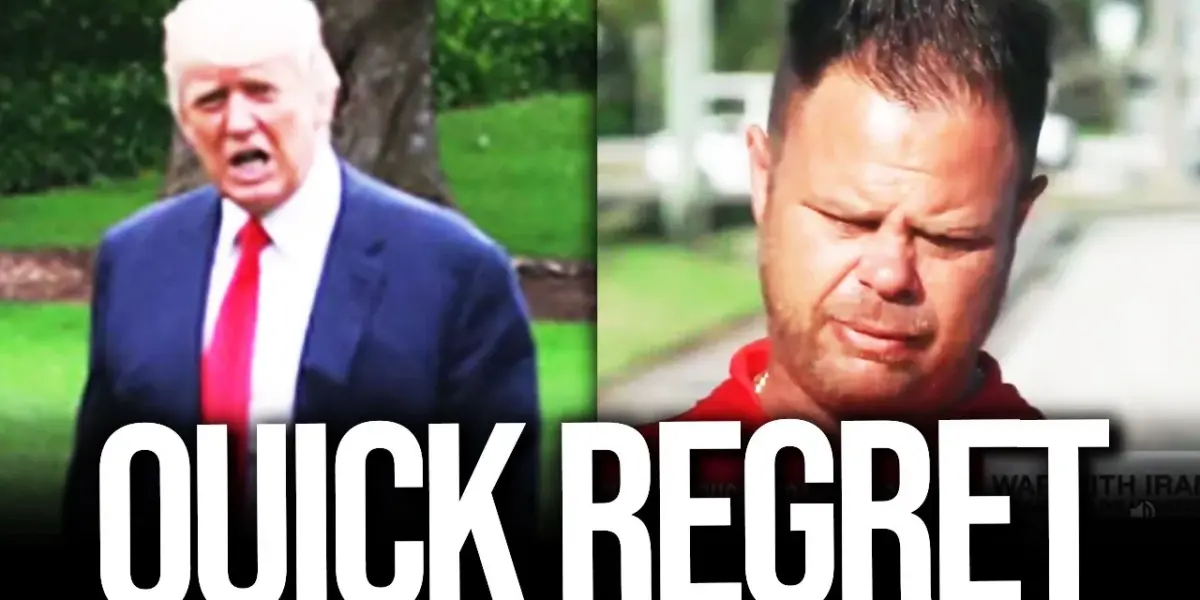
The job market is also showing signs of weakness, with reports of the U.S. losing 92,000 jobs and an increase in unemployment. A particularly striking element is the segment featuring a Trump voter from Florida who expresses deep regret and disillusionment. This individual, who voted for Trump based on promises of lower gas prices and economic improvement, now finds themselves struggling financially. They lament the increase in gas prices, which have more than doubled since they last filled up, and contrast the current situation with a perceived calmer and more stable period under the previous administration.
“He did vote. He said he’d have gas under $3 and now it’s right at five. And I mean honestly it’s something that he stole from somewhere and now we’re at what $5 a gallon… He said that the small increase in prices is for safety I guess one do you feel more safe in this country right now? And two is it worth the price of gas? Is is is that safety worth it? A small increase on prices. It’s a It’s more It’s It’s over a dollar more than what it was. It was at uh It was almost at $2 and something cents… We don’t want off of hopes and dreams. And as far as being safe this point in time, anybody uh can do anything. So, as far as safety, he ain’t doing nothing for my safety.”
The voter expresses a profound sense of betrayal, stating they miss the previous administration because, despite its perceived “craziness,” life was “a whole lot calmer” and did not affect their “day-to-day life.” They feel they were “balling” then, but now struggle to even afford basic necessities.
The Life Cycle of Right-Wing Populism
This voter’s experience is framed as a microcosm of the “life cycle of right-wing populism.” The analysis suggests that such movements often capitalize on existing wealth inequality, gaining power by filling a perceived vacuum. However, once in power, the reality of governance and the consequences of their policies become apparent, leading to disillusionment. The argument is that while populist leaders may offer simple solutions, they often disregard established norms and rules, leading to instability.
In contrast, the previous administration (implicitly Biden’s) is characterized as having maintained a “steady hand” on the economy, even if its leader was perceived as “sleepy” or having a “stutter.” This stability, the argument goes, is preferable to the turmoil caused by policies like widespread tariffs and pressure on economic institutions.
A Dire Future for Educated Youth?
The economic outlook for young college graduates is particularly concerning. Data from the Federal Reserve indicates a rising unemployment rate for recent graduates, standing at approximately 5.6%. More alarmingly, the unemployment rate for young men with college degrees is now roughly equivalent to that of young men without college degrees. This suggests a potential devaluation of higher education in the current labor market and a “dead payoff” for pursuing a degree.
The speaker, a college dropout who runs a media company, acknowledges their personal success but views this trend as a “bad sign for the future of America.” This is compounded by the nation’s ballooning debt, with annual interest payments alone reaching $1 trillion. This immense burden will fall on future generations to manage.
Why This Matters
The economic performance under any administration is a critical determinant of public well-being and political stability. The current situation, as described, suggests a divergence between campaign promises and economic reality, leading to significant hardship for a broad segment of the population. The disillusionment of a Trump voter highlights the potential fragility of populist support when economic expectations are unmet. Furthermore, the struggling job market for educated youth raises questions about the long-term economic strategy and the value of education in America.
Implications, Trends, and Future Outlook
The trends discussed—rising unemployment, increased cost of living, and a weakening return on higher education—point towards a period of economic uncertainty. The analysis suggests a potential cyclical pattern in right-wing populism, where initial appeal wanes as governing realities set in. The future outlook hinges on whether economic policies can be adjusted to address these challenges, whether trust can be rebuilt, and whether a more stable economic path can be forged. The growing national debt also presents a significant, long-term challenge that will require sustained attention and potentially difficult fiscal decisions.
Historical Context
Historically, periods of economic hardship and wealth inequality have often seen the rise of populist movements promising radical change. The critique of Trump’s presidency as a manifestation of right-wing populism draws parallels to similar movements globally and historically, where charismatic leaders capitalize on public dissatisfaction with the status quo. The “life cycle” described—from initial surge in popularity to eventual disillusionment—is a pattern observed in various political contexts.
Source: MAGA Voter Realizes Trump SCREWED HIM on TV (YouTube)

Related Articles

Polls Spell Doom: Republicans Face Voter Backlash
New polling data reveals a sharp decline in public confidence regarding the economic impact of Republican policies, particularly under Donald Trump. A significant majority now feel financially worse off, a trend that is especially pronounced among independent voters. This economic discontent poses a major challenge for the Republican party heading into future elections.

Trump Delays Iran Strike Deadline Amidst Shifting Diplomacy
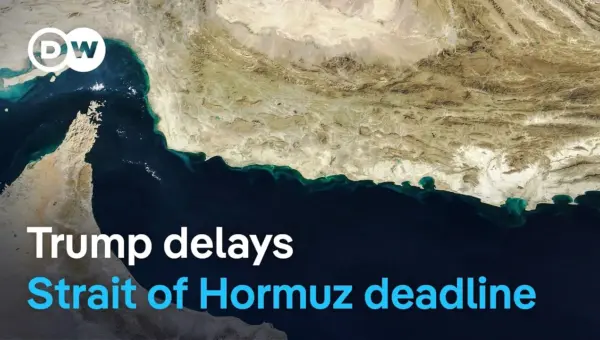
President Donald Trump has extended his deadline for potential strikes on Iranian energy plants to April 6th, amid reports of U.S.-Iran diplomatic talks mediated by Pakistan. This move comes as Israel continues its strikes on Iran and the U.S. deploys additional military assets to the region. Analysts point to mixed signals, economic pressures, and strategic miscalculations as key factors shaping the evolving situation.
Iran War Claims Ring Hollow as US Troops Injured in New Attack
Days after Donald Trump claimed "we've won" the war with Iran, a new attack injured approximately a dozen U.S. troops and damaged aircraft. This incident contradicts Trump's assertions of victory and raises serious questions about the strategy and reality of the ongoing conflict.