Super Heavy Booster Ignites New Era of Space Exploration
SpaceX's Starbase facility witnessed a pivotal week of testing for the Super Heavy booster, including the rollout of the Version 3 design and initial static fire tests on the new Pad 2. This marks a significant step towards the most powerful rocket ever built.

Super Heavy Booster Ignites New Era of Space Exploration
The week at SpaceX’s Starbase facility in Texas was a whirlwind of groundbreaking activity, culminating in a series of pivotal tests for the next generation of Starship. The much-anticipated rollout of the Version 3 Super Heavy booster, designated Booster 19, onto the newly constructed Pad 2 marked a significant leap forward in the development of the most powerful rocket ever conceived. This event, coupled with the initial static fire tests and an array of other space-related news, signals a dynamic and rapidly advancing frontier in space exploration.
Super Heavy Version 3 Rolls Out, Unveiling New Design Features
The week began with the arrival of the Super Heavy booster transport stand, setting the stage for the first Version 3 Super Heavy booster, Booster 19, to be prepared for its initial static fire test. Shortly after, the colossal booster was moved into Megabay 1, offering the first public glimpse of its redesigned, gigantic grid fins. These new fins, crucial for atmospheric control during descent and landing, are a key feature of the Version 3 design. The meticulous process of disconnecting the booster from its transport stand and carefully maneuvering it out of the megabay, with ground crews closely monitoring the new grid fins, underscored the precision engineering involved.
After a thorough inspection in the ringyard, where crews accessed quick disconnect ports for final checks, Booster 19 embarked on its journey to the launch site. The sheer scale of the booster was on full display as it was transported along Remedios Avenue and Highway 4. Although views of the engine section were limited during the nighttime rollout, the presence of engines was confirmed, sparking immediate speculation about their number and configuration for the upcoming tests.
Pad 2 Comes Alive with Integrated Testing
Upon arrival at the launch site, Booster 19 was positioned on the brand-new Pad 2, situated between the tower arms. These arms, which have been redesigned to integrate with the grid fins for both lifting and catching the booster, were raised for fine adjustments. A remarkable visual during this phase was the evident flexing of the arms and carriage as they began to bear some of the booster’s immense weight. This suggested that SpaceX might have been conducting initial pull or load testing on the grid fin sockets, a critical step given the new design and previous issues with test tanks crumpling.
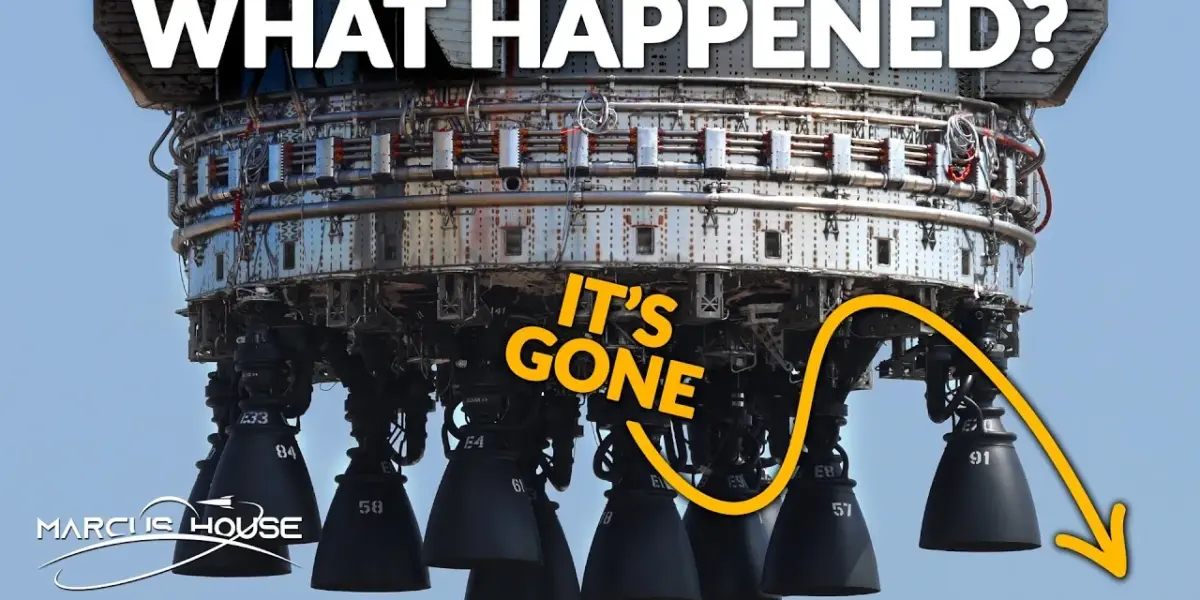
The subsequent steps involved connecting stabilization pins and retracting clamps from the transport stand. As Booster 19 slowly rose, it became apparent that not all 33 Raptor engines were installed. Instead, a unique engine layout was revealed, likely a strategic choice to minimize risk during early tests. This configuration featured 10 Raptor 3 engines, representing approximately 30% of the full booster’s potential thrust. The placement of these engines—four non-gimballing engines on the outer ring, four thrust-vectoring engines in the middle ring, and two of the three inner engines—suggests an experimental approach, possibly to test specific areas of the new flame trench design. Even with only 10 engines, the combined thrust potential exceeded that of a Falcon Heavy launch.
First Cryogenic Tests and Pad 2 Capabilities
SpaceX confirmed that Pad 2 would undergo a series of tests to activate its systems, including new propellant loading operations and the first-time operation of a vehicle with Raptor 3 engines. The initial phase involved connecting liquid oxygen and liquid methane quick disconnects, followed by pressure tests. Venting from the methane tank indicated successful initial checks, allowing scaffolding to be removed. The new Pad 2 features a bi-directional flame trench, a significant improvement over the previous flat-exit design, offering better control over exhaust dispersal.
As the sun rose, the tower arms moved to their testing and launch positions. Before this, a ‘wiggle test’ was performed on all three grid fins, with the side fins rotating to their limits. A subtle but important design difference was noted in the aft grid fin, which appeared to have slanted steel panels. This modification is likely intended to minimize drag during the booster’s return and re-entry, preventing unwanted pitching moments when the side fins are actively controlling the vehicle’s attitude.
The week’s testing culminated in the first cryogenic propellant load on Pad 2. The process, which involved filling the oxygen tank to near full capacity and adding sufficient methane for a static fire test, was remarkably rapid, completed in just 30 minutes. This speed is crucial for achieving rapid launch capabilities, especially considering Starship’s significantly larger propellant capacity compared to Falcon 9. While the initial test involved activating the detonation suppression system and a deluge, no fire was observed, suggesting a focus on spin prime tests for the 10 engines. The powerful deluge system on Pad 2 effectively masked any auditory clues from the engines.
Ship 39 Progress and Other Space News
In parallel with the Super Heavy testing, progress continued on the Starship upper stage. Ship 39 successfully completed its cryogenic proof testing, including assessments of its structural integrity under simulated ‘catch’ forces. It was then returned to the production site for further preparation. The installation of six actuators for thrust simulations on the aft dome of Ship 39 is underway, indicating that its static fire campaign may be approaching.
The week also saw significant activity from other players in the space industry. A SpaceX Falcon 9 successfully launched the EchoStar-25 satellite for Dish Network, marking a key moment in strengthening broadcast services across North America. The booster, B1085, achieved its 14th landing on the drone ship ‘A Shortfall of Gravitas’. This launch is part of a broader partnership between EchoStar and SpaceX, including a substantial spectrum deal that will aid in the expansion of Starlink’s direct-to-cell network.
Standard Starlink missions also continued, with launches from Vandenberg Space Force Base. Booster 1097 completed its 7th flight, landing successfully, while Booster 1071, a veteran of 32 flights, also achieved a safe landing, nearing the fleet leader in flight count.
Firefly Aerospace concluded the operational life of its Alpha Block 1 variant with the ‘Stairway to Seven’ mission. This launch served as a testbed for Block 2 flight systems and hardware, paving the way for the more capable, in-house developed Block II vehicle. The mission was a success, validating key systems for the upcoming upgrade.
NASA provided an update on the Artemis II mission, confirming a ‘go’ for launch following a Flight Readiness Review. The Space Launch System (SLS) rocket with the Orion capsule atop is scheduled to roll out on March 19, with the first launch attempt set for April 1, 2025. This mission will send astronauts around the Moon for the first time since 1972.
Further insights were shared regarding NASA’s DART mission. New findings published in ‘Science Advances’ reveal that the DART impact not only altered the orbit of Dimorphos around Didymos but also measurably changed the entire binary system’s orbital period around the Sun. This marks the first time a human-made object has demonstrably altered a celestial body’s path around the Sun, with the debris ejection acting akin to rocket thrust. This capability, combined with advanced warning systems, could be crucial for planetary defense against asteroid collisions.
In related planetary defense news, Blue Origin confirmed its collaboration with JPL and Caltech to develop the ‘Near-Earth Objects Hunter’, a planetary defense platform based on its Blue Ring Satellite Bus. This system will employ various deflection methods, from ion beams to kinetic impacts, signaling humanity’s growing preparedness to address potential cosmic threats.
Looking Ahead: The Road to Starship’s First Orbital Flight
The extensive testing of Booster 19 on Pad 2, including multiple propellant loads and engine tests, has laid crucial groundwork. The decision to destack Booster 19 from the launch mount and place it back on the transport stand is likely for inspections and sensor reconfiguration before the critical static fire test. With new closures posted for potential static fire tests in mid-March, the Starship program is rapidly advancing towards its ambitious goals. The successful integration of new hardware, novel testing procedures, and the continuous refinement of launch infrastructure at Starbase highlight SpaceX’s relentless pursuit of reusable, heavy-lift launch capabilities that could fundamentally reshape space access.
Source: SpaceX Just Pulled Super Heavy Off the Pad: What Happened? (YouTube)

Related Articles


Musk Unveils Ambitious ‘Terafab AI’ Plan
Elon Musk's XAI, in partnership with SpaceX and Tesla, is launching 'Terafab AI,' a massive chip manufacturing project aiming for a terawatt of annual compute power. This initiative is presented as essential for humanity's expansion into space and achieving a galactic civilization, addressing current AI compute limitations.

Starship Ignites: SpaceX Tests New Engines on Pad 2
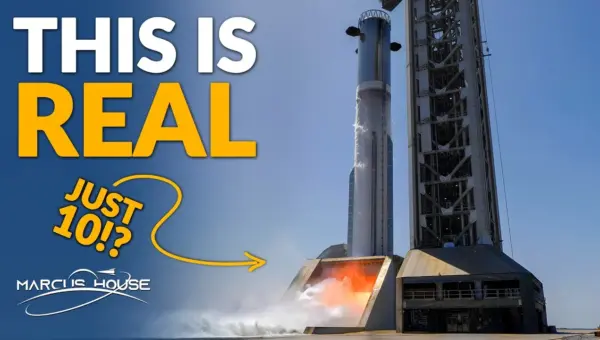
SpaceX successfully conducted a crucial engine test fire of its Super Heavy booster on the new Pad 2, igniting 10 Raptor engines. This marks a significant step towards Starship's full-scale testing and future missions. The report also touches on potential shifts in NASA's Artemis plans and the continued expansion of Starlink.


Starship V3 Ignites: First Static Fire Tests Near
SpaceX's Starship Version 3 is gearing up for its first static fire tests, with Ship 39 undergoing rigorous cryogenic and actuation trials. Meanwhile, NASA's Artemis program reveals a revised lunar strategy and standardization of the SLS, aiming for a sustained presence on the Moon.