Kursk Residents Confront Putin’s Lies Over Destroyed Homes
Displaced residents in Kursk are protesting the abrupt cancellation of 65,000 ruble monthly payments, aid meant for those whose homes were destroyed in the August 2024 incursion. The decision has exposed a bureaucratic system seemingly designed to obstruct aid, sparking desperation and highlighting deeper issues of governance and accountability within Russia.

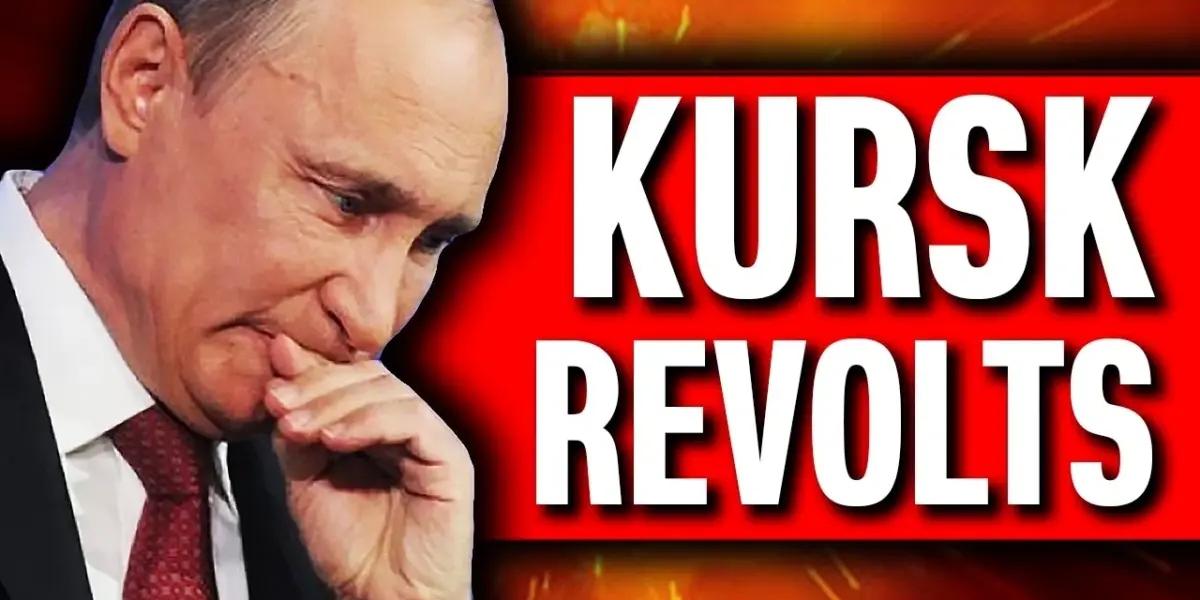
Kursk Residents Confront Putin’s Lies Over Destroyed Homes
In a revealing moment for Russia’s internal stability, thousands of displaced residents in the city of Kursk openly confronted authorities after the abrupt cancellation of essential financial aid. The decision to halt monthly payments of 65,000 rubles, intended to support families whose homes were destroyed during the August 2024 incursion into the region, has ignited widespread protests, exposing a system struggling to manage the consequences of its own actions and revealing deeper truths about power in modern Russia.
The Promise of 65,000 Rubles
The crisis in Kursk began in August 2024 when a Ukrainian incursion led to the destruction or abandonment of thousands of homes. Displaced families, facing ruined houses and ongoing financial obligations like mortgages on non-existent properties, found themselves in a precarious situation. To alleviate this, a support program was introduced in February 2025, providing monthly payments of 65,000 rubles to help cover rent, basic expenses, and loan repayments. This sum was not a luxury but a lifeline, preventing many from falling into debt and homelessness, especially as banks continued to demand mortgage payments for destroyed homes.
Both President Vladimir Putin and Kursk Governor Alexander Khinshtein had publicly supported the continuation of these payments. Putin had suggested maintaining welfare support for the current period, and Khinshtein had reassured residents that assistance would be available until they could return home. However, the payments were not based on the families’ needs but were tied to the duration of the declared “counter-terrorist operation” (CTO) in the region. This meant the financial support could be terminated the moment authorities deemed the operation over, irrespective of the residents’ ongoing needs.
Despite assurances from local officials and even an article in the newspaper “Argumenty i Fakty” on November 19th stating the payments would continue until residents returned home, a dramatic shift occurred. On December 6th, Governor Alexander Khinshtein announced the termination of the payments, redirecting the funds to boost the regional economy. This decision was the catalyst for the subsequent protests.
Blaming the Victims
The cancellation of the aid payments triggered immediate and emotional public reactions. Families who had relied on the 65,000 rubles faced the prospect of losing their housing and financial stability. Adding to the distress, some officials and public figures adopted a tone that seemed to blame the victims.
Viktoria Penkova, an assistant to Governor Khinshtein, suggested in public comments that residents bore some responsibility for not protecting their homes from Ukrainian forces. Meanwhile, businessman Alexander Polin, appearing on local television, argued that the refugees had become too accustomed to government support. He claimed that families had received an average of 3.6 million rubles over the year and had grown comfortable, forgetting how to work. The significance of Polin’s statement is amplified by his background: he is a member of the ruling United Russia party, a former regional lawmaker, and headed a government institution. His comments, therefore, signaled a broader perspective within the political system regarding the displaced population.
These tensions were not entirely new. Protests by refugees frustrated with the government’s response to home destruction had already occurred in November 2024. However, by December 2025, the mood had escalated from anger to desperation. The cancellation of the payments felt like a final confirmation that the system had little genuine intention of helping them rebuild their lives. This pattern became clearer when examining the compensation system itself, which seemed designed to create obstacles rather than provide aid.
The Bureaucratic Maze
The Russian government’s compensation system for destroyed property in the Kursk region was riddled with complex rules that often excluded residents from receiving aid. One major issue was the geographical definition of the “combat zone.” Property destruction was only recognized in specific designated areas, leaving residents outside these boundaries ineligible for compensation even if their homes were damaged by military activity.
Timeline restrictions also played a significant role. Full reimbursement was only offered for properties legally registered under purchase agreements signed before February 24, 2022, the start date of Russia’s full-scale invasion of Ukraine. This meant that individuals who bought homes after this date, even in areas later affected by the August 2024 incursion, found their destroyed properties disqualified for compensation. The implicit message was that these residents should have somehow predicted the conflict’s impact.
Further complications included restrictions on multiple properties; families owning more than one house could only receive compensation for one, despite the common practice in rural Russia of building homes for extended family. The distinction between “destroyed property” and “fully destroyed property” also significantly affected the compensation amounts. Even the rent assistance program, capped at 20,000 rubles per month (or 40,000 for large families), was often insufficient to cover actual rental costs in many areas.
Perhaps the most significant hurdle was the process for obtaining housing compensation certificates. Survivors needed official property evaluators to assess their destroyed homes. However, many districts in Kursk remained closed due to security risks, preventing assessors from reaching the sites. While aerial footage was proposed as an alternative by Governor Khinshtein, its availability was limited, and without a completed valuation report, certificates could not be issued. Consequently, only a small fraction of displaced residents received certificates, while the majority remained trapped in a system seemingly designed for delay and obstruction. This bureaucratic complexity was framed within a political narrative that deliberately separated the Kursk incursion from the broader war in Ukraine, a distinction that served to manage the government’s responsibility.
Bureaucratic Tsarism
The Kursk crisis highlights a fundamental contradiction in modern Russian governance: the need to project an image of a responsible state that protects its citizens, versus a political structure that often operates like a bureaucratic monarchy. While direct disclaimers of responsibility are politically unfeasible, the system employs a network of rules, procedures, and legal distinctions to achieve a similar outcome.
The official separation of the “counter-terrorist operation” in Kursk from the “special military operation” in Ukraine is a prime example. This classification allows the government to treat victims and soldiers differently based on the conflict they are associated with. For instance, families of those killed during the CTO might receive different benefits than families of soldiers killed in Ukraine. This classification becomes a tool for managing liability.
When citizens protest, the state’s response is carefully calibrated. Following a December 8th protest rally in Kursk, one participant, Alyona Liskova, was briefly detained after reading an appeal to authorities. Although released without charges, the message was clear: protests are permissible but strictly within controlled limits. Furthermore, communication channels used by refugees have faced restrictions. In 2024, a VK community page used by displaced Kursk residents to coordinate protests was blocked by Russia’s censorship bureau, Roskomnadzor.
This combination of public reassurance, bureaucratic complexity, and selective enforcement allows the system to maintain an appearance of accountability while limiting citizens’ ability to demand genuine solutions. This delicate balancing act, while functional for periods, inevitably breeds tension. When citizens begin questioning why promises do not translate into tangible support, the conversation extends beyond a single region or policy.
The protests in Kursk in December 2025, though not international headlines, offer a crucial insight into Russia’s internal dynamics. Over 110,000 displaced residents, many having lost their homes in the August 2024 incursion, are navigating a system marked by complex rules, shifting policies, and uncertain promises. The cancellation of aid, bureaucratic obstacles, and the narrative separating the Kursk events from the wider war all point to a political structure prioritizing control over accountability. While these tensions may currently seem localized, historical patterns suggest that such moments often expose deeper structural challenges. When citizens question the entire framework, not just individual decisions, the conversation inevitably broadens, making the unfolding situation in Kursk a critical one to watch.
Source: IT FINALLY HAPPENED! Kursk Residents OPENLY CONFRONTED Putin. Dirty Lies EXPOSED (YouTube)

Related Articles

Protesters Challenge Presidential Power, Ignite Debate
Millions are protesting nationwide under the "No Kings" banner, challenging presidential authority and policies they deem unconstitutional. Organizers emphasize First Amendment rights while debating foreign policy, immigration, and the balance of power.
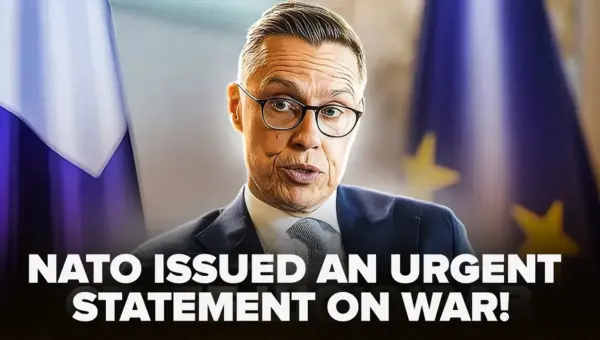
Ukraine Strikes Russian Oil Refinery, Eyes Iran Threat
Ukrainian forces struck a key Russian oil refinery, disrupting Moscow's war capabilities. Meanwhile, Finland's president urged continued U.S. support for Ukraine, as Kyiv shares its air defense expertise globally amid growing geopolitical complexities involving Iran and potential sanctions against Hungary.


Americans Rally for Democracy Amidst War and Economic Woes
Thousands of Americans are participating in "No Kings" rallies nationwide, demanding accountability from leaders and drawing parallels to historical movements that spurred significant change. The protests occur amidst a controversial war with Iran, economic uncertainty, and a partial government shutdown. Organizers emphasize solidarity, joy, and the power of collective action in defending democracy.