Fast & Furious Icons Drag Race: Supra vs. Charger!
We recreate iconic Fast & Furious drag races with movie-accurate replicas and genuine movie cars. A supercharged Dodge Charger battles a surprisingly potent Toyota Supra in a quarter-mile showdown that defies expectations.

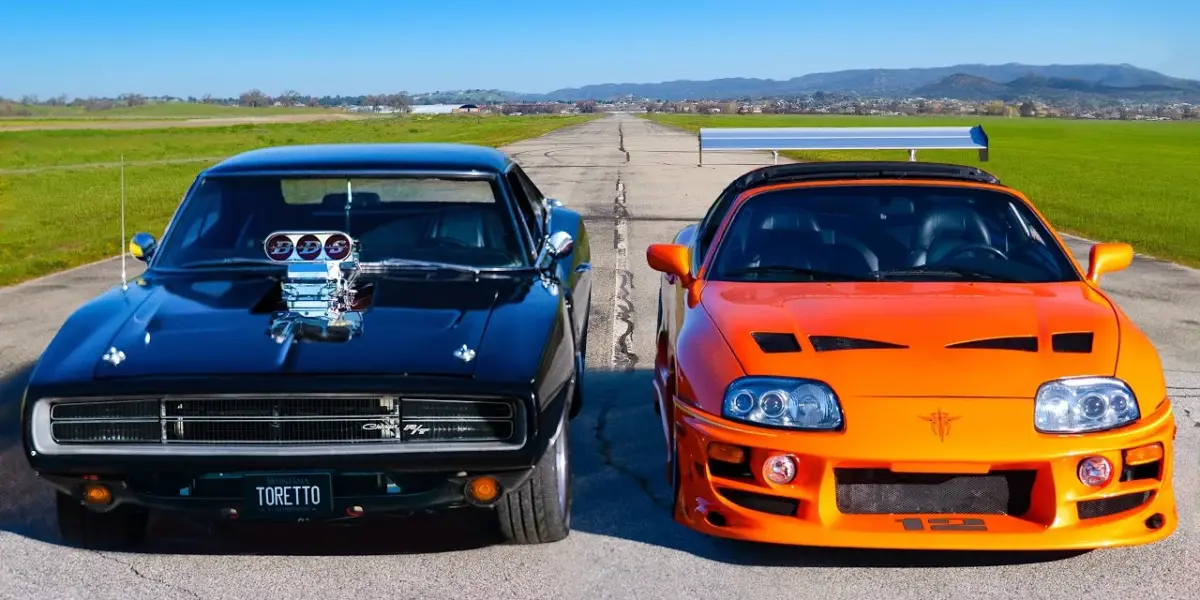
The Ultimate Fast & Furious Rematch: Supra Takes on Charger in a Quarter-Mile Showdown
The roar of engines, the smell of burning rubber, and the thrill of pure speed – it’s the stuff of cinematic legend. For fans of the Fast & Furious franchise, the iconic matchups from the silver screen hold a special place in automotive hearts. Now, we’re ditching the Hollywood script and bringing these legendary vehicles to the asphalt for a real-world drag race. Forget retakes and stunt doubles; this is raw, unadulterated automotive combat as we pit some of the most memorable cars from the first film against each other over the standing quarter mile.
Recreating the Opening Scene: A JDM Lineup
We kick things off by recreating the famous opening sequence, lining up a quartet of Japanese legends that defined a generation of tuning culture. First up is the Mitsubishi Eclipse, a naturally aspirated 2.0-liter four-cylinder producing a modest 140 horsepower and 176 Nm of torque, driving the front wheels through a 5-speed manual. Weighing 1.3 tons, it’s a far cry from its movie counterpart’s tuned prowess.
Next, the Acura Integra, boasting a 1.8-liter four-cylinder engine with 170 horsepower and 174 Nm of torque, also front-wheel drive and paired with a 5-speed manual. It tips the scales at around 1.2 tons.
Following closely is the Honda Civic Coupe, powered by a 1.6-liter four-cylinder engine delivering 125 horsepower and 142 Nm of torque. This one is mated to a 4-speed automatic gearbox and is the lightest of the bunch at just under 1.1 tons.
Rounding out the initial JDM assault is the Mazda RX-7. This one packs a punch with its 1.3-liter twin-turbo rotary engine, producing a healthy 259 horsepower and 294 Nm of torque, driving the rear wheels via a 5-speed manual transmission, and weighing approximately 1.3 tons.
Performance: First Round Woes
The initial rolling race in second gear sets the tone, with chaos quickly ensuing. The Honda Civic, despite its automatic transmission, shows some life, but the real drama unfolds as the RX-7, a car known for its unique rotary engine, unfortunately, suffers a catastrophic engine failure, spewing smoke and ending its race prematurely. The driver recounts issues with the alternator and battery, highlighting the temperamental nature of some high-performance engines, especially those with a rotary heart. “Rotaries, that’s the life,” is the grim but resigned commentary.
With the RX-7 out, the race effectively becomes a battle between the Eclipse and the Integra. The Integra, with its VTEC engine singing, pulls ahead, while the Eclipse struggles to keep pace. The Civic’s automatic transmission proves to be a hindrance, with a significant delay in power delivery.
Escalating the Stakes: The Real Movie Cars Arrive
The competition heats up as we introduce cars with genuine movie provenance. First, a Honda S2000, a replica of Johnny Tran’s menacing car from the film’s race war scene. This isn’t just a lookalike; this specific car was repainted pink to become Suki’s vehicle in 2 Fast 2 Furious, giving it a unique dual-movie history. Its value is estimated at a staggering $250,000.
Under the hood, this S2000 is far from stock. A supercharger bolted onto its 2.0-liter four-cylinder engine boosts output to an impressive 345 horsepower and 300 Nm of torque, channeled to the rear wheels through a 6-speed manual gearbox. It weighs in at just under 1.3 tons.
Facing this movie icon is the Acura Integra, now piloted by Sean, who was previously in the RX-7. This presents a David vs. Goliath scenario, with the stock 170 horsepower Integra up against the supercharged 345 horsepower S2000.
Performance: S2000 Dominance
The rolling race is a clear demonstration of the power disparity. The S2000’s supercharger whine is a prelude to its overwhelming acceleration, leaving the Integra struggling to keep up, despite its initial spirited launch. The difference in power is undeniable, with the S2000 effortlessly pulling away.
A drag race between the two confirms the outcome. While the Integra puts up a valiant fight off the line, the S2000’s superior power quickly closes the gap and secures a decisive victory. The S2000 advances.
The American Muscle Contender: Dom’s Charger
The next challenger to the S2000’s reign is a replica of Dominic Toretto’s iconic Dodge Charger. This beast is powered by a colossal 7.2-liter supercharged V8, producing over 500 horsepower and around 700 Nm of torque. It’s a rear-wheel-drive machine with a 3-speed automatic transmission and tips the scales at a hefty 1.8 tons.
The S2000, on the other hand, is the same car that just defeated the Integra. The stage is set for a clash of titans: Japanese precision versus American brute force.
Performance: Charger’s Raw Power
In a rolling race, the Charger’s sheer torque is immediately apparent. Despite the S2000’s agility and horsepower, the Charger’s V8 lunges forward with relentless force, eventually overwhelming the Honda. The S2000 driver admits to a slight gear-skipping error, but the Charger’s power advantage is undeniable.
The subsequent drag race confirms the Charger’s dominance. While the S2000 gets a decent launch, the Charger’s immense power allows it to claw back and surge ahead for a clear victory. The Charger moves on.
The Final Showdown: Supra vs. Charger
The grand finale pits the mighty Dodge Charger against the legendary Toyota Supra. However, there’s a twist. The Supra presented is stated to be a naturally aspirated version, producing around 220 horsepower and 285 Nm of torque, driving the rear wheels via a 5-speed manual transmission and weighing about 1.6 tons.
This sets up a seemingly insurmountable challenge against the 500+ horsepower Charger.
Performance: A Shocking Upset
In the initial rolling race, the Charger’s power is evident, but the Supra, despite its supposed lack of turbocharging, proves surprisingly quick. The Charger driver expresses astonishment at the Supra’s pace, attributing it to a kickdown delay in the automatic transmission.
The tension mounts for the final drag race. The Charger launches hard, but the Supra, against all odds, keeps pace. In a stunning upset, the Supra crosses the finish line ahead of the Charger. The driver of the Charger is left bewildered, questioning how the naturally aspirated Supra could possibly win.
The mystery is solved post-race: the Supra wasn’t a standard naturally aspirated model at all. It had undergone a significant engine swap, featuring a 4.0-liter V8 from a Lexus LS400, producing approximately 300 horsepower and 400 Nm of torque. While not the twin-turbo JDM hero many expected, this modified Supra still delivered a performance that defied expectations and echoed the spirit of The Fast and the Furious.
Verdict: A True Fast & Furious Experience
This drag race event truly captured the essence of the Fast & Furious movies. From the dramatic engine failures to the genuine movie cars and the shocking upsets, it was a celebration of automotive passion. While the stock JDM heroes struggled against their tuned counterparts and movie icons, the final battle between the supercharged Charger and the deceptively powerful Supra delivered an unforgettable spectacle. It proved that with the right modifications and a bit of cinematic flair, even the underdog can emerge victorious.
Final Times:
- Honda Civic Coupe: 19.3 seconds
- Mazda RX-7: DNF (Engine Failure)
- Mitsubishi Eclipse: 17.5 seconds
- Acura Integra: 16.0 seconds
- Honda S2000: 15.6 seconds
- Dodge Charger: 14.3 seconds
- Toyota Supra (Modified V8): 14.0 seconds
Source: Fast & Furious Toyota Supra v Dodge Charger: DRAG RACE (YouTube)

Related Articles

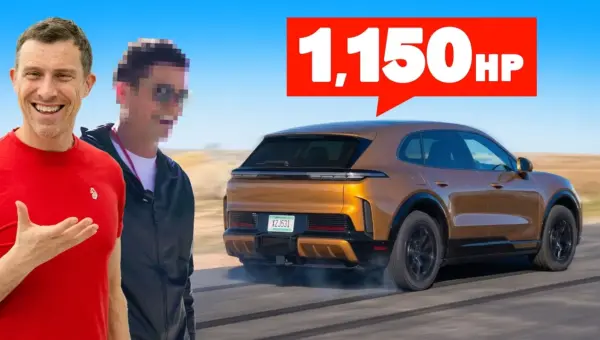
Porsche Cayenne EV Crushes Rivals in Speed Showdown
The new all-electric Porsche Cayenne Turbo Electric has proven to be the fastest SUV in its lineup, out-accelerating its hybrid and gasoline siblings. In a head-to-head challenge with actor Orlando Bloom, the EV delivered stunning performance figures, solidifying its place as a speed demon.
Dodge Charger Sixpack Arrives: A Six-Cylinder Surprise
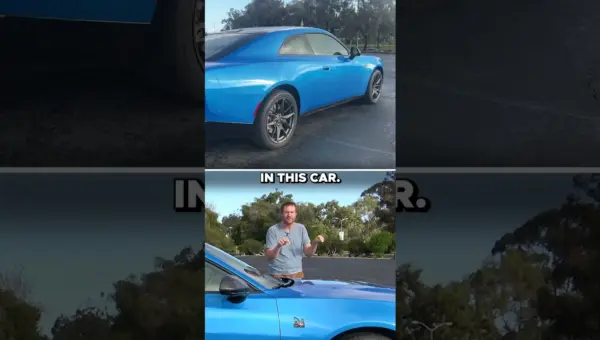
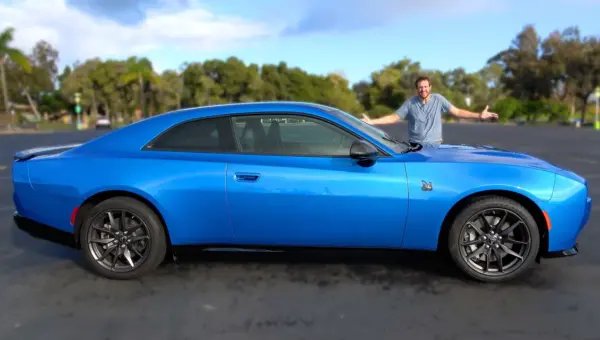
The 2026 Dodge Charger Sixpack arrives with a powerful new twin-turbo inline-six engine, offering up to 550 horsepower. This modern muscle car aims to impress with thrilling performance and a responsive driving feel, potentially winning over even skeptical enthusiasts. A four-door version is also planned.
Dodge Charger Sixpack Returns With Gas Power, Impresses
The 2026 Dodge Charger Sixpack arrives with a potent twin-turbo six-cylinder engine, bringing back gasoline power to the iconic nameplate. This modernized muscle car offers impressive performance, a retro-inspired design, and a host of new features, making it a strong contender in its segment.