War’s Economic Fallout: How Trump’s Policies Fuel Global Crisis
The global economy faces a deepening crisis fueled by the Iran war, amplified by prior economic weaknesses and the Trump administration's policies. GDP revisions, persistent inflation, and a strained fiscal situation paint a grim picture.

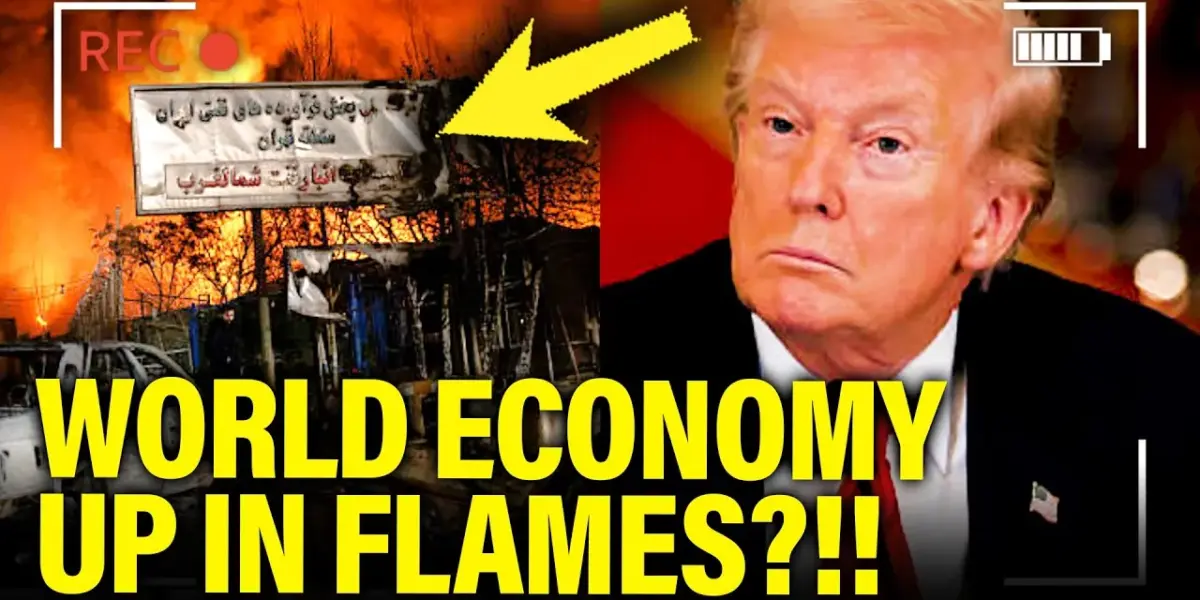
War’s Economic Fallout: How Trump’s Policies Fuel Global Crisis
The global economic landscape is facing a precarious situation, marked by significant downward revisions in key financial data and an escalating conflict in Iran. This confluence of events, as analyzed by Max from UNFR, suggests a deepening economic crisis that could be exacerbated by the Trump administration’s policies and rhetoric. The current turmoil, characterized by backwardation in oil markets, demand destruction, and fiscal dominance, is not merely a result of unforeseen circumstances but a consequence of deliberate actions and a particular governing philosophy.
Revisiting Economic Realities: GDP and Inflation Woes
A striking feature of the current economic climate is the severity of backward-looking downward revisions to Gross Domestic Product (GDP). The recent cut to fourth-quarter growth from 1.4% to 0.7% starkly illustrates the underlying weakness of the economy even before the Iran war intensified. This revision is particularly significant because it dwarfs previous downward adjustments seen during less volatile periods, such as the global financial crisis or the COVID-19 pandemic.
The narrative that the previous slowdown was solely attributable to a government shutdown is now undermined by these substantial revisions. Furthermore, the growth that was observed was heavily propped up by a surge in spending on data centers and AI infrastructure. Without this sector-specific boom, the broader economy was essentially flatlining. This reliance on a narrow segment of the economy for growth highlights its inherent fragility. Compounding these concerns is the persistent inflation. Real personal spending saw a meager increase of 0.1% in January as consumers cut back on goods and prioritized essentials. Core inflation, the Federal Reserve’s preferred gauge, rose 0.4% for the month and 3.1% year-over-year. This is particularly troubling as it represents a scenario where households are curtailing spending while prices remain stubbornly high, a situation that existed even before the Iran war added its inflationary pressures.
The Fiscal Deficit and Rising Borrowing Costs
The nation’s fiscal health presents another area of significant concern. Treasury data reveals that the deficit in February alone was roughly equal to the entire monthly revenue. From October to February, the government has already accumulated a deficit exceeding $1 trillion, a pace comparable to the previous year. This indicates a failure to address the structural deficit. Alarmingly, these figures are artificially inflated by a surge in tariff revenue, which is legally and politically vulnerable. Should these tariffs be challenged and unwound, the deficit figures are likely to worsen.
This widening deficit occurs at a time when borrowing costs are becoming increasingly difficult to manage. The Treasury has been shifting aggressively from longer-term debt to shorter-term instruments, a strategy aimed at saving marginal basis points but at the cost of increased refinancing risk. While short-term rates remain in the mid-3% range, the 10-year Treasury yield is rising as investors demand a higher risk premium. This trend is critical because the 10-year yield serves as an anchor for key borrowing costs, including mortgage rates. As long-term yields climb due to war and inflation fears, mortgage rates are increasing again, threatening to stifle any nascent recovery in the housing market.
Private Credit Stress and the Fed’s Dilemma
The backdrop of financial markets is one of steadily increasing risk in the private credit sector. Warnings from major financial institutions about potential spikes in private credit defaults in 2026 are already causing unease. This stress is manifesting in higher default rates and borrowers deferring interest payments. Bankruptcies have exposed shaky lending practices, with notable failures like a subprime auto lender and an auto parts manufacturer. The situation has become so acute that BlackRock has capped withdrawals from its significant private credit fund following a wave of redemption requests.
In response, the Federal Reserve appears poised to relax certain post-crisis capital requirements for big banks, a move ostensibly aimed at boosting lending. However, this decision is being made within a context of tightening credit conditions and a volatile economic environment. The risks of such deregulation during a tightening cycle are substantial, especially when the economy is facing a severely constrained credit environment and the removal of crucial shock absorbers. Policymakers find themselves in a difficult position: interest rates are rising, making borrowing more expensive, while cracks are appearing in the shadow banking system. The Fed’s toolkit is constrained; cutting rates could further fuel inflation and debt servicing costs, while aggressive hikes could destabilize the private credit and housing markets.
Understanding the Economic Pickle: Backwardation, Demand Destruction, and Fiscal Dominance
The current economic predicament is a result of the collision of three key concepts: backwardation in the oil market, demand destruction in the broader economy, and an era of fiscal dominance that renders traditional policy tools less effective.
Backwardation and the Iran War’s Supply Shock
Backwardation occurs when the price of oil for immediate delivery is higher than prices for future delivery, signaling current scarcity but an expectation of future easing. While the current backwardation in oil prices has been initially driven by the Iran war, the market’s assumption that this is a temporary flare-up may prove to be a dangerous fantasy. Unlike previous conflicts in Iraq or Ukraine, which led to regional or manageable supply disruptions, a conflict involving the Strait of Hormuz poses a systemic threat. This narrow waterway is a critical chokepoint for a vast amount of global crude oil, refined products, natural gas, and other essential commodities. A disruption here would not only affect gasoline prices but also increase input costs for manufacturing, shipping, and critically, food production, especially given the timing of global planting and harvest calendars.
If the conflict persists, the backwardated curve could flip into contango, where future prices exceed spot prices. This would signal not just an acute crisis but a potential structural shortage, leading to a multi-year inflationary problem embedded in the cost structure of nearly everything, reminiscent of the circumstances during the COVID-19 pandemic but with different triggers.
Demand Destruction: When Prices Break Consumers
Demand destruction occurs when prices rise so high for an extended period that consumers are forced to stop buying, not out of choice, but out of necessity. Early signs of this are already visible, with flattening consumer spending even before the war. When energy prices rise, they have a cascading effect on transportation costs, delivery fees, and the prices of goods on store shelves. For households already squeezed by rising rents, insurance, and healthcare costs, this could be the breaking point, leading to reduced travel, deferred discretionary purchases, and a struggle to cover basic necessities.
On the business side, demand destruction translates to canceled projects, hiring freezes, and a shift towards part-time or gig work. Margins are squeezed by higher input costs and weaker demand, disproportionately affecting smaller businesses, especially those reliant on private credit at already elevated interest rates.
Fiscal Dominance: Monetary Policy Serves the Treasury
Fiscal dominance describes a situation where the government’s debt level and servicing costs become so significant that monetary policy is dictated by the Treasury’s needs rather than the central bank’s dual mandate of inflation and employment. With the deficit already exceeding $1 trillion for the fiscal year and the Treasury actively managing debt maturities to save on interest, the government’s fiscal needs are increasingly constraining monetary policy. The Fed is caught in a bind: it cannot aggressively cut rates without exacerbating inflation and debt servicing costs, nor can it hike rates without triggering further instability in private credit and housing markets.
Historical Context and Future Outlook
The current situation stands in stark contrast to the lead-up to the Russia-Ukraine conflict, where the Biden administration engaged in extensive planning, securing alternative supplies and coordinating with allies. The current administration’s approach to the Iran conflict appears to be one of crisis management without a discernible plan for energy security or diplomatic engagement. This reactive, crisis-driven approach, coupled with tough rhetoric, is unlikely to stabilize markets.
The administration is likely to attempt to spin the narrative, attributing economic slowdowns to temporary factors or even questioning the validity of their own data. The deficit increase may be framed as a wartime necessity, and the energy shock as unavoidable. However, it is crucial to remember the sequence of events: the economy was already slowing, private credit was showing stress, and fiscal imbalances were growing. The war did not create these problems; it has transformed them into a full-blown crisis.
In the coming months, citizens will be bombarded with competing narratives from various governments and think tanks. The advice to narrow one’s information diet and seek out credible, on-the-ground reporting is sound. The economic reality will ultimately be reflected in everyday experiences: the prices paid, jobs available, and access to credit. The challenge for policymakers and the public alike is to navigate this complex landscape, discern truth from disinformation, and address the underlying economic vulnerabilities that the current conflict has so starkly exposed.
Source: Trump Throws ENTIRE WORLD into ECONOMIC DEATH TRAP (YouTube)

Related Articles


Americans Rally for Democracy Amidst War and Economic Woes
Thousands of Americans are participating in "No Kings" rallies nationwide, demanding accountability from leaders and drawing parallels to historical movements that spurred significant change. The protests occur amidst a controversial war with Iran, economic uncertainty, and a partial government shutdown. Organizers emphasize solidarity, joy, and the power of collective action in defending democracy.

US Official Claims Iran War Could End Soon; Expert Skeptical
Despite US envoy Steve Woff's optimism about imminent talks and a swift end to the conflict with Iran, expert Aaron David Miller expresses significant doubt. Miller argues that a lack of shared urgency and fundamental miscalculations by the US administration make a quick resolution unlikely.

G7 Allies Clash Over Iran War Strategy, Urge Focus on Russia
G7 foreign ministers met in Paris, revealing deep divisions over the U.S. war with Iran. European allies urged the U.S. to pressure Russia, linking its actions to the conflict and fearing support for Ukraine will wane.