US Strikes Iranian Island, Domestic Terror Fears Rise
The U.S. has struck military targets on Iran's Kharg Island, escalating international tensions while domestic concerns rise over potential terror attacks. Meanwhile, travelers face airport chaos and soaring fares, and new scrutiny falls on a prison guard from the Jeffrey Epstein investigation.


US Strikes Critical Iranian Island, Escalating Tensions
In a significant escalation of international conflict, President Trump announced moments ago that the U.S. has “obliterated every military target on an Iranian island.” The strikes, which targeted Kharg Island, a vital hub for Iran’s oil infrastructure and exports located in the northern Persian Gulf, were aimed at destroying military installations while leaving oil facilities intact. However, the President issued a stark warning: if the Strait of Hormuz is not reopened, the U.S. may “reevaluate that decision,” effectively placing Iran’s oil industry under threat.
NBC News Correspondent Garrett Haake, reporting from the White House, explained that Kharg Island is strategically crucial, situated near the Strait of Hormuz, a narrow waterway essential for global oil transit. “Essentially, where much of Iran’s oil industry and their export industry begins,” Haake stated. The President’s strategy appears to be one of “escalation dominance,” signaling that any move by Iran to increase tensions will be met with a more forceful response from the U.S.
Live from Dubai, NBC News correspondent Keir Simmons provided further context, emphasizing the island’s critical role in Iran’s oil exports, accounting for approximately 90% of the nation’s oil flow. Simmons noted that the strikes send a clear message: “Every time Iran, you ramp things up, we will ramp things up more.” The key question remains how Iran will retaliate, especially as their new supreme leader recently vowed to continue controlling the Strait of Hormuz and striking neighbors like the UAE.
While the President claims the oil infrastructure was spared, the potential economic impact on global oil prices is a subject of debate. Simmons suggested that direct impact on prices might be limited given the current state of Iran’s oil industry, but the overall escalation could still influence market sentiment. Additionally, the decision not to destroy the oil infrastructure might stem from a longer-term hope that if the regime falls, the industry could be used to help finance Iran’s reconstruction.
Garrett Haake also pointed out the President’s deliberate ambiguity regarding the strikes, noting a pattern of the President addressing military decisions in a way that offers strategic advantages. The broader geopolitical implications, particularly concerning China’s heavy reliance on Iranian oil and President Trump’s upcoming trip to Beijing, add another layer of complexity to the unfolding situation.
Courtney Kube, reporting from the Pentagon, elaborated on the dual nature of the strike: demonstrating the U.S. capability to reach Kharg Island and neutralizing significant military infrastructure, including air defense systems, which posed a threat to U.S. aircraft. The central question now is whether these actions will compel Iran to open the Strait of Hormuz or if they will lead to further escalation.
Domestic Terror Concerns Mount Amid Separate Attacks
As international tensions flare, the U.S. is grappling with two separate incidents being investigated as potential acts of terror. In Michigan, chilling surveillance footage shows the suspect in a synagogue ramming attack, identified as 41-year-old Iman Muhammad Ali, purchasing over $2,000 worth of fireworks just two days before the incident. Investigators found gasoline canisters and equipment for launching fireworks in his vehicle.
Adding a disturbing layer to the Michigan case, NBC News has learned that Ali’s family members were killed in Israeli airstrikes in Lebanon just last week, and two of his adult brothers were reportedly members of the Iran-backed militant group Hezbollah. While the FBI has not confirmed a motive, this information is considered a significant part of the ongoing investigation.
In Virginia, new details have emerged about a shooting at Old Dominion University where student military cadets intervened to stop a gunman. The shooter, identified as Mohammad Jallow, a convicted ISIS supporter who had been released from prison early in 2024, opened fire in a classroom full of ROTC cadets. The cadets bravely confronted Jallow, with one fatally stabbing the assailant. The attack resulted in the death of Lieutenant Colonel Brandon Shaw.
Terrorism expert Colin Clark warned that the U.S. should brace for more such attacks, citing Iran’s known strategy of employing forward-deployed sleeper cells. Governor Spanberger of Virginia emphasized the need for the FBI to focus on their core priorities, including thwarting terrorist attacks.
Carl Schmitt, a retired FBI Supervisory Special Agent, explained the rigorous process investigators undertake to determine motive, involving deep dives into backgrounds, interviews, and electronic device analysis. He noted that Jallow, as a convicted felon, should not have legally possessed a firearm, suggesting it was obtained through illegal channels. The early release of Jallow and the circumstances surrounding it are also under scrutiny.
Airport Chaos and Economic Woes Persist
Spring break travel is being marred by severe disruptions at airports nationwide, with passengers facing extremely long security lines. The situation is exacerbated by TSA officers missing their second paycheck due to the ongoing government shutdown, leading to increased sick calls and checkpoint closures. Lines in cities like Austin, Philadelphia, and Atlanta have stretched for hours, prompting airlines to criticize Congress for failing to reach an agreement.
Adding to the travel woes, airfares are surging by as much as 50% on some routes, driven by soaring fuel costs attributed to the war abroad. Deutsche Bank reports a significant increase in domestic advanced booking tickets, highlighting the economic impact of current global events on everyday travel.
Epstein Guard Under Scrutiny Amid New Revelations
The House Oversight Committee has requested an interview with Tova Noel, a former prison guard on duty the night Jeffrey Epstein died in jail. This request comes after newly released Department of Justice documents raised questions about Noel’s actions. The documents reveal Noel’s Google search history showed searches related to Epstein and online shopping approximately 40 minutes before he was found dead. A $5,000 cash deposit made into Noel’s account 11 days prior to Epstein’s death has also drawn scrutiny.
Noel and another guard were previously charged with falsifying records related to the required cell checks for Epstein, though those charges were dismissed after they agreed to cooperate with a federal probe. Committee Chairman James Comer expressed doubts about the official suicide ruling, stating that many on the committee are not “100% confident” that Epstein died by suicide.
Severe Weather Grips the Nation
Meanwhile, the U.S. is experiencing extreme weather conditions across the country. The Midwest is bracing for a major blizzard, with millions in Minnesota, Wisconsin, and Michigan expected to face heavy snowfall and potentially power outages. The National Weather Service predicts snowfall ranging from 19 to 31 inches in some areas, posing significant travel challenges.
In contrast, the Western U.S. is anticipating a record-breaking heatwave, with temperatures in Phoenix potentially reaching 105 degrees Fahrenheit. This stark contrast highlights the erratic and severe nature of the current weather patterns impacting the nation.
Source: Top Story with Tom Llamas – March 13 | NBC News NOW (YouTube)

Related Articles
Iran-Backed Houthis Strike Israel, Escalating Regional Tensions
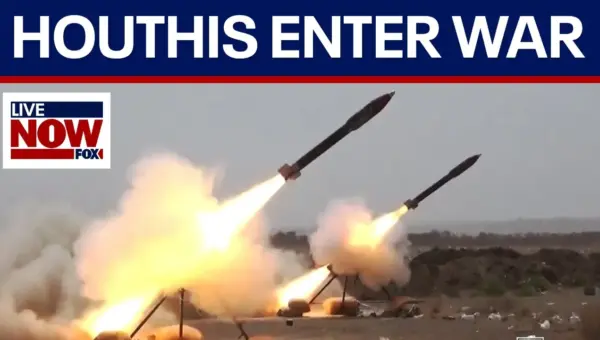
Iran-backed Houthi rebels have launched a missile attack targeting Israel, marking their first such strike since the current Middle East conflict began. The Israeli military confirmed the interception of the projectile. Analysts view this action as part of Iran's broader regional strategy, highlighting the regime's reliance on proxy forces amid internal weaknesses.

Iran Extends Strait of Hormuz Deadline Amid Global Oil Tensions
The U.S. has granted Iran a 10-day extension to reopen the Strait of Hormuz, a critical global oil route. This move comes amid complex negotiations, military actions, and concerns over Iran's strategic leverage and resilience. Lawmakers express frustration over the lack of a clear strategy and potential escalation.

Iran Tensions Rise, Airport Chaos Looms
Global tensions escalate as Iran war concerns impact oil prices and stock markets. Simultaneously, a potential end to the TSA worker pay crisis is in sight with a presidential order. In personal news, Savannah Guthrie shares new details about her mother's kidnapping, while the family of an Idaho murder victim champions a new law protecting victims' privacy. Finally, Nicolas Maduro challenges his indictment in a New York court over legal fees.