China’s Taiwan Strait Silence: A Crisis of Confidence?
A sudden 192-hour silence in the Taiwan Strait, following U.S. strikes in Iran, suggests China's military activity may have been a high-level reaction to a crisis of confidence. This pause could signal deeper vulnerabilities in Beijing's military modernization and leadership.

China’s Taiwan Strait Silence: A Crisis of Confidence?
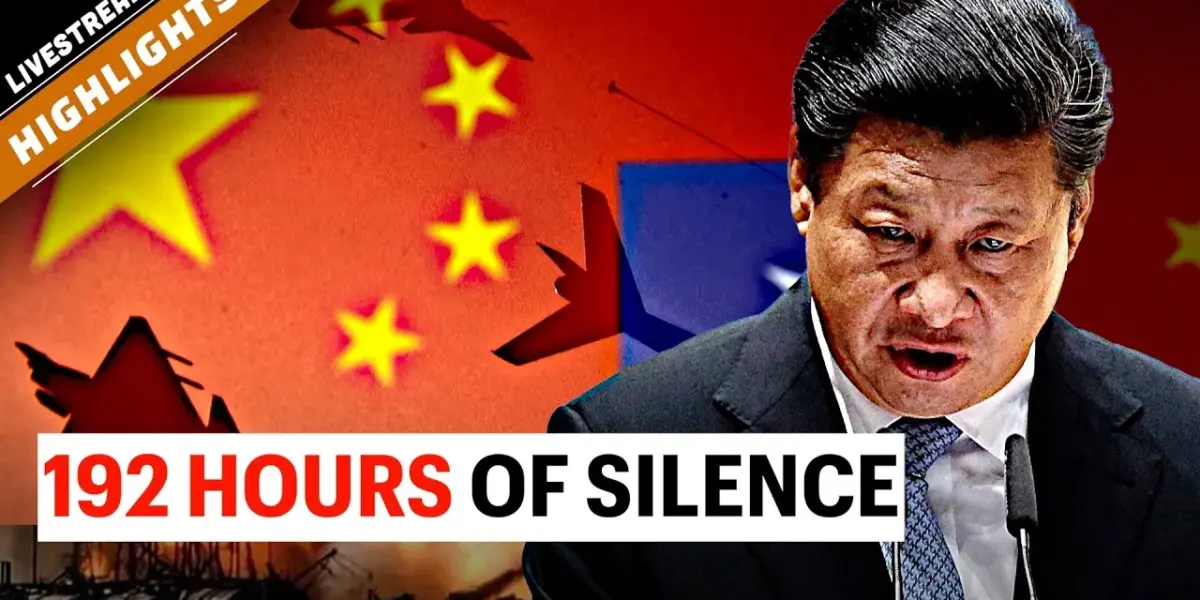
For three years, the Taiwan Strait has been a focal point of geopolitical tension, characterized by the routine presence of PLA aircraft and naval vessels. This persistent show of force, which Beijing termed the “new normal,” became a familiar backdrop to the region’s simmering conflicts. However, on February 28th, this relentless activity abruptly ceased, creating an unprecedented 192-hour period of silence in the skies over the Taiwan Strait.
Unpacking the Explanations
Several explanations have emerged to account for this sudden pause. Beijing’s propaganda machine, amplified by state media outlets like the Global Times, framed the silence as a deliberate “goodwill gesture.” The narrative posited that grounding aircraft during the crucial annual “two sessions” political meetings demonstrated China’s commitment to stability and responsibility in a turbulent world.
Western analysts offered more technical perspectives. One theory suggested “burnout” within the PLA Air Force, citing a record-breaking 5,700 sorties in the preceding year. This view posits that the air force may have simply required a period of rest for engine maintenance and pilot recuperation, with the silence being a scheduled operational pause.
Another hypothesis centered on a potential fuel shortage, linking it to concerns about energy supply disruptions arising from the conflict in the Persian Gulf. However, the transcript challenges this, noting that the fuel consumed by dozens of fighter jets would represent a minuscule fraction of China’s daily oil consumption of approximately 16 million barrels.
A diplomatic angle was also explored, with the “summit leverage theory.” This suggests that Beijing may have sought to “clear the air,” both literally and politically, in anticipation of a high-stakes summit between Chinese and U.S. leaders scheduled for late March and early April. The aim, according to this theory, would be to foster a more conducive atmosphere for negotiations.
The Timing Discrepancy
While these explanations offer plausible reasoning on the surface, the transcript argues that none adequately account for the precise timing of the cessation. The abrupt halt occurred on a random Saturday afternoon, not aligning with the typical patterns of diplomatic maneuvering or scheduled maintenance. If the goal was to create a peaceful backdrop for diplomacy, a sudden stop on a Saturday afternoon seems counterintuitive. Similarly, a maintenance standdown would not typically involve grounding all aircraft simultaneously.
A Trigger in the Middle East?
The analysis pivots to a specific moment: February 28th, 1:15 p.m. Beijing time. This corresponds precisely to 1:15 a.m. in Washington D.C., the moment the first cruise missiles were launched as part of Operation Epic Fury, targeting Islamic Revolutionary Guard Corps facilities in Iran.
The transcript presents a compelling connection: the day before the silence, PLA activity was normal, with Taiwan’s Ministry of National Defense reporting around 30 aircraft. However, on Saturday, February 28th, the expected afternoon surge of PLA aircraft, typically occurring between 2 and 4 p.m., never materialized. At the exact moment the U.S. initiated kinetic operations in the Middle East, the PLA’s operational tempo in the Taiwan Strait seemingly evaporated, described as an “instantaneous high-level reaction” or a “kill switch” being activated.
A “Buyer’s Show from Hell” for Xi Jinping
This immediate and dramatic shift suggests the silence was not a routine pause but a high-level reaction to events unfolding elsewhere. The critical question becomes: what did Beijing observe in Iran that prompted such a swift and comprehensive pullback?
The U.S. and Israeli strikes in Iran, according to the analysis, struck at a core assumption of China’s military modernization. The transcript frames the situation from Xi Jinping’s perspective: after investing trillions in projecting an image of an unstoppable military machine, and even exporting some of these systems to Iran, the rapid and seemingly effective dismantling of Iranian defenses by U.S. and allied forces presented a stark reality check. The conflict in Iran became a “buyer’s show from hell,” where weapons that appeared formidable on paper were exposed in a real-world battlefield environment. Xi Jinping may have witnessed his own military doctrine falter in real-time.
A Crisis of Confidence in Domestic Substitution
The silence over Taiwan, viewed through this lens, appears to be a cautious retreat, a moment for Beijing to reassess the actual battlefield efficacy of its decades-long military buildup. The gap between propaganda and reality may have been far wider than anticipated.
This concern is echoed by recent data from the Stockholm International Peace Research Institute (SIPRI). China’s weapon imports have plummeted by 72% over the past five years, a consequence of its policy of “domestic substitution” – replacing foreign components and weapons with Chinese-made technology. While intended to bolster China’s defense sector, SIPRI reports indicate a decline in global arms sales for China, with the revenues of its top eight defense companies falling by roughly 10%. Norinco, a key player in land weapons systems, saw a significant 31% revenue drop.
The transcript suggests a likely reason for this decline: a defense industry plagued by corruption. Kickbacks, patronage networks, and political connections have allegedly compromised the effectiveness of domestic substitution, turning procurement into a system that benefits insiders rather than strengthening national security.
Paranoia and the “Zombie Command Structure”
Furthermore, Xi Jinping may be facing a critical issue of trust within the PLA. Recent purges and arrests of high-ranking officials, such as Zhang Youxia and Li Shangfu, have created a leadership environment characterized by fear. This has resulted in what some describe as a “zombie command structure,” where the hierarchy exists on paper but decision-making is paralyzed by apprehension.
Adding to this, the PLA Daily issued a warning about “two-faced people” – individuals with divided loyalties. This paranoia now extends beyond political loyalty to operational confidence. The risk of pilots defecting during high-stakes operations, such as flying dozens of fighter jets into the Taiwan Strait during a global crisis, could be a significant deterrent. This pervasive suspicion within the command structure can lead to a collapse in operational confidence.
Why This Matters
The sudden silence over the Taiwan Strait, far from being a simple operational pause or a diplomatic maneuver, appears to be a symptom of a deeper crisis within China’s military and its leadership. The perceived failure of its advanced military technology in a real-world conflict, coupled with systemic corruption and pervasive paranoia, raises serious questions about the PLA’s readiness and Beijing’s ability to project power credibly.
Implications, Trends, and Future Outlook
This event underscores the volatile nature of geopolitical flashpoints and the complex interplay of military, economic, and political factors. The trend of China’s increasing military assertiveness may be tempered by internal vulnerabilities. The future outlook suggests a period of reassessment for Beijing, potentially leading to a more cautious approach in its regional posturing or, conversely, a desperate attempt to regain face through more aggressive actions.
Historical Context
For decades, China has been engaged in a significant military modernization program, aiming to transform the People’s Liberation Army into a world-class fighting force. The Taiwan Strait has been a recurring locus of tension, with China viewing the island as a renegade province to be reunited, by force if necessary. The routine incursions into Taiwan’s Air Defense Identification Zone have been a key component of this strategy, designed to intimidate Taiwan and signal resolve to the international community. The abrupt halt, therefore, represents a significant deviation from this established pattern, hinting at underlying issues that may be more profound than previously understood.
Source: Why China Suddenly Stopped Flying Over Taiwan (YouTube)

Related Articles


Stocks Ignore War Risks, Focus on “Taco Moments”
Stock markets appear to be overlooking the severe supply chain risks stemming from the Iran conflict, focusing instead on potential diplomatic de-escalations. While the S&P 500 shows resilience, bond and commodity markets signal deep concern over disruptions to critical resources like LNG, helium, and fertilizers.

U.S. Iran Tensions Rise Amid Shifting Alliances
Rising tensions between the U.S. and Iran are creating a volatile geopolitical situation. With conflicting signals on de-escalation and potential shifts in alliances like NATO and U.S.-Israel relations, the path forward remains uncertain. The global economy and regional stability hang in the balance.


Iran Targets US With Cyberattacks, Escalating Digital Warfare
Iran is increasingly using cyberattacks to challenge the U.S., as seen in a recent hack of the FBI director's account. Experts say this is a strategic shift due to Iran's limitations in conventional warfare. The U.S. needs to strengthen its digital defenses, focusing on encryption and cloud computing, rather than solely relying on traditional security measures.