Giant Star Shade Could Reveal Alien Worlds to Ground Telescopes
A groundbreaking proposal envisions a 99-meter starshade orbiting Earth, capable of blocking starlight to reveal exoplanets for powerful ground-based telescopes. Meanwhile, new analysis of the DART mission's final moments offers visual proof of asteroid moon formation, and cosmic tension persists as scientists refine the age of the universe.

Giant Star Shade Could Reveal Alien Worlds to Ground Telescopes
The quest to find Earth-like planets orbiting distant suns has long been hampered by a fundamental challenge: the overwhelming brightness of stars compared to the faintness of their orbiting planets. For decades, astronomers have envisioned sophisticated tools to overcome this cosmic glare, and a new proposal suggests a surprisingly elegant solution that could transform ground-based observatories into powerful exoplanet hunters. The concept involves a massive, free-flying spacecraft – a colossal sunshade – designed to orbit Earth and precisely block the light of target stars, enabling the detection and characterization of planets in their habitable zones.
Hiding the Star to Find the Planet
The difficulty in spotting exoplanets lies in the sheer disparity in brightness. An Earth-sized world in the habitable zone of a sun-like star is approximately 10 billion times fainter than its parent star. To overcome this, astronomers have explored two main strategies: internal coronagraphs within telescopes, which use interferometry to cancel out starlight, and external starshades. The latter involves a spacecraft flying in precise formation with a telescope, acting as an external occulting disk.
The new proposal, detailed in a recent paper, takes the starshade concept a step further. Instead of being tethered to a specific space telescope mission, this proposed starshade, measuring approximately 99 meters in diameter, would be launched into its own orbit around Earth. Its trajectory would be carefully timed to align with observations from some of the world’s most powerful upcoming ground-based telescopes, including the Extremely Large Telescope (ELT) and the Giant Magellan Telescope (GMT), as well as the planned Thirty Meter Telescope (TMT).
This innovative approach could dramatically enhance the capabilities of these colossal observatories. By strategically positioning the starshade to block the light of a target star, the ground-based telescopes could, in theory, detect and categorize planets within a star system in mere minutes. Characterizing the atmospheres of these exoplanets, a crucial step in searching for biosignatures, could be achieved in a matter of hours. This would effectively turn these massive terrestrial instruments into planet-finding machines, democratizing the search for alien worlds.
The idea of using starshades is not entirely new. It has been proposed for integration with future space missions, such as the Habitable Worlds Observatory. However, the concept of a standalone, ground-telescope-complementary starshade has also been a subject of research for years. Notably, Nobel laureate John Mather, a key figure behind the James Webb Space Telescope, has been a strong proponent of this technology, viewing it as a critical component for future exoplanet discovery.
Formation Flying Challenges and the Dart Mission’s Legacy
While the prospect of a dedicated starshade is exciting, the complexities of formation flying in space were recently highlighted by an issue with the European Space Agency’s Proba-3 satellite. Proba-3 consists of two spacecraft flying in precise formation: an ‘occulter’ to block the Sun and a coronagraph to study its atmosphere. In February, a problem with the coronagraph spacecraft caused it to drift out of alignment with the occulter, and its solar panels to misorient, forcing it into a low-power state. ESA is currently working to recover the satellite, demonstrating the delicate nature of such coordinated space operations. The success of a starshade mission, whether in formation or free-flying, hinges on the reliability of complex systems.
Meanwhile, the legacy of NASA’s Double Asteroid Redirection Test (DART) mission continues to yield fascinating insights. In 2022, DART intentionally collided with the asteroid Dimorphos to test humanity’s ability to alter an asteroid’s trajectory. While the mission successfully changed Dimorphos’ orbital period around its larger companion, Didymos, recent analysis of the final images captured by DART moments before impact has revealed something unexpected: a peculiar pattern of rays across one hemisphere of Dimorphos.
These rays are not impact craters but rather evidence supporting a long-held theory about the formation of moons around rubble-pile asteroids. These asteroids, believed to be remnants of larger bodies that shattered and reformed under their own gravity, are constantly influenced by sunlight. The Yarkovsky effect, which causes asteroids to heat up and radiate energy, can induce rotation. As a rubble-pile asteroid spins faster, its low surface gravity allows loose material to be ejected. Over time, this ejected material can coalesce into a moon orbiting the asteroid. The DART images suggest that these rays represent material slowly shedding from Dimorphos, moving at a leisurely pace of about 30 centimeters per second – roughly walking speed. This discovery provides visual confirmation of a theorized mechanism for moon formation in our solar system.
The European Space Agency’s Hera mission, currently en route to the Didymos system, is expected to provide even more detailed observations of Dimorphos and Didymos by the end of the year, offering a closer look at these celestial bodies without the destructive context of an impact.
The Age of the Universe: A Persistent Tension
Measuring the age of the universe is a fundamental goal in cosmology, intrinsically linked to understanding its expansion rate, known as the Hubble constant. Astronomers currently employ two primary methods to determine this constant and, consequently, the universe’s age. The first involves observing nearby cosmic objects like Cepheid variable stars and Type Ia supernovae, yielding an estimated age of around 13 billion years. The second method analyzes the cosmic microwave background (CMB) radiation, the faint afterglow of the Big Bang, which suggests an age closer to 13.8 billion years.
This discrepancy, known as the Hubble tension, represents a significant puzzle in modern cosmology, as the error margins for both measurements are extremely small and do not overlap. In an effort to find a new perspective, astronomers have been exploring alternative methods, including a novel approach that involves studying the oldest stars in the universe. By analyzing data from the Gaia space observatory, researchers identified approximately 200,000 candidate stars, narrowing down the selection to about a hundred of the most ancient. Utilizing advanced techniques, including asteroseismology – the study of stellar oscillations – and observations of globular clusters, these stars’ ages were precisely calculated.
The preliminary results from this oldest-star analysis suggest an age of 13.6 billion years, a figure that falls between the two previously conflicting estimates. While this new data point doesn’t definitively resolve the Hubble tension, it offers a potentially crucial piece of the puzzle and may indicate that the measurements derived from Cepheid variables and Type Ia supernovae require re-evaluation.
Auroras Beyond Earth and the Sun’s Persistent Rotation
Auroras, the mesmerizing light displays at Earth’s poles, are caused by charged particles from the solar wind interacting with our planet’s magnetic field and atmosphere. While Jupiter is also known for its spectacular auroras, its mechanism differs. Instead of solely relying on solar wind, Jupiter’s auroras are significantly influenced by its large moons, such as Io and Europa. New infrared images from the James Webb Space Telescope (JWST) reveal distinct spots within Jupiter’s auroras that correspond to these moon-induced magnetic connections, shifting as the moons orbit the gas giant.
Further insights into solar physics come from simulations of the Sun’s interior. It has long been assumed that the Sun’s differential rotation – where the equator spins faster (25 days) than the poles (35 days) – would eventually reverse as the star ages, with the poles rotating more rapidly. However, simulations conducted on Japan’s Fugaku supercomputer suggest that this differential rotation pattern is remarkably stable and will persist throughout the Sun’s entire lifespan. This finding implies that the Sun’s behavior is more constant than previously thought and could have implications for our understanding of other stars.
The Sun’s activity also follows an 11-year cycle, marked by periods of high and low solar activity, and magnetic pole reversals. By meticulously observing solar cycles 21 through 25, astronomers have gained a deeper understanding of the Sun’s internal dynamics through helioseismology. They’ve discovered subtle yet distinct ‘fingerprints’ at the minimum points of each cycle, which seem to influence the subsequent solar cycle’s behavior. This research is crucial for predicting solar activity, which can disrupt communications, power grids, and other essential technologies on Earth.
SETI’s Evolving Strategy and Binary Black Holes
The search for extraterrestrial intelligence (SETI) has evolved significantly since the days of the SETI@home project, which utilized distributed computing power from home computers to analyze radio signals. Initially, the focus was on narrow slices of the radio spectrum, particularly the ‘water hole’ band (1.4-1.6 GHz), believed to be a likely channel for interstellar communication. However, researchers now recognize that interference from interplanetary plasma can distort signals, making the analysis of such narrow frequency bands less effective. The current strategy emphasizes collecting more data and engaging more volunteers to cast a wider net in the search for alien signals.
Astronomers are also developing new techniques to detect the presence of binary supermassive black holes at the centers of galaxies. While we can observe distant merging black holes, distinguishing between a single supermassive black hole and two in orbit around each other in closer galaxies has been challenging. A new method involves looking for periodic variations in the brightness of stars near galactic centers, caused by gravitational lensing from orbiting black holes. This requires long-term observation campaigns, potentially spanning a decade, making future observatories like the Vera C. Rubin Observatory ideally suited for this task.
Finally, the cosmos continues to reveal its breathtaking beauty. The Very Large Telescope has captured a stunning infrared image of RCW 36, a star-forming region approximately 2,300 light-years away. Despite its infrared capabilities, the dense gas and dust surrounding these nascent stars obscure even more of the region, earning it the nickname ‘Cosmic Hawk Nebula’ from the European Southern Observatory. This image serves as another powerful reminder of the ongoing birth of stars and planetary systems throughout the universe.
Source: New Findings About The Sun // More from DART // Starshade for ELT (YouTube)

Related Articles

NASA Pivots: Mars Nuclear Probe, Moon Base Ahead
NASA is pivoting its exploration strategy, prioritizing a nuclear-powered Mars probe and accelerating plans for a moon base. The International Space Station's future is uncertain, with a shift towards commercial platforms. Meanwhile, new telescope data reveals overmassive black holes in dwarf galaxies and captures stunning images of Saturn and the Crab Nebula.


Dark Matter Defies Gravity, Forming Fuzzy Clouds Instead of Stars
Dark matter, which outweighs all visible matter, surprisingly does not collapse under gravity to form stars or black holes. Instead, it forms vast, diffuse clouds around galaxies, baffling scientists with its unique behavior. Understanding this cosmic enigma is key to comprehending the universe's structure and evolution.
New Satellites Capture ‘Impossible’ Colors from Space
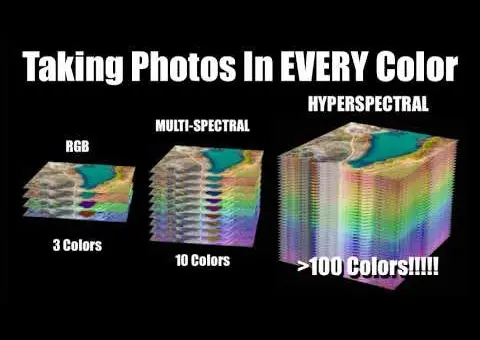
New hyperspectral satellites are capturing images with hundreds of color bands, revealing details invisible to the human eye and traditional cameras. This advanced technology builds on a 200-year legacy of spectral analysis, enabling unprecedented insights into Earth's resources and environment.