Journalist Questions Trump’s Iran Strategy Amidst Escalating Tensions
A journalist has expressed grave concerns over President Trump's Iran strategy, questioning its lack of clear objectives and reliance on emotional decision-making. Amidst escalating tensions, reports from within Iran detail explosions and speculation surrounding the Supreme Leader's health, while the U.S. faces challenges in securing congressional funding and maintaining international standing.

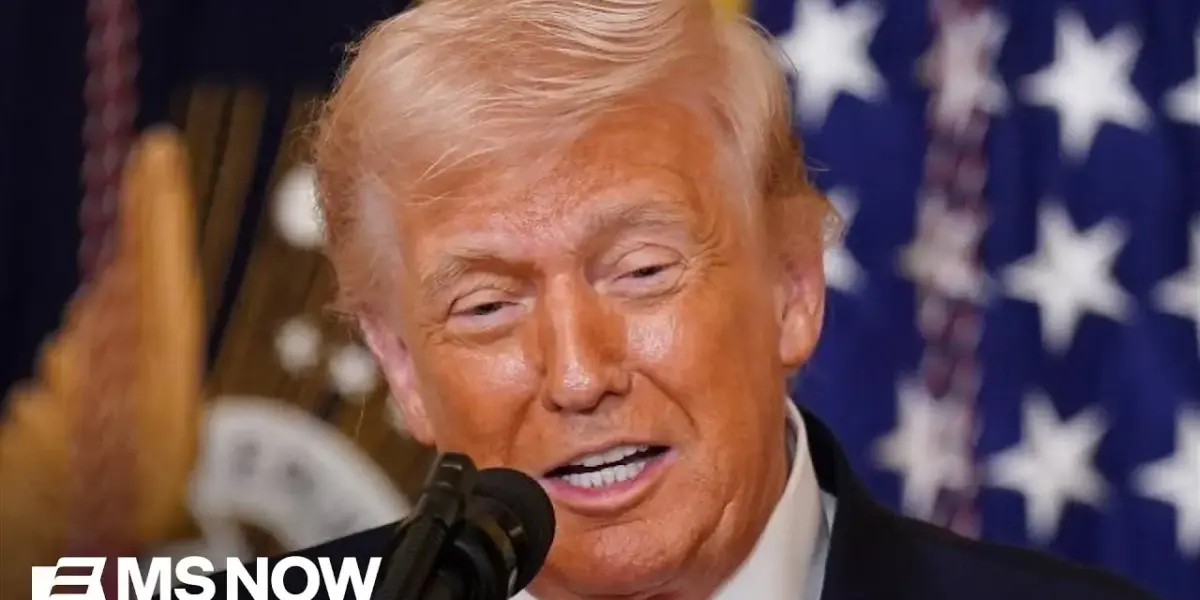
Trump’s Iran Strategy Under Scrutiny Amidst Rising Tensions
As the conflict with Iran intensifies, a prominent journalist has voiced significant concerns regarding the clarity and effectiveness of President Trump’s strategy, suggesting it is driven more by emotion than by a defined geopolitical plan. The escalating situation, marked by airstrikes and retaliatory threats, has left many, including those within the administration, on edge. The journalist highlighted the palpable anxiety among advisors and the uncertainty within the President’s own base, all while the objective of “success” remains ill-defined.
Uncertainty Surrounds “Success” in Iran Conflict
The core of the criticism lies in the President’s tendency to define reality based on his feelings. “It looks like whatever he feels it looks like, right? He says that all the time. He feels something might happen, therefore it’s reality in his view,” the journalist explained. This subjective approach to foreign policy raises questions about the long-term implications, particularly if the President were to declare victory prematurely, even if the situation on the ground does not reflect unconditional surrender from Iran.
“It wouldn’t surprise me if he at some point decided to declare victory and go home. But for the moment, he seems intent on going forward and continuing to hit these targets.”
Despite the current focus on military action, the journalist questioned whether escalation is truly aimed at regime change, noting that air power alone is an unlikely tool for achieving such a drastic outcome. The lack of direct information from within Iran, coupled with the absence of public appearances by the Supreme Leader, adds another layer of opacity to the conflict.
Inside Iran: Reports of Explosions and Leader’s Status
Direct communication from Iran remains scarce, with reports of internet outages even for users with VPNs. One message relayed described “serious explosions” that shook residents awake, with speculation that bunker busters were used. The individual sending the message expressed concern about evacuating due to bombings near checkpoints, while simultaneously lacking reliable information.
Adding to the intrigue are persistent rumors about the Supreme Leader’s health, with reports ranging from him being in a coma to suffering severe injuries. The journalist noted that the Iranian Revolutionary Guard Corps (IRGC) might benefit from not reporting the leader’s death, as it could diminish their authority and signal a failure to protect him, potentially accelerating regime collapse.
“It is absolutely terrifying for the Iranian people to be beholden to President Trump’s feelings of him deciding there’s a mission accomplished when it may very well be not a mission accomplished, where they could have been bombed and had so much death and destruction and loss of life but still have to go back to living under a regime that will be even more vindictive.”
Information Warfare and Public Perception
The conflict is also being waged in the information space, with the White House employing controversial tactics, such as splicing movie scenes with footage of airstrikes for social media. This approach has drawn criticism, particularly in light of reports that U.S. airstrikes may have hit a girls’ school, resulting in numerous casualties. The journalist contrasted the administration’s seemingly lighthearted portrayal of war with the grim reality, questioning its reception in Congress.
The financial burden of the conflict is also a growing concern. “War is hell, and we know that. And the rubber is going to meet the mode the road, Katie, in the next couple of weeks, because they’re spending a billion dollars a day. A billion dollars a day,” the journalist stated, referencing remarks by Congressman James Lankford. The significant daily expenditure raises questions about the sustainability of the campaign and the potential need for substantial congressional funding, which may prove difficult to secure, especially with divided political interests.
Congressional Support and International Standing
Securing bipartisan support for continued military funding is proving to be a challenge. Democrats, in particular, are largely opposed to authorizing further action in Iran, viewing supplemental funding requests as a proxy vote for war authorization. With a slim majority in the House and the need for 60 votes in the Senate, obtaining the necessary approvals appears unlikely without significant concessions or a shift in political sentiment.
The international implications of the conflict are also significant. The war is seen as damaging to U.S. standing globally, potentially creating opportunities for China to expand its influence in the Middle East and beyond. Furthermore, the perception that the U.S. possesses only “middling military capability” against Iran, unable to decisively conclude the conflict, could embolden adversaries and undermine alliances.
Broader Risks and Strategic Patience
Some analysts suggest that patience is key, drawing parallels to past air campaigns that lasted for weeks or months. However, the effectiveness of air power alone in achieving strategic objectives, such as regime change, remains a point of contention. The journalist also noted the President’s upcoming meeting with Chinese President Xi Jinping, speculating that a desire to resolve the Iran situation before this high-stakes diplomatic engagement could be a factor.
Ultimately, the prevailing sentiment is one of uncertainty. The lack of a clearly articulated strategy, coupled with a foreign policy seemingly guided by emotion, leaves the future of the U.S. engagement in Iran precarious. The ongoing military actions, the financial costs, and the geopolitical ramifications continue to unfold, demanding a closer examination of the long-term consequences.
Source: 'Not clear' what Trump's Iran strategy is 'when he's only following his feelings': Journalist (YouTube)

Related Articles
U.S. Iran Tensions Rise Amid Shifting Alliances
Rising tensions between the U.S. and Iran are creating a volatile geopolitical situation. With conflicting signals on de-escalation and potential shifts in alliances like NATO and U.S.-Israel relations, the path forward remains uncertain. The global economy and regional stability hang in the balance.


Iran Targets US With Cyberattacks, Escalating Digital Warfare
Iran is increasingly using cyberattacks to challenge the U.S., as seen in a recent hack of the FBI director's account. Experts say this is a strategic shift due to Iran's limitations in conventional warfare. The U.S. needs to strengthen its digital defenses, focusing on encryption and cloud computing, rather than solely relying on traditional security measures.
Ukraine Strikes Russian Oil Refinery, Eyes Iran Threat
Ukrainian forces struck a key Russian oil refinery, disrupting Moscow's war capabilities. Meanwhile, Finland's president urged continued U.S. support for Ukraine, as Kyiv shares its air defense expertise globally amid growing geopolitical complexities involving Iran and potential sanctions against Hungary.