Lost in the Wild: Tragic Encounters and Unforeseen Dangers
Investigative journalism delves into three harrowing tales of individuals who ventured into dangerous territories, whether natural landscapes or personal vulnerabilities, and faced the ultimate consequences. From Yellowstone's predatory wilderness to Egypt's treacherous underwater arch and a Utah canyon's deadly embrace, these stories underscore the fragility of life.

Lost in the Wild: Tragic Encounters and Unforeseen Dangers
The wilderness, with its breathtaking beauty and profound solitude, can also be a place of unimaginable peril. For some, the allure of remote landscapes and the thrill of the unknown have led to encounters with nature’s raw power, resulting in stories that serve as stark reminders of our vulnerability.
The Perilous Allure of Yellowstone’s Pelican Valley
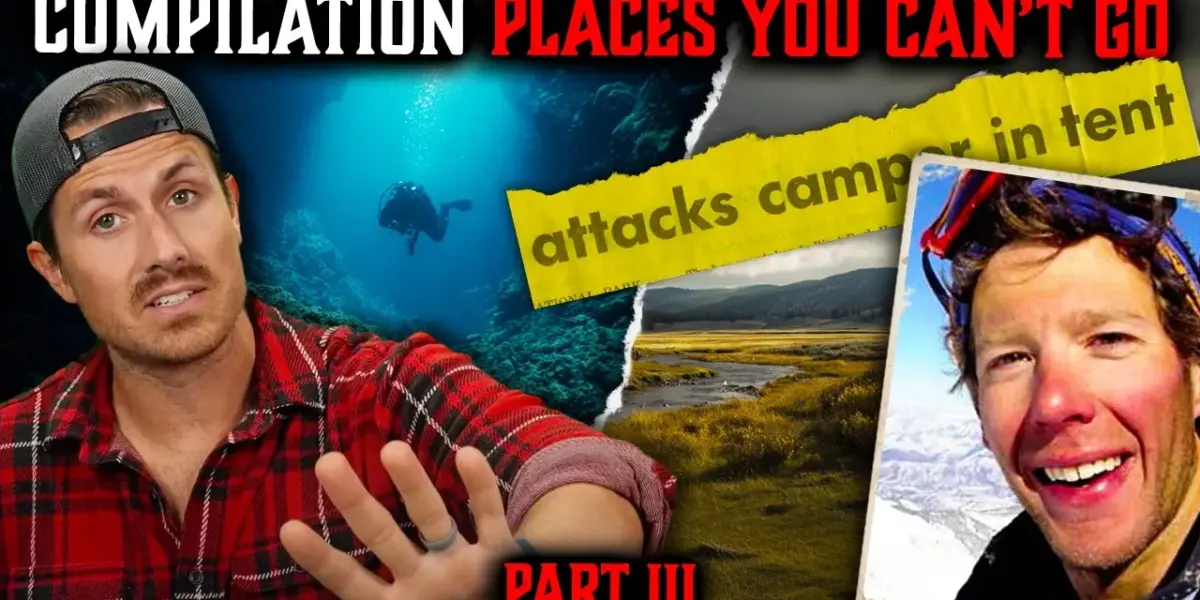
On July 28th, 1984, 25-year-old Brigittita Fredenhagen, an experienced camper, arrived at Yellowstone National Park with her brother Andreas and sister-in-law Junko. Their itinerary included a visit to the remote Pelican Valley, an area known for its stunning backcountry but also for its inherent dangers. Park rangers emphasized the need for permits and advised against solo excursions, recommending groups of at least four.
Despite these warnings, Brigittita, confident in her skills, secured a permit for a solo overnight stay in Pelican Valley. Her brother and sister-in-law dropped her off at the trailhead the following morning, agreeing to meet her the next day. When Brigittita failed to appear at the designated meeting point, Andreas and Junko alerted park rangers. A search of her intended campsite revealed a disturbing scene: her tent was intact, but her sleeping bag, laid out to dry, bore two puncture marks. The tidiness of the campsite contrasted sharply with the expected chaos of an animal attack. A drag trail led rangers to a torn sweater with blood, and ultimately, to Brigittita’s remains. The prevailing theory suggests a male grizzly bear, drawn by her improperly secured food, attacked her while she slept, dragging her away. The attack highlighted the extreme dangers of Pelican Valley, a place where human presence can inadvertently provoke encounters with apex predators.
The Deadly Depths of Egypt’s Blue Hole
In the azure waters of Dahab, Egypt, the Blue Hole, a massive underwater sinkhole, beckons divers with the promise of adventure. However, its infamous archway, an underwater tunnel connecting to the Red Sea, poses a deadly challenge. On April 28th, 2000, Yuri Lipsky, a 24-year-old from Moscow, arrived with the sole intention of filming himself swimming through the arch. The arch lies at a depth of 181 feet, well beyond the safe limits for recreational diving on standard air, which is approximately 130 feet. Technical diving, requiring specialized gas mixtures and extensive training, is necessary for such depths.
Yuri, with only two days before his return to Moscow, disregarded the advice of experienced diving instructors, including TK Omar, whose job often involved retrieving the bodies of those who perished attempting the dive. Instructors refused to take him without proper training and equipment. Undeterred, Yuri proceeded alone, equipped with scuba gear and a helmet-mounted camera, breathing standard air. His descent was captured on his camera. In the footage, Yuri attempts to use his buoyancy compensator to slow his rapid descent, but a leak prevents it from functioning correctly. Despite having a quick-release weight belt, a common safety feature, Yuri’s panic and fixation on the malfunctioning equipment led him to miss the archway. He continued to descend, reaching a depth of 392 feet before hitting the angled bottom. The video shows him desperately trying to anchor himself in the mud to avoid sliding into a sheer drop-off. It is believed he either removed his mouthpiece due to nitrogen narcosis or blacked out from oxygen toxicity, ultimately drowning. The Blue Hole has an unofficial, grim reputation, with locals estimating as many as 200 deaths in the past decade.
A Boulder’s Cruel Embrace: Aaron Ralston’s Ordeal
On April 25th, 2003, Aaron Ralston embarked on a solo expedition into Utah’s Canyonlands National Park. After biking 15 miles to Blue John Canyon, an 11-mile gorge that narrows to as little as three feet in places, he began his hike. Around 2:45 p.m., while navigating a particularly narrow section, an 800-pound boulder dislodged and tumbled down, pinning Ralston’s right arm against the canyon wall, leaving him suspended 100 feet above the canyon floor. He was miles from any paved road and had no means of communication.
With only 12 ounces of water, two burritos, and a multi-tool, Ralston’s initial attempts to dislodge the boulder were futile. As daylight faded, the grim reality of his situation set in. He contemplated amputation but deemed it impossible with his dull multi-tool. For five days, he rationed his meager supplies, eventually resorting to drinking his own urine. Delirious and resigned to his fate, he etched his name and expected date of death into the rock and recorded farewell messages to his family. A vivid dream of playing with a child, missing his right arm, galvanized him. He realized he could break his arm and then use his multi-tool to saw through the bone. With immense effort, he broke his arm against the rock’s edge and then painstakingly sawed through the remaining flesh and bone. Adrenaline fueling his escape, he climbed 65 feet out of the canyon with one arm, ran six miles, and encountered hikers who summoned help. Medics arrived, saving his life. The recovery of his arm required a massive effort by park rangers, a hydraulic jack, and a winch, underscoring the impossibility of his escape without amputation. His harrowing experience was later immortalized in the 2010 film “127 Hours.”
The Unseen Threat Within: A Florida Home Invasion
On the evening of October 28th, 2006, Marissa Weber returned to her parents’ home in Port Richey, Florida. Her mother was in the kitchen preparing dinner, and her father was also present. As Marissa entered the living room, a cat darted past her, fixated on the baseboard, an indication of a rat infestation that had been causing Marissa significant stress and anxiety. She was taking medication for anxiety and depression, partly due to her living situation and the pest problem.
After a brief interaction with her parents, Marissa retired to her bedroom. The following morning, she did not come down for breakfast, leading her parents to assume she had left early for her job as a secretary. When she didn’t return home that evening, they initially weren’t overly concerned, attributing her absence to a desire for privacy. However, by late that night, with no sign of activity from her room, her mother went upstairs. Knocking yielded no response, and upon opening the door, they found Marissa’s room empty. Concern escalated when they discovered her purse, still containing her wallet, in her room, suggesting she hadn’t left voluntarily for an extended period. This discovery prompted them to contact the police.
Source: Top 5 Bingeable SCARY STORIES • PLACES You Can't Go Edition Vol. 3 (YouTube)

Related Articles


Justice Denied: 10 Cases Where Cops Got It Wrong
From flawed eyewitness accounts to biased technology, these 10 cases reveal devastating failures in law enforcement that led to wrongful convictions and immense suffering. Discover the shocking details of justice gone wrong.


Gilgo Beach Killer Nears Confession, Ending Long Wait
Rex Heuermann, accused in the Gilgo Beach serial killings, is reportedly expected to plead guilty to seven murders. This potential confession could bring long-awaited closure to the victims' families after years of investigation and uncertainty.


Killer Admits Long Island Murders After Decades of Fear
Accused Gilgo Beach killer Rex Heuermann is reportedly expected to plead guilty to seven murders. This potential confession could finally bring closure to families who have waited decades for justice. The case has haunted Long Island since the early 1990s.