Veterans Question U.S. Role in Potential Iran Conflict
Seven American veterans expressed deep skepticism about the U.S. role in potential conflicts with Iran during a discussion in South Miami. They questioned the objectives and long-term strategies behind military engagement, emphasizing the human and financial costs of war.


Veterans Debate U.S. Involvement in Iran Tensions
Seven American veterans, representing diverse military branches and generations, gathered at an American Legion post in South Miami, Florida, to voice their perspectives on the escalating tensions between the United States and Iran and to question the rationale behind potential U.S. military engagement. The discussion, facilitated by MS NOW, revealed a spectrum of opinions, from deep-seated skepticism about perpetual U.S. involvement in Middle Eastern conflicts to a pragmatic acknowledgment of geopolitical realities.
A Legacy of Conflict and Questionable Objectives
The veterans, many of whom have direct experience in the Middle East, expressed a weariness with what they perceive as a recurring cycle of American military intervention. A central theme emerging from the conversation was a fundamental questioning of the objectives and long-term strategies behind U.S. policy toward Iran. The phrase “Why is this our war?” resonated among the participants, highlighting a disconnect between the perceived national interest and the human and financial costs of potential military action.
“We’ve been involved in wars in the Middle East for decades,” one veteran remarked, reflecting a sentiment shared by many. “What has fundamentally changed that justifies a new conflict, and what is the endgame this time?” This question underscored a broader concern about strategic clarity and the absence of a clearly defined exit strategy in past and present military engagements.
Skepticism Towards Political Rhetoric
The veterans also addressed the role of political rhetoric in shaping public perception and policy decisions regarding Iran. While the discussion was framed around President Trump’s stance, the veterans broadened their critique to encompass the general tendency of political leaders to frame complex geopolitical situations in simplistic, often confrontational terms. There was a palpable distrust of narratives that could lead the nation into another costly conflict without sufficient public debate or a clear understanding of the stakes.
“It feels like we’re being led down a path based on soundbites rather than solid, long-term strategy,” another participant stated. “Our leaders need to be more transparent about the risks and the actual benefits to the American people, not just to certain political factions.” This sentiment points to a desire for more accountability and a more grounded approach to foreign policy decision-making.
The Cost of War: Human and Financial
The human and financial toll of prolonged military engagement was a recurring concern. Veterans recalled the sacrifices made by themselves and their comrades, emphasizing the profound impact of war on individuals, families, and the nation’s resources. The economic burden of maintaining a significant military presence and engaging in potential combat operations was weighed against domestic priorities, leading to a call for more judicious use of national assets.
“Every dollar spent on a bomb or a soldier deployed to a conflict zone is a dollar not spent on infrastructure, education, or healthcare here at home,” a veteran pointed out. “We need to ask if the perceived threat from Iran warrants diverting such immense resources, especially when our own country has pressing needs.”
Differing Views on Deterrence and Diplomacy
While the consensus leaned towards caution and skepticism, there were nuanced perspectives on how to manage relations with Iran. Some veterans emphasized the importance of robust diplomacy and international cooperation as primary tools for de-escalation. Others acknowledged the necessity of maintaining a strong defense posture and the potential role of deterrence, but only as a component of a larger strategy that prioritizes non-military solutions.
“Deterrence is important, but it shouldn’t be the only tool in the toolbox,” one veteran explained. “We need to invest as much, if not more, in diplomatic channels, intelligence gathering, and understanding the regional dynamics. A purely military-focused approach has historically proven insufficient and often counterproductive.”
The Veteran’s Perspective: A Call for Prudence
The overarching message from the South Miami veterans was a plea for prudence and a more critical examination of U.S. foreign policy. Their experiences have instilled in them a deep appreciation for the gravity of military action and a strong desire to avoid unnecessary conflicts. They urged policymakers and the public alike to engage in a more informed and less emotionally charged debate about America’s role in the world, particularly concerning the Middle East.
The conversation served as a stark reminder that those who have directly borne the costs of war are often the most vocal advocates for peace and strategic clarity. Their insights offer a valuable counterpoint to the often-abstract discussions of foreign policy that dominate public discourse.
Looking Ahead: The Path to De-escalation
As geopolitical tensions continue to fluctuate, the insights from these veterans underscore the critical need for transparent communication, well-defined objectives, and a comprehensive strategy that prioritizes diplomatic solutions. The question of whether the United States will be drawn into further conflict with Iran remains a significant concern, and the voices of those who have served offer a vital perspective on the profound implications of such decisions. Future developments will likely hinge on diplomatic efforts, regional stability, and the ability of world leaders to navigate complex challenges without resorting to costly military interventions.
Source: “Why is this our war?” American Veterans weigh in on Trump’s war with Iran (YouTube)

Related Articles
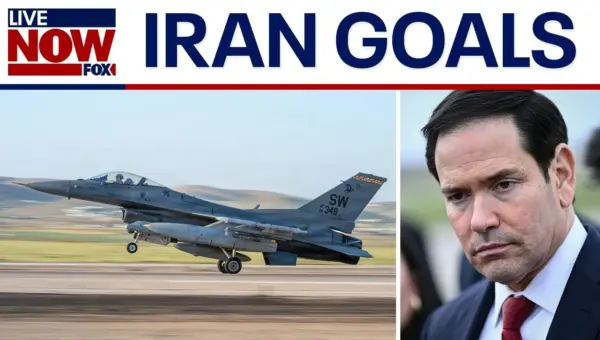
Rubio: US Can Achieve Iran War Goals Without Troops
Senator Marco Rubio outlined a strategy to counter Iran without deploying U.S. ground troops, focusing on weakening the regime and enhancing maritime security. He also criticized Cuba's economic system and expressed concerns about West Bank violence.
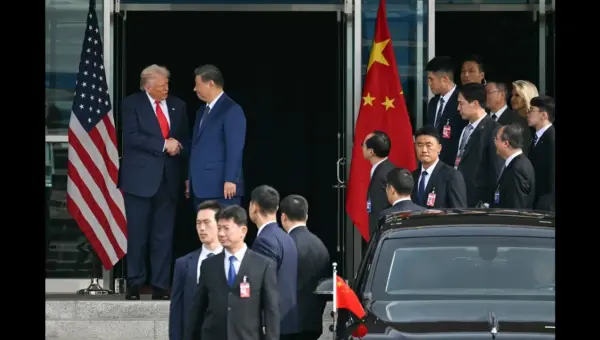
Trump’s “Walk Away” Tactic Signals Tougher Stance on China
Retired Air Force Brigadier General David Stillwell believes President Trump's strategy of being willing to walk away from negotiations puts pressure on China. This tactic, combined with US global actions and strengthened alliances, signals a more assertive American foreign policy.


Israel Escalates Iran Strikes, Warns of Wider War
Israel has launched significant strikes inside Iran following continued missile fire, warning of further escalation. The conflict risks wider regional instability and economic disruption, especially concerning the Strait of Hormuz.