Moscow Blackout Signals Kremlin Purge Amidst War Failures
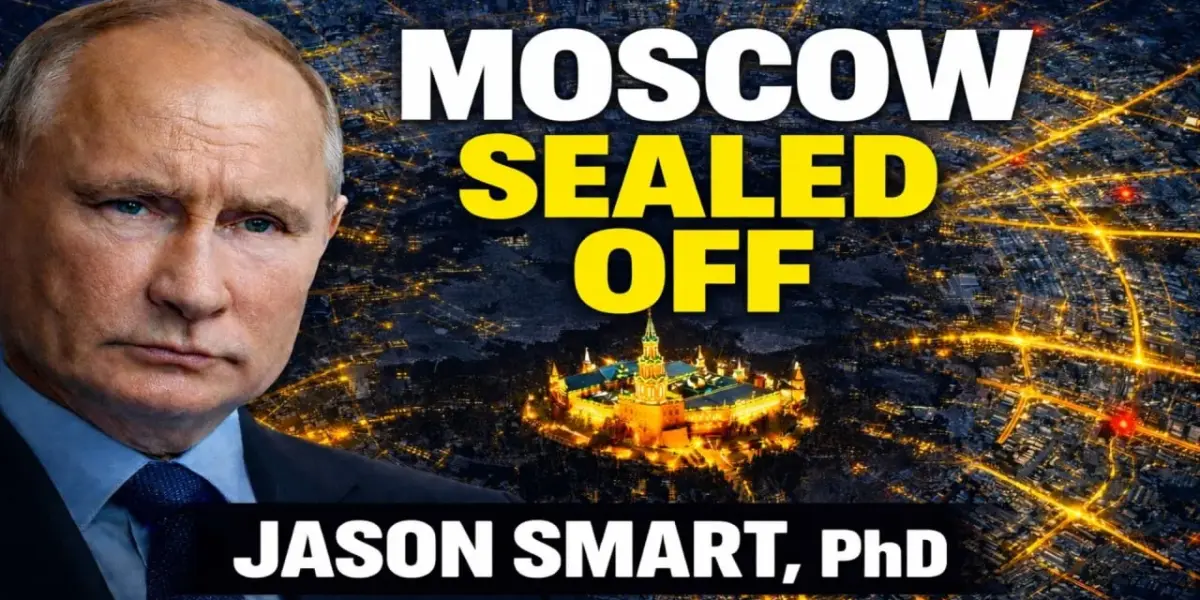
A sweeping purge is reportedly underway within Russia's elite, targeting long-serving officials amidst escalating Ukrainian attacks and military failures. The internet blackout in major cities is seen as a smokescreen for this internal crackdown, designed to deflect blame and suppress dissent as the Kremlin faces mounting pressure.

Kremlin Purge Underway Amidst Military Setbacks
In a dramatic turn of events, the Russian power structure appears to be undergoing a significant internal purge, with key figures once considered untouchable now facing scrutiny and removal. This internal upheaval coincides with escalating Ukrainian attacks on Russian territory, suggesting a desperate attempt by the Kremlin to deflect blame for the prolonged and increasingly costly war.
High-Profile Officials Targeted
The recent repositioning and subsequent house arrest of high-ranking officials, including former Defense Minister Sergey Shoigu and his longtime deputy Ruslan Salakov, signal a systematic dismantling of the old guard. Shoigu, who held the defense portfolio for 12 years, was moved to the Security Council, a move initially perceived as a safe landing. However, the arrest of Salakov, who managed Shoigu’s power for over two decades, indicates that the state is now directly targeting Shoigu’s inner circle, creating an atmosphere of uncertainty and fear among the elite.
Adding to this turmoil, Pavel Kholodkov, a key architect of the security apparatus around Shoigu, was removed from the Security Council. This development further erodes the sense of security among those within the Kremlin’s inner sanctum, suggesting that no one is truly safe from the escalating internal purges.
Economic Woes Fuel Instability
The economic strain on Russia, exacerbated by the war in Ukraine, is also playing a significant role. Igor Sechin, the head of Rosneft, Russia’s largest oil company and a long-time ally of Putin, finds himself in a precarious position. Rosneft has experienced substantial revenue and profit losses, diminishing Sechin’s former influence and making him vulnerable to attack. In Russia, arrests are often a precursor to asset seizure, and Sechin’s inability to maintain profitability opens him to such actions.
Vladislav Surkov, another influential figure credited with building the modern Putin system and shaping Putin’s public image, is reportedly fleeing the country. His silence and the lack of official denial fuel speculation that he possesses critical knowledge of the regime’s internal workings and the war’s failures. His potential departure underscores the pervasive fear and uncertainty gripping Moscow.
Military Failures and Blame Game
The prolonged military operation in Ukraine, which was initially projected to be a swift victory, has devolved into a protracted conflict, leading to significant military setbacks. The inability of the Russian military to achieve its objectives has created a climate of recrimination, with individuals scrambling to assign blame and consolidate their own power. The purges within the military and security apparatus are seen as a direct consequence of these failures, as Putin seeks to identify scapegoats for the war’s lack of progress.
The transcript highlights that over 17 Russian generals have been arrested in the past couple of years, a number exceeding that of all NATO countries combined. This level of internal prosecution within the military suggests a deep-seated crisis and a potential erosion of loyalty among senior commanders.
Ukrainian Strikes Intensify Pressure
Simultaneously, Ukraine has intensified its attacks within Russian territory, targeting critical infrastructure, including oil refineries and military-industrial facilities. Strikes on key sites like the Kremlyov microelectronics factory, which produces components for missile guidance systems, and major oil transfer hubs demonstrate Ukraine’s growing capability to disrupt Russia’s war effort and economy. These attacks not only inflict damage but also sow fear and panic within Russia, forcing the Kremlin to implement measures to control information and public reaction.
The alleged reason for the internet blackout in Moscow and St. Petersburg, affecting millions, is ostensibly to guard against Ukrainian drone strikes. However, the article suggests this is a cover for the ongoing internal purge and a means to suppress information about the regime’s growing instability and the failures of the war.
Control and Profit in the Putin Regime
The article points out that the Putin regime often operates on a principle of profit, even when actions appear irrational or contrary to the state’s interests. The emphasis on controlling communication channels, such as restricting Telegram and forcing users onto the VK platform (created by a relative of Putin), is presented as an example of this dynamic. This control is seen as a desperate attempt to manage public dissent and prevent the spread of information that could further destabilize the regime.
Future Uncertainty and the Specter of a Coup
The convergence of internal purges, military failures, and escalating Ukrainian attacks has placed Vladimir Putin in an increasingly precarious position. The inability to openly admit decision-making errors forces the regime to seek external justifications for its failures, leading to the targeting of corrupt officials and perceived threats within the elite. The article posits that the current climate, marked by fear and uncertainty, could create an environment ripe for a coup, especially among military leaders who feel their positions are threatened.
The internet blackout and the suppression of communication are interpreted as desperate measures to prevent coordination among potential opposition elements. As the war continues to push inward and the pressure mounts on the capital, the foundations of Putin’s regime appear to be weakening, leaving the future of Russia uncertain.
Source: Moscow Blackout Hiding A Kremlin Purge (YouTube)

Related Articles

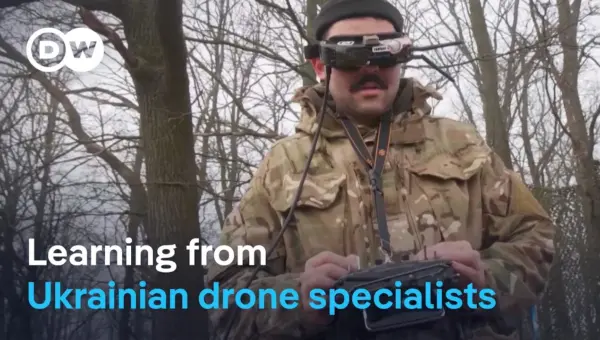
Ukraine War Experts Train British Army in Drone Warfare
Ukrainian soldiers, masters of drone warfare, are sharing their battlefield expertise with the British Army in a secret training program. This exchange offers invaluable insights into the realities of modern conflict, particularly the extensive use of drones. The initiative also includes innovative uses of 3D printing for drone production.

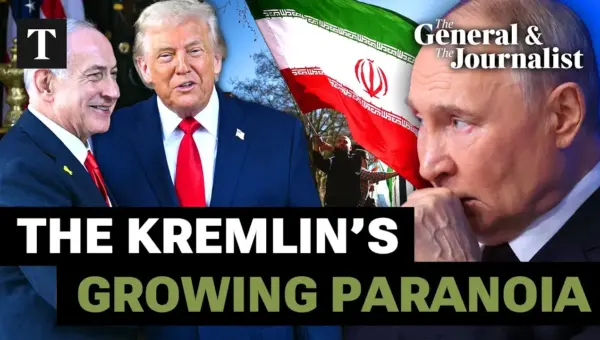
Kremlin Shakes: Elite Discontent Fuels Putin’s Paranoia
Internal turmoil and paranoia are reportedly gripping the Kremlin as President Putin faces growing elite discontent and the realities of the Ukraine war. Meanwhile, Russia's strategic involvement in the Iran conflict highlights complex calculations and potential risks, even as a wider global war remains unlikely.
Ukraine Hits Russian Oil, Pentagon Eyes Aid Shift
Ukraine's strikes are crippling Russian oil exports, with 40% of capacity offline. Meanwhile, the Pentagon may shift air defense aid to the Middle East. Ukraine is countering by deepening ties with Saudi Arabia and other Gulf nations, leveraging its combat experience.