Trump Dances as Global Tensions Ignite: A Stark Visual Contrast
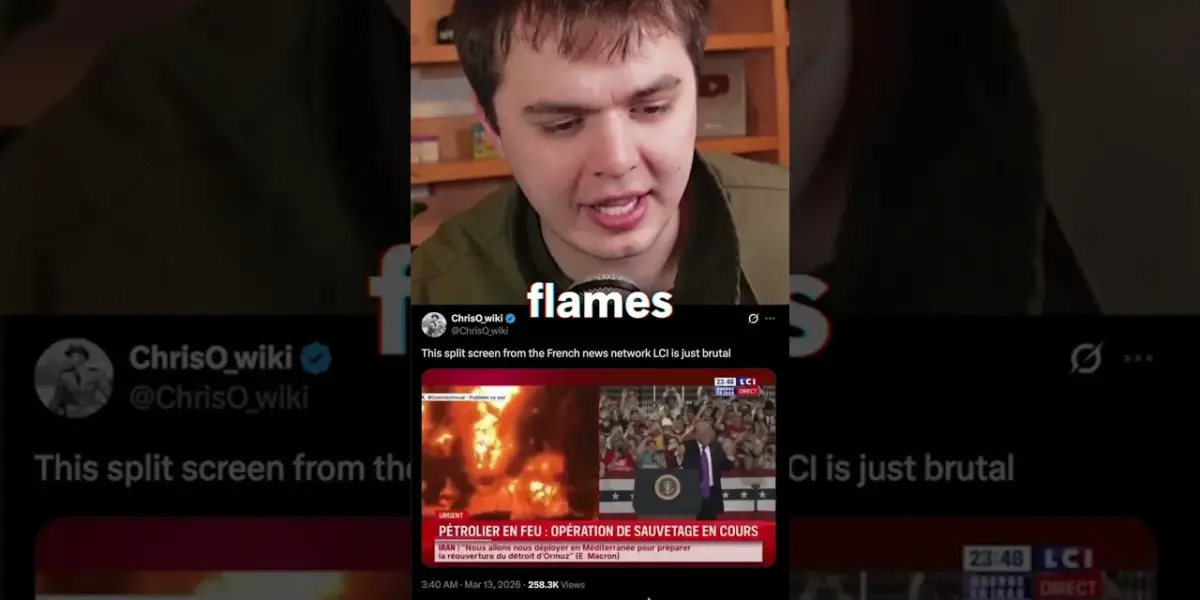
A French news network's split screen juxtaposed Donald Trump dancing with flames erupting in the Strait of Hormuz, highlighting a perceived disconnect between political figures and global crises. The visual serves as a potent metaphor for leadership during escalating geopolitical tensions.

Trump’s Dance of Distraction Amidst Global Firestorm
In a striking visual that has captured widespread attention, a French news network recently juxtaposed two dramatically different realities: Donald Trump engaged in a moment of apparent levity, contrasted with escalating geopolitical conflict. The image, described as a “brutal split screen,” placed footage of the former President dancing – reportedly to the Village People’s “YMCA” – alongside live reporting of flames erupting in the Strait of Hormuz, a critical global oil chokepoint.
The Visual Metaphor of Escalation
The significance of this visual pairing cannot be overstated. On one side, a figure seemingly detached from the gravity of international affairs, caught in a moment of personal celebration or distraction. On the other, a stark depiction of rising danger, with flames erupting in a region vital to global energy security. The Strait of Hormuz, a narrow waterway separating the Persian Gulf from the Gulf of Oman, is a vital transit point for crude oil. Any disruption here has immediate and profound implications for global energy markets, often leading to significant price hikes and increased geopolitical instability. The eruption of flames in this volatile area signals a dangerous escalation, potentially involving military action or severe diplomatic tensions.
A History of Prescient Warnings and Present Ironies
What adds a layer of profound irony to this situation is a seemingly prescient observation made by Donald Trump himself, dating back to 2013. In a tweet from that year, Trump highlighted the connection between oil prices and geopolitical events, writing, “Do you notice that oil prices just went up big time?” This observation, made during a period of prior regional tension, now appears eerily relevant. The current crisis in the Strait of Hormuz, leading to fears of oil supply disruptions, directly echoes the concerns Trump himself voiced years ago. However, the transcript notes a critical distinction: while Trump in 2013 was commenting on market fluctuations, his current actions or the context in which he is presented seem to stand in stark contrast to the gravity of the unfolding events. The analysis from the transcript suggests a perceived disconnect, with Trump’s public persona or actions appearing to ignore or downplay the severity of the situation, despite his own past acknowledgments of the sensitivity of oil prices to such events.
The Nature of Political Communication in Crisis
The transcript touches upon the nature of Donald Trump’s communication style, particularly his use of social media platforms. It describes his past tweets as “idiotic” and suggests that his current communication on platforms like Truth Social remains similarly characterized. This critique points to a broader discussion about how political figures communicate during times of international crisis. The visual of Trump dancing while a critical global waterway is aflame raises questions about leadership, priorities, and the perception of detachment. In an era where information, and often misinformation, spreads rapidly, the visual narrative presented by a news network can have a powerful impact on public perception. The split screen serves as a potent metaphor, suggesting that while the world grapples with real-world dangers, some leaders may appear to be operating on a different plane, seemingly oblivious or unconcerned.
Historical Context: The Strait of Hormuz and Geopolitical Flashpoints
The Strait of Hormuz has long been a focal point of geopolitical tension. Its strategic importance means that any conflict or instability in the region has immediate global repercussions. Throughout history, the waters have been a site of naval skirmishes, diplomatic standoffs, and concerns over freedom of navigation and oil flow. The current escalation, whatever its specific cause, taps into this long-standing historical vulnerability. The repeated threats to this waterway underscore the delicate balance of power in the Middle East and the interconnectedness of regional stability with global economic well-being.
Why This Matters
The stark contrast presented by the split screen is more than just a fleeting news image; it is a commentary on the disconnect that can exist between political figures and the pressing realities of global affairs. It raises critical questions about leadership accountability, the role of perception in politics, and the public’s expectation of leaders during times of crisis. The juxtaposition highlights the potential for political theater to overshadow substantive engagement with complex international issues. Furthermore, it underscores the power of visual media to shape narratives and influence public opinion, particularly in the digital age where attention spans are short and imagery often speaks louder than words.
Implications, Trends, and Future Outlook
This incident, however brief, is indicative of broader trends in political communication and global affairs. The rise of social media has democratized communication but also created platforms where personal branding and attention-grabbing tactics can sometimes overshadow the gravity of policy and international relations. The visual metaphor of a leader seemingly detached while a crisis unfolds serves as a cautionary tale. It suggests a public increasingly sensitive to perceived insincerity or a lack of focus on critical issues. In the future, we can expect similar visual juxtapositions to be employed, as media outlets seek to capture the attention of a fragmented audience and highlight perceived disconnects in leadership. The challenge for political figures will be to navigate this landscape by demonstrating both engagement with critical issues and authenticity in their communication, lest they be depicted as dancing while the world burns.
The situation in the Strait of Hormuz, and the accompanying visual commentary, serves as a potent reminder of the complex interplay between global politics, energy security, and the public’s perception of leadership. As geopolitical tensions continue to simmer and evolve, the ability of political figures to connect with and address the gravity of these issues will remain a crucial determinant of their effectiveness and public trust.
Source: Split Screen Shows Trump Dancing While War Escalates #politics #fyp #new (YouTube)

Related Articles
G7 Allies Clash Over Iran War Strategy, Urge Focus on Russia
G7 foreign ministers met in Paris, revealing deep divisions over the U.S. war with Iran. European allies urged the U.S. to pressure Russia, linking its actions to the conflict and fearing support for Ukraine will wane.
Iran Blocks China Ships, Exposing Beijing’s Weak Grip
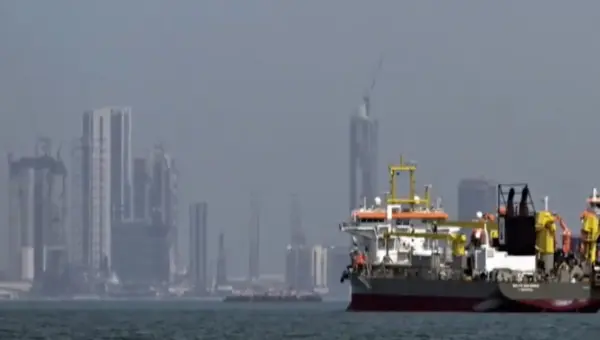
Iran's recent decision to block Chinese ships at the Strait of Hormuz is exposing the limits of Beijing's influence in the Middle East. This action is causing delays and cancellations for Chinese manufacturers, turning a perceived geopolitical win into an economic strain.
Rubio: US Can Achieve Iran War Goals Without Troops
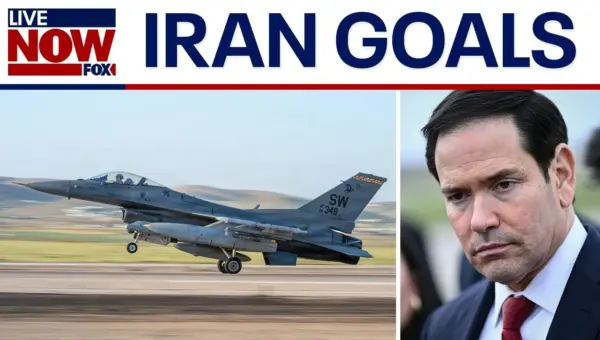
Senator Marco Rubio outlined a strategy to counter Iran without deploying U.S. ground troops, focusing on weakening the regime and enhancing maritime security. He also criticized Cuba's economic system and expressed concerns about West Bank violence.