UK Bans Al-Quds March Over Public Disorder Fears
London's annual Al-Quds Day march has been banned by the Home Secretary due to concerns over public disorder and potential extremist propaganda. While the procession is prohibited, static demonstrations will still be permitted. The Islamic Human Rights Commission, organizer of the event, vows to challenge the decision, calling it politically motivated.

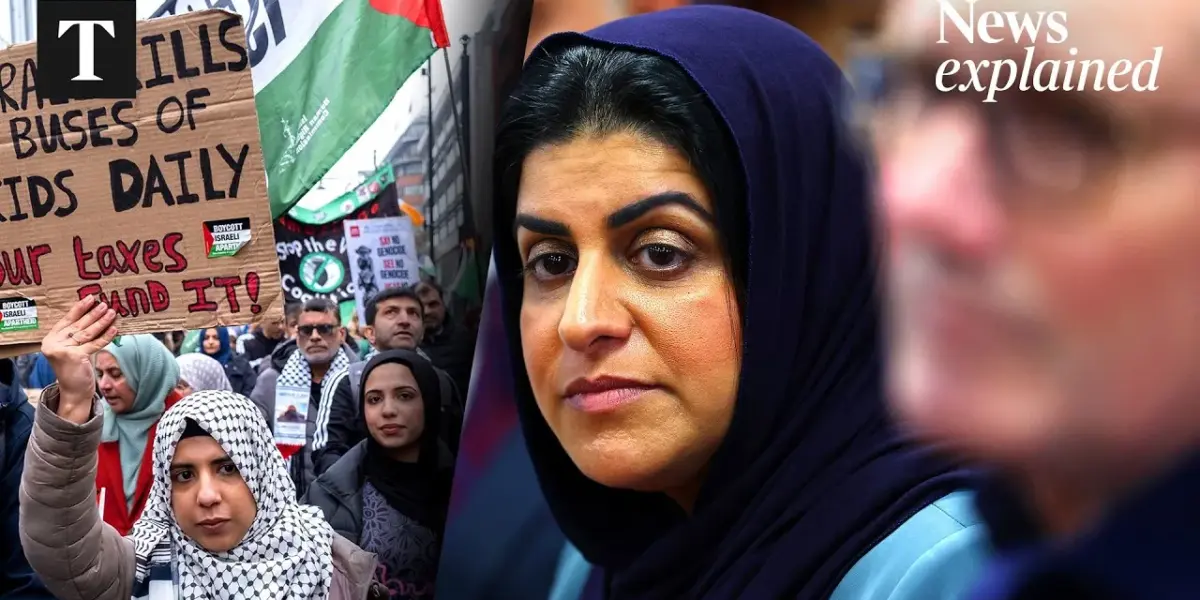
Home Secretary Restricts London’s Al-Quds March Amid Public Disorder Concerns
The Home Secretary has banned the annual Al-Quds Day march in London, a move that prohibits the procession while allowing for static demonstrations. The decision, announced on Sunday, March 15th, comes amidst significant concerns over public disorder, potential clashes with counter-protesters, and the promotion of extremist ideologies. The Islamic Human Rights Commission (IHRC), which has organized the London event for the past 40 years, has vowed to challenge the ban, labeling it a politically motivated decision.
What is Al-Quds Day?
Al-Quds Day, observed annually on the last Friday of Ramadan, is an event in solidarity with Palestinians and in opposition to Israel and Zionism. The London march, scheduled to start at the Home Office, has been a focal point of these observances in the UK. The IHRC describes the event as a peaceful protest open to all, emphasizing its commitment to justice for all peoples.
Controversy and Concerns Surrounding the March
The Al-Quds Day march has been a recurring source of controversy. Previous iterations have seen arrests, confrontations with police, and the display of flags, including those associated with Hezbollah before its proscription in 2019. Allegations have been made linking the IHRC to the Iranian regime, suggesting the group is used to advance Iran’s interests in the UK.
The IHRC was described in an independent review of the government’s counterterrorism scheme as an Islamist group ideologically aligned with the Iranian regime that has a history of extremist links and terrorist sympathies.
The IHRC has consistently refuted these claims, describing itself as an independent non-governmental organization dedicated to advocacy and human rights. The organization’s practical work includes providing support to Muslim prisoners, assisting individuals facing racial and religious discrimination, and offering legal aid in employment and immigration tribunals. Their campaigns have included boycotts of Israeli products and the Holocaust Memorial Day Trust, the latter for refusing to label the situation in Gaza as genocide. The IHRC established its own genocide memorial day in 2010.
Leadership and Allegations
The IHRC’s co-founder and chairman, Masud Shajera, born in Iran, has faced scrutiny for his past affiliations and statements. He previously oversaw the IHRC’s campaign for the release of Omar Abdul Raman, an individual imprisoned for plotting attacks in New York, whom the IHRC eulogized as a “rare man of principle and a martyr.” More recently, at a 2020 vigil for Qasem Soleimani, head of Iran’s Revolutionary Guard Corps, Shajera reportedly told attendees, “We inspired to become like him.” These associations have fueled concerns about the group’s ideological leanings and potential links to state-sponsored activities.
The Home Secretary’s Decision
Home Secretary, in announcing the ban on the march, cited “serious concerns of public disorder.” The Metropolitan Police are understood to have raised concerns about potential clashes between marchers and counter-protesters. Furthermore, it was alleged that the march could serve as a platform for intimidation, the dissemination of extremist propaganda, and the promotion of the Iranian regime.
Under the new restrictions, the Al-Quds Day event will proceed as a static demonstration, a format that neither the Home Secretary nor the police have the authority to prohibit. This means that Al-Quds Day will still be marked in London, likely accompanied by counter-protests.
Reactions to the Ban
The Campaign Against Antisemitism welcomed the Home Secretary’s decision, signaling support for the move to prevent potential unrest. Conversely, the IHRC has expressed strong opposition, with a spokesperson asserting that the ban is a “politically charged decision” rather than one based on genuine security concerns.
Looking Ahead
The Home Secretary’s decision marks a significant intervention in the annual Al-Quds Day observances in London. While the march has been prohibited, the allowance for static demonstrations ensures the event will still take place. The focus now shifts to how the static demonstration will be managed, the potential for continued counter-protests, and the IHRC’s legal challenge against the ban. The situation underscores the ongoing tension between freedom of assembly and the need to maintain public order and security in the face of controversial events.
Source: Inside The Home Secretary’s Decision To Restrict London’s Al-Quds March (YouTube)

Related Articles
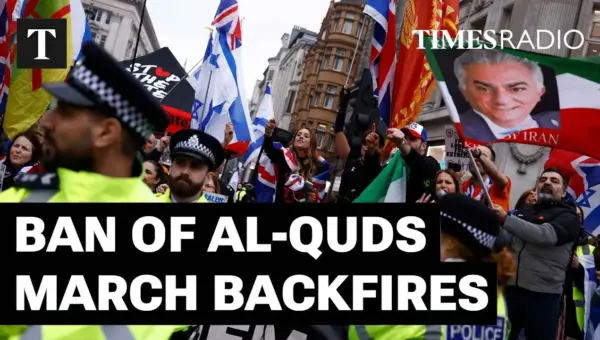
London Al-Quds March Faces Ban, Draws Larger Crowds
London's Al-Quds Day march has been restricted to a static demonstration following a government ban, with organizers anticipating a larger turnout due to the controversy. The Islamic Human Rights Commission attributes the ban to pro-Israel lobbying and sees the event as a protest for Palestinian rights, while authorities are on high alert for hate speech and support for banned groups.
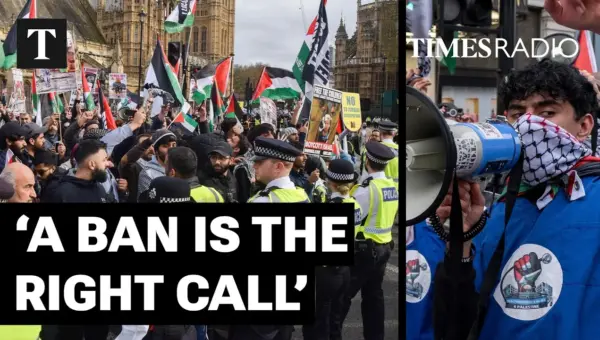
Met Police Justify Al-Quds March Ban Amid Iran Conflict Fears
Metropolitan Police Commissioner Sir Mark Rowley has defended the decision to ban the annual Al-Quds march in London, citing the "uniquely complex situation" arising from the ongoing war in Iran. Former chief constable Olivia Pinkney supported the ban, emphasizing the high bar for such prohibitions and the specific context of global events.
Pro-Iran March Proceeds Despite UK Minister’s Objections
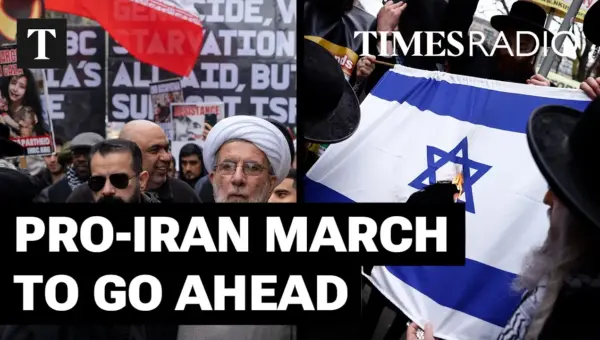
A pro-Iranian Al-Quds march is set to proceed in London this weekend despite strong objections from UK Justice Minister Sarah Sackman, who stated such hate marches have 'no place in British society.' Organizers defend the event as a exercise of freedom of expression, while past controversies including displays of flags from designated groups and calls for Israel's destruction continue to fuel debate.