Iran’s Strait Gambit: How a Chokehold Threatens Global Trade
US and Israeli forces are conducting unprecedented strikes in Iran, while Tehran counters by threatening the vital Strait of Hormuz. This analysis delves into the strategic implications of Iran's chokehold, the challenges of measuring military success, and the critical role of operational security in managing casualty information amidst escalating regional tensions.

Iran’s Strait Gambit: How a Chokehold Threatens Global Trade
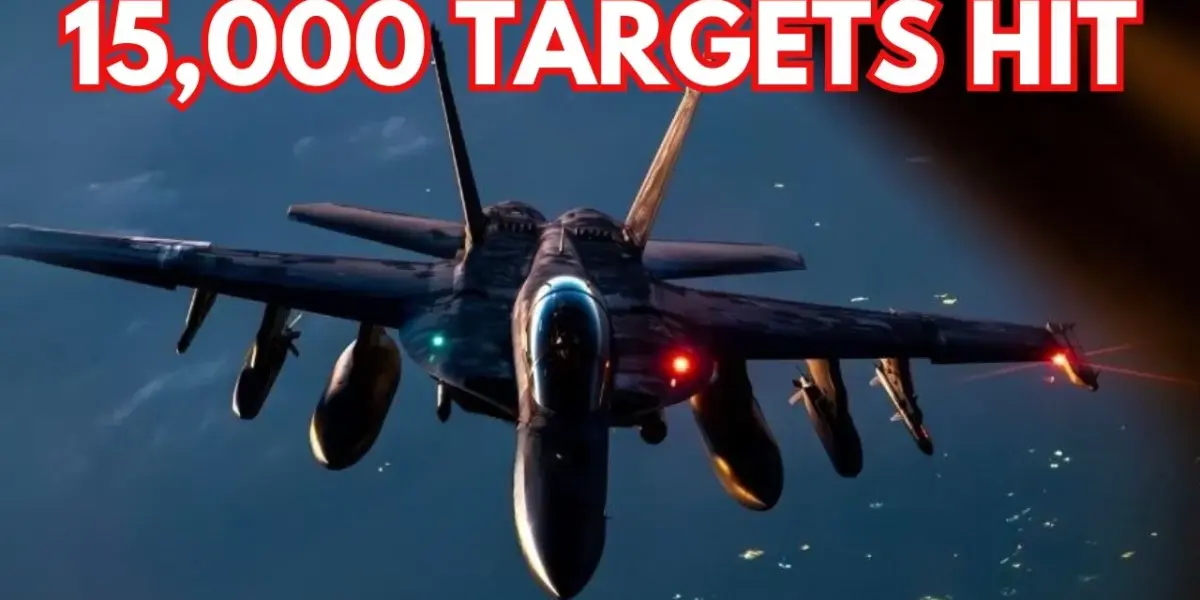
The ongoing conflict has seen a dramatic escalation in military actions, with US and Israeli forces reportedly striking over 15,000 targets in Iran within the first 13 days of hostilities. This intense campaign, described as involving more than a thousand unique targets engaged daily, is now seeing its heaviest single-day volume of strikes. The Pentagon indicates a strategic shift towards ‘standing munitions’ – guided bombs that are less expensive and pose a reduced threat to aircraft, allowing for increased sortie rates and munition payloads over Iranian airspace. This suggests a sustained effort to degrade Iran’s military capabilities, with officials claiming 99% of today’s strikes utilize such munitions and that Iranian missile and drone launches have plummeted by 90% and 95% respectively. The stated objective is not merely to destroy current capabilities but to prevent Iran’s ability to rebuild its defense industry.
Measuring Success in Conflict
However, the metrics of success in this conflict remain a point of discussion. While the number of targets struck and munitions deployed are significant, Pentagon officials, like Secretary Hegsth, have pushed back against these being the sole indicators of success, emphasizing that meeting defined objectives is the true measure. This echoes historical lessons, such as the Vietnam War, where inflated casualty figures did not necessarily equate to strategic victory. Centcom reports the destruction of over 90 Iranian naval vessels, yet acknowledges that even the complete elimination of Iran’s traditional navy would not neutralize its ability to threaten the Strait of Hormuz, a critical global chokepoint.
The Strait of Hormuz: Iran’s Strategic Leverage
Iran’s primary counter-strategy appears to be focused on disrupting maritime traffic through the Strait of Hormuz. This tactic is seen as Iran’s key strategic advantage, one that US planners are acutely aware of. Reports of the US being caught off guard by this strategy are met with skepticism, given the long-standing recognition of the Strait’s vulnerability. The transcript highlights that Iran is allowing a minimal percentage of vessels, primarily those destined for China, to pass through, effectively shutting down normal traffic. This action is described as an act of ‘sheer desperation’ by one US official, while another acknowledges Iran’s continued ability to harm commercial shipping and friendly forces.
“Iran is exercising sheer desperation in the Straight of Hormuz, something we’re dealing with and have been dealing with. Don’t need to worry about it.” – Secretary Hegsth
“We’ve made progress, but Iran still has the ability to harm friendly forces and commercial shipping, and our work on this effort continues.” – General Kaine
The closure of the Strait is a significant concern, impacting global trade and insurance markets. The situation is compared to the Houthis’ disruption in the Bab el-Mandeb Strait and the Red Sea, where shipping numbers remain depressed despite a long period without direct attacks. The challenge lies not just in achieving zero attacks on a given day, but in ensuring sustained security for maritime traffic. The prospect of needing ‘boots on the ground’ along coastlines to fully secure the Strait is being discussed.
Escalation and Shifting Demands
The conflict appears to be expanding beyond Iran’s direct borders. Hezbollah has launched its largest barrage of the war into northern Israel, and videos of these strikes are being disseminated. This expansion, coupled with Iran’s demands, suggests a perception of leverage. The new leader of Iran has called for the continued closure of the Strait of Hormuz and demanded the immediate closure of all American bases in the region, signaling a shift from seeking a cessation of hostilities to demanding a complete withdrawal from the region.
The Fog of War: Censorship and Casualty Reporting
Compounding the challenges of assessing the conflict is the issue of censorship and controlled information flow. Videos and images of missile impacts, which could provide targeting intelligence to adversaries, are being suppressed by civilian populations and governments alike. This intentional screening extends to damage assessments of military bases. While satellite imagery companies have imposed holds, information is still emerging, such as a New York Times assessment detailing damage at 17 sites across the Middle East. Notable locations include Shuaiba Port in Kuwait, where six US soldiers were killed in a drone strike, and other bases targeted for their command posts, barracks, and radar systems.
The accuracy of Iranian strikes is also being highlighted, countering the narrative that their munitions are ineffective. Evidence suggests they are targeting specific buildings and systems, indicating a persistent and effective drone and missile threat. The effective destruction of these systems is crucial for achieving a return to normalcy, but the path forward remains uncertain.
US Casualties and Operational Security
The conflict has also seen an increase in US casualties. A recent incident involved the crash of a US KC-135 refueler aircraft in Western Iraq, resulting in the confirmed deaths of all six crew members. While the circumstances are under investigation, it was not attributed to hostile or friendly fire, with evidence suggesting a mid-air collision. Despite US assertions, Iranian-affiliated channels have claimed responsibility for shooting down the aircraft, a claim that appears to be an opportunistic piggybacking on the US announcement.
Furthermore, a Pentagon spokesperson indicated that overall US casualty figures are significantly higher than initially reported. Approximately 140 US service members have been wounded in just over ten days of sustained attacks, a substantial increase from previously reported numbers. The rationale behind the delayed or aggregated release of casualty information is attributed to operational security (OPSEC). Releasing timely casualty figures could provide adversaries with valuable targeting data, revealing the effectiveness of their strikes and the readiness of US units. This balancing act between informing the public and protecting operational security is a critical aspect of modern warfare. The analysis suggests that the current civilian leadership at the Pentagon, being relatively new to the system, might also contribute to perceived hiccups in information release.
Why This Matters
The ongoing conflict in the Middle East presents a complex geopolitical challenge with far-reaching implications. The intense military strikes against Iran, coupled with Iran’s strategic response of threatening global shipping lanes via the Strait of Hormuz, underscore the fragility of international trade and energy security. The discrepancy between official statements on success metrics and the reality of ongoing threats, particularly the persistent Iranian ability to disrupt maritime traffic, highlights the difficulty in achieving decisive victory. Furthermore, the careful management of casualty information, driven by operational security concerns, raises questions about transparency and public trust, while also demonstrating the sophisticated threat environment US forces are operating within. The potential for regional escalation, as evidenced by Hezbollah’s actions, means that the conflict’s impact could extend well beyond the immediate combatants, affecting global stability and economic well-being.
Implications, Trends, and Future Outlook
The current trajectory suggests a protracted conflict with no easy resolution. The US strategy appears focused on degrading Iran’s military capabilities, while Iran leverages its asymmetric advantages, particularly the Strait of Hormuz, to inflict economic and strategic pain. The trend towards utilizing standing munitions indicates a sustained, high-volume strike campaign. However, the persistent threat from Iran, despite significant reductions in missile and drone launches, points to the difficulty of achieving zero threats. This could lead to increased calls for more direct intervention, such as ground operations to secure maritime routes, a move with significant escalatory potential.
The diversification of demands from Iran, moving from a cessation of attacks to a complete regional withdrawal, suggests a hardening of positions and a belief in their leverage, particularly concerning the Strait. The expansion of the conflict, with actions by proxies like Hezbollah, indicates a widening theater of operations. The emphasis on operational security in casualty reporting is a clear trend, reflecting the value of such information to adversaries. The future outlook remains uncertain, with possibilities ranging from a negotiated settlement (potentially unfavorable to regional stability) to a prolonged, attritional conflict. The lack of a clear path forward with minimal repercussions underscores the difficult strategic position the US and its allies find themselves in.
Historical Context and Background
The Strait of Hormuz has long been recognized as a critical chokepoint. Its strategic importance dates back centuries, but modern geopolitical significance surged with the rise of oil as a primary global energy source. For decades, Iran has viewed control or disruption of the Strait as its ultimate leverage against external powers, particularly the United States. This strategy has been a recurring element in regional tensions, notably during the Iran-Iraq War when both sides targeted shipping. The current conflict can be seen as an intensification of these long-standing dynamics, where Iran seeks to exploit its geographic advantage and asymmetric capabilities in response to direct military pressure.
The concept of achieving ‘air superiority’ is also nuanced. While absolute dominance across an entire nation is rare, achieving superiority in specific corridors allows for increased operational freedom. This has been a gradual process in this conflict, enabling the ramp-up of strikes. The discussion around casualty reporting and operational security echoes debates from previous conflicts, where the balance between transparency and battlefield advantage has always been a contentious issue.
Source: Heavy Strikes Hammer Iran: Key Strait Remains Closed (YouTube)

Related Articles

U.S. Iran Tensions Rise Amid Shifting Alliances
Rising tensions between the U.S. and Iran are creating a volatile geopolitical situation. With conflicting signals on de-escalation and potential shifts in alliances like NATO and U.S.-Israel relations, the path forward remains uncertain. The global economy and regional stability hang in the balance.

Trump Halts Iran Strikes Amid Stalled Diplomacy
President Trump announced a pause on planned strikes against Iran, citing productive talks, though Iran denies negotiations occurred. Reports also suggest a potential U.S. ground operation on Iran's Hark Island. The situation raises concerns about international support for Ukraine and potential shifts in U.S. foreign policy.

Trump Delays Iran Strike Deadline Amidst Shifting Diplomacy
President Donald Trump has extended his deadline for potential strikes on Iranian energy plants to April 6th, amid reports of U.S.-Iran diplomatic talks mediated by Pakistan. This move comes as Israel continues its strikes on Iran and the U.S. deploys additional military assets to the region. Analysts point to mixed signals, economic pressures, and strategic miscalculations as key factors shaping the evolving situation.