LBJ’s Voting Rights Speech: Echoes of 1965 in Today’s Debate
Sixty-one years after President Lyndon B. Johnson's landmark "We Shall Overcome" voting rights speech, new legislative debates and potential Supreme Court rulings are raising concerns about the future of suffrage. Presidential historian Doris Kearns Goodwin draws parallels between historical barriers to voting and contemporary challenges, emphasizing that voting rights remain a fundamental American issue.

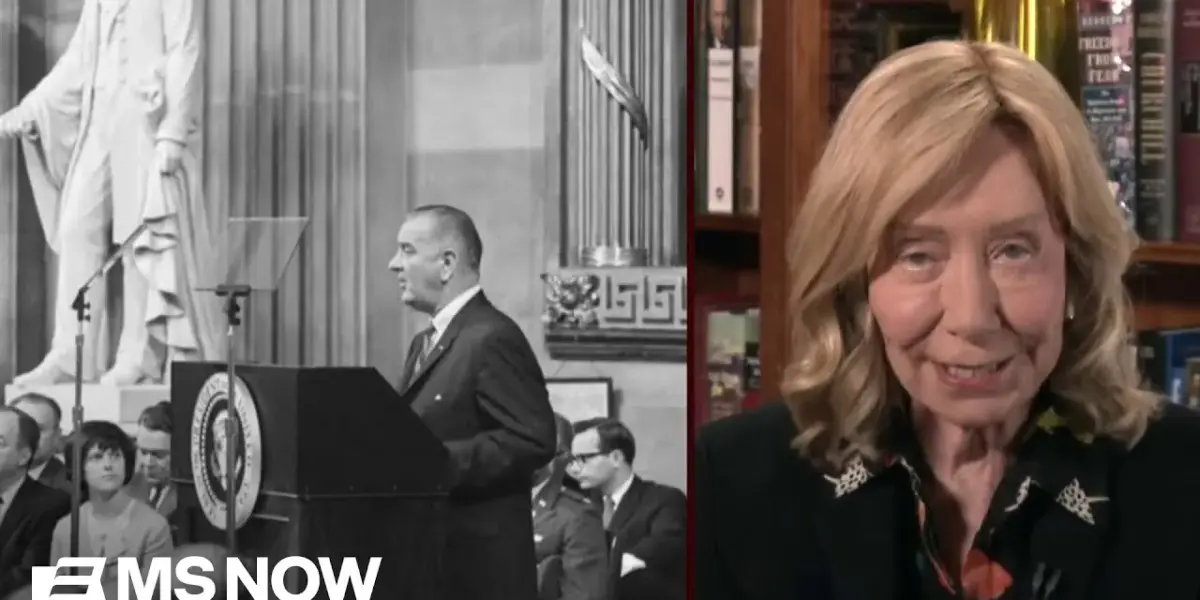
Remembering LBJ’s ‘We Shall Overcome’ Speech: A Fight for the Franchise
Sixty-one years ago this Sunday, President Lyndon B. Johnson stood before Congress and delivered a speech that would etch itself into the annals of American history. The “We Shall Overcome” voting rights address, a powerful response to the brutal violence of Bloody Sunday in Selma, Alabama, called for sweeping legislation to ensure every American had the right to vote, denouncing racial injustice as a profound moral failing. This anniversary arrives at a critical juncture, as the Senate prepares to debate President Trump’s “Save America Act,” a bill Democrats argue could disenfranchise millions, raising echoes of the past struggles for suffrage.
The Barriers to the Ballot Box: Selma’s Shadow
Presidential historian Doris Kearns Goodwin, speaking on the enduring significance of LBJ’s speech, provided crucial context to the historical moment. “What the marchers were doing on that Selma Bridge… was arguing against all the barriers that were put to Blacks registering all throughout,” Goodwin explained. These barriers were not mere inconveniences; they were deliberately designed obstacles.
“You have to say how many jelly beans there were in a jar of jellybeans, how many watermelon seeds were in a watermelon. Things impossible to [answer]… They were registered, so that’s what they were up against, all these barriers.”
These absurd and often impossible tests were used to prevent Black citizens from registering to vote, a systemic disenfranchisement that LBJ’s speech directly confronted. Goodwin noted that President Johnson initially intended to delay voting rights legislation until the following year, allowing the Civil Rights Act of 1964 to be absorbed. However, the visceral horror of the events in Selma ignited the nation’s conscience, compelling immediate action.
Crafting a Landmark Address: History and Fate Converge
Goodwin shared a personal and poignant memory of the speech’s creation. As a graduate student at Harvard, she listened to the address, but her connection ran deeper: her late husband had been instrumental in its writing. “He had only nine hours to do it,” she recalled. The challenge of finding the right words, especially the opening, was immense. “It took him two hours,” she said, “to come up with the first line.” That line, “I speak tonight for the dignity of man and the destiny of democracy,” set the stage for a speech that transcended partisan divides.
LBJ himself was moved by the spirit of the Civil Rights Movement. While taking a walk and smoking a cigar, he heard children in the distance singing “We Shall Overcome.” This experience inspired him to add the powerful line, “Even if we pass this bill, there is still a century of injustice to overcome.” The speech culminated with Johnson, in a moment of profound solidarity, uttering the words that had become the anthem of the movement: “And we shall overcome.”
The impact was immediate and deeply felt. John Lewis, who was present with Martin Luther King Jr. that night, recalled seeing King cry, a rare display of emotion, knowing that the Voting Rights Act would finally pass. The legislation was not seen as a partisan issue at the time; in 1981, President Ronald Reagan extended the Voting Rights Act for 25 years, calling it “the crown jewel of American liberty.” Similarly, in 2006, President George W. Bush extended it for another 25 years, stating, “Finally, the segregation has been broken on the ballot box.”
Modern Echoes: New Barriers and Lingering Concerns
The 61st anniversary of LBJ’s speech is cast against a backdrop of renewed concerns about voting rights. “It’s so heartbreaking to know that at the anniversary of this and the anniversary of Selma, that those barriers are being put back up rather than tumbling down,” Goodwin lamented.
The current debate centers on the “Save America Act” and potential Supreme Court decisions. Goodwin highlighted that the Supreme Court has already weakened protections, removing the preclearance requirement that previously mandated federal government review of changes to voting laws in certain jurisdictions. “The Supreme Court knocked that down, saying we’ve gone far enough,” she noted. Now, the court is considering whether race can be taken into account when drawing congressional lines, a move that critics fear could lead to gerrymandering that dilutes minority voting power.
Democrats argue that such measures risk disenfranchising voters, echoing the historical struggles. The “Save America Act,” they contend, could create new barriers to casting a ballot, effectively taking away the “sacred franchise from so many Americans.”
The Fundamental Right: A Call for Unity
Goodwin emphasized the foundational importance of voting rights. “Lyndon Johnson said that voting rights was the fundamental right upon which all the others depend,” she stated. She urged that this issue should not be viewed through a partisan lens. “This is not a partisan issue. This is an American issue.”
As the nation grapples with these contemporary challenges, the legacy of LBJ’s “We Shall Overcome” speech serves as a potent reminder. The fight for the right to vote, a cornerstone of democracy, continues. The potential passage of the “Save America Act” and upcoming Supreme Court rulings underscore the fragility of these hard-won rights, making the vigilance of citizens and lawmakers more critical than ever.
The current debates surrounding voting access, fueled by legislative proposals and judicial review, demonstrate that the struggle for equal suffrage is far from over. The words spoken 61 years ago resonate with renewed urgency, calling for a commitment to ensuring that the promise of democracy is accessible to all Americans, today and tomorrow.
Source: Doris Kearns Goodwin looks at the 61st anniversary of LBJ's voting rights speech (YouTube)

Related Articles
Voter ID: Common Sense or Suppression?
A growing debate surrounds voter ID laws, with proponents calling them a common-sense measure against fraud and opponents fearing voter suppression. Many countries and U.S. states already require ID to vote.
Senate Rejects Voter ID Bill: A Deep Dive into the Divide
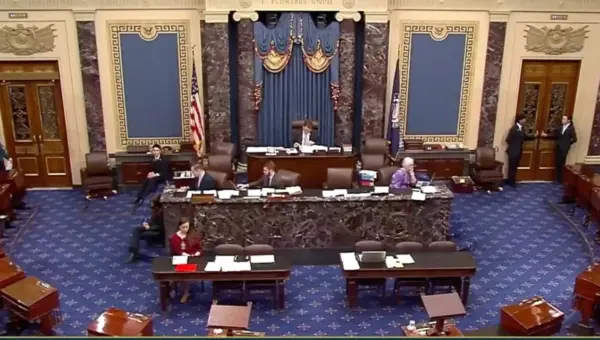
The U.S. Senate recently voted down a proposed amendment requiring photo ID to vote, splitting strictly along party lines. Republicans argued for election security, while Democrats raised concerns about voter suppression. This failure highlights deep divisions on election laws.
Trump’s Mail-In Ballot Hypocrisy Fuels Voter Suppression Debate
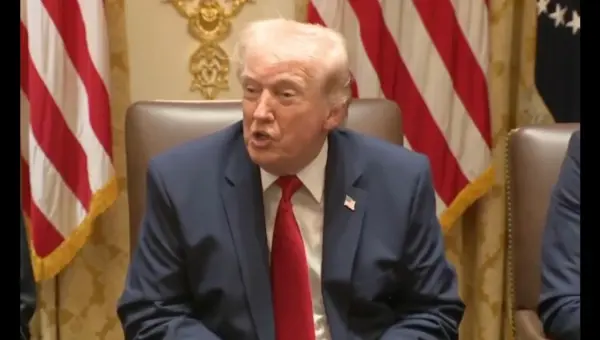
Donald Trump's personal use of mail-in ballots contradicts his public stance against them, fueling concerns about voter suppression. Evidence suggests widespread voter fraud is rare, and efforts to restrict voting access disproportionately affect marginalized communities.