Ukraine’s “Office Warriors”: Drones Strike Russian Targets Remotely
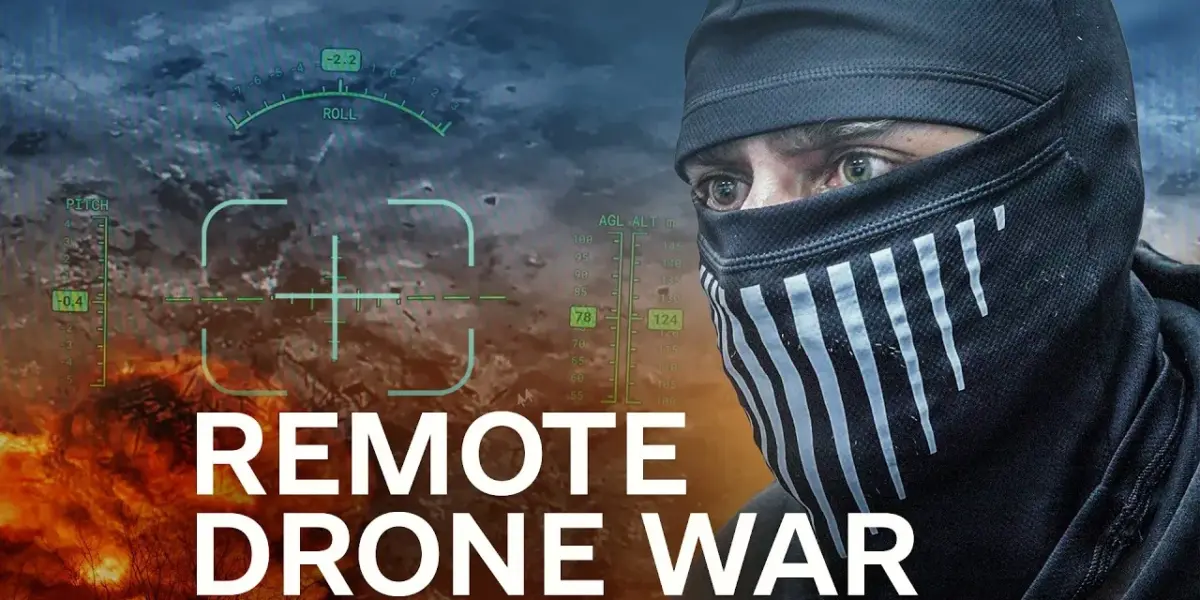
Ukrainian soldiers are now operating advanced drone missions from office buildings, thanks to Starlink technology. This "remote warfare" allows pilots to strike Russian targets from hundreds of miles away, offering a crucial safety buffer and changing the nature of combat.

Ukraine’s “Office Warriors”: Drones Strike Russian Targets Remotely
In a stark departure from the visceral imagery of trench warfare, a new breed of Ukrainian soldiers is waging war from the relative safety of office buildings. Oleg and Anton, drone pilots for the elite Nemesis unit, are part of an evolving military strategy that leverages advanced technology to strike Russian positions from hundreds of miles away, transforming conventional battlefields into remote operations centers.
The Rise of Remote Warfare with Starlink
Far from the front lines, within the confines of a secure, modern office space in Kyiv, Oleg and Anton spend their shifts not with shovels and sandbags, but with joysticks, monitors, and endless cups of coffee. Their mission: to hunt Russian soldiers. This is the reality of the night shift for Nemesis, a premier drone unit within Ukraine’s military, and one of the few to equip its heavy bomber drones with Starlink terminals. This technology allows them to pilot missions in real-time, destroying Russian positions while operating in an environment a world away from direct combat.
“More and more soldiers can operate further from the direct threat to their lives at the front. One of the key technologies enabling this is Starlink.”
The use of Starlink satellite internet is a game-changer. Traditionally, drone pilots like Oleg and Anton would operate within approximately 30 kilometers of their targets, working alongside ground crews in improvised bunkers close to the front. However, as Russian forces have increasingly targeted these forward-operating drone teams, and with the advent of longer-range, jamming-resistant drones like Russia’s fiber optic FPV drones capable of reaching 50 km or more, the danger to Ukrainian units has escalated significantly.
Starlink provides a crucial technological buffer. By strapping Starlink dishes to their heavy bomber drones, pilots can connect directly to satellite internet, theoretically enabling them to pilot from anywhere with an internet connection. This setup not only reduces the exposure of the ground teams to Russian fire but also minimizes the electronic and radio frequency signatures that Russian drone pilots use to locate Ukrainian positions. Furthermore, it allows pilots to manage multiple ground teams in a single shift, seamlessly switching to a fresh, reloaded drone while others are being serviced.
A “Call of Duty” Reality, Minus the Game Over
Anton steers the drone with a joystick, while Oleg monitors the live map, cross-referencing intelligence from ground reports and satellite imagery to identify and match targets. Their operational environment is a far cry from the traditional battlefield. The ability to switch between drones, recharge, and reload, is likened by the pilots to “respawning in a game of Call of Duty, except you don’t get killed.” This technological advantage is a welcome relief in an increasingly dangerous combat zone.
First Mission: Targeting Russian Drone Pilots
The shift begins with the first mission: a bombed-out house identified by intelligence as a potential hub for Russian drone pilots. As the mission commences, high winds present a challenge, causing the drone to lose its signal temporarily and veer off course. Despite the brief disruption, Anton skillfully regroups, repositioning the drone for a second attempt.
The first bomb lands near the target, exploding with a bright flash, but missing the intended building. The pilots regroup, and Anton makes a second pass. The drone’s thermal imaging vividly displays the desolate landscape – fields fading into tree lines, and the stark outlines of devastated villages, creating an almost graveyard-like panorama.
“It’s kind of remarkable seeing the dumbbas move across the screen in black and white thermal vision. The sort of the fade of the fields into the tree lines and then into these devastated villages. It makes the entire place look like an odd graveyard.”
Before volunteering, Oleg was a videographer for Ukrainian television, and Anton was an engineer. Both joined the military in early 2022 and found themselves in the same unit. While they now operate from a distance, they are not strangers to the harsh realities of the front lines, having previously conducted reconnaissance missions in Bakhmut during its intense siege.
The Eerie Effectiveness of “Outsourced” Warfare
Later in the shift, new intelligence arrives for a second mission. The concept of directing bombings hundreds of miles away from an office setting is described as both powerful and eerie. This “outsourced” or remote warfare, conducted from the relative comfort of a civilian setting, is seen as an inevitable progression of modern conflict.
“There is something powerful and certainly at least somewhat eerie about seeing a series of bombings hundreds of miles away controlled by somebody next to you in an office building manning a joystick. The future of this sort of outsourced war, this war from home environment is going to progress regardless of how eerie it may or may not be.”
As Oleg and Anton conclude their night shift, the reality for units like Nemesis is that this is simply another day at the office. The integration of technologies like Starlink is not only redefining combat tactics but is also blurring the lines of the traditional front. The implications of this shift extend beyond Ukraine, influencing conflicts globally.
The Future of Warfare from Home
The continued development and implementation of technologies that enable remote warfare are poised to reshape military operations worldwide. As Ukraine demonstrates, the ability to strike targets with precision from secure, distant locations offers significant tactical advantages, potentially reducing risks to personnel and altering the strategic landscape of future conflicts. Observers will be watching closely to see how other nations adopt and adapt these advancements, and what further innovations emerge from the ongoing conflict in Ukraine.
Source: These Ukrainians bomb Russian positions… from an office (YouTube)

Related Articles
Ukraine War Experts Train British Army in Drone Warfare
Ukrainian soldiers, masters of drone warfare, are sharing their battlefield expertise with the British Army in a secret training program. This exchange offers invaluable insights into the realities of modern conflict, particularly the extensive use of drones. The initiative also includes innovative uses of 3D printing for drone production.


Trump Halts Iran Strikes Amid Stalled Diplomacy
President Trump announced a pause on planned strikes against Iran, citing productive talks, though Iran denies negotiations occurred. Reports also suggest a potential U.S. ground operation on Iran's Hark Island. The situation raises concerns about international support for Ukraine and potential shifts in U.S. foreign policy.

China Sends Old Jets Reborn as Drones Toward Taiwan
China has converted old J6 fighter jets into attack drones, deploying over 200 near Taiwan. These drones could overwhelm air defenses and present a costly challenge for Taiwan's interceptors. This move highlights evolving military tactics and regional tensions.