Trump’s Iran Gambit Backfires: A War of Unforeseen Consequences
The U.S. war against Iran, initiated with clear objectives, is now a protracted conflict marked by unforeseen challenges. From the reported injury of Iran's Supreme Leader to concerns over chemical weapons and the critical chokepoint of the Straits of Hormuz, the initial strategy appears to be backfiring, raising questions about the long-term implications and the potential for U.S. withdrawal.

Trump’s Iran Gambit Backfires: A War of Unforeseen Consequences
The current conflict in the Middle East, initiated with stated aims of dismantling Iran’s nuclear program and missile capabilities, has taken a complex and precarious turn. What began as a seemingly decisive military action, driven by a desire to reshape regional power dynamics and install a more amenable leadership in Tehran, now appears to be a protracted engagement with escalating risks and unforeseen ripple effects. The initial confidence, particularly from the Trump administration, that Iran would swiftly collapse has given way to a prolonged struggle, raising serious questions about the strategic foresight and the potential for a premature withdrawal.
The Shadow of Leadership and Chemical Warfare Concerns
A significant development in the conflict is the reported injury of Iran’s new Supreme Leader, Mosh Taba Ham. U.S. Secretary of Defense Pete Hexath has publicly stated that intelligence suggests the leader is wounded, possibly disfigured, evidenced by his first public statement being a written document rather than an audio or video recording. This lack of visual presence, especially at a time when unity is crucial for the regime, fuels speculation about the extent of his injuries and even his current status. The implication is that American and Israeli intelligence are actively targeting Iran’s leadership, a strategy designed to destabilize the regime from the top down.
Beyond leadership decapitation, the conflict has also brought renewed focus on Iran’s historical and potential use of chemical weapons. While the immediate objective of dismantling Iran’s nuclear program remains a stated U.S. priority, the specter of chemical warfare looms large. Iran’s extensive use of chemical agents during the Iran-Iraq War (1984-1988), which resulted in hundreds of thousands of casualties, serves as a grim historical precedent. Experts suggest that Iran may still possess such weapons, viewing them as a ‘lesser evil’ compared to nuclear capabilities. The recent attacks on desalination plants in the Gulf States, while ostensibly military targets, raise alarms due to their high chlorine content and the potential for widespread contamination. This tactic, mirroring strategies employed by Russia in Ukraine and by the Assad regime in Syria, suggests a willingness to inflict widespread harm and create hazards, particularly as Iran faces increasing desperation.
The Straits of Hormuz: A Critical Chokepoint
The ongoing disruptions in the Straits of Hormuz, a vital artery for global oil transport, have emerged as a primary headache for the U.S. and its allies. Approximately 20% of the world’s oil passes through this narrow strait, and its control is paramount to regional stability and the global economy. Many military commentators express bafflement that the U.S. did not prioritize securing the Strait at the outset of the conflict. The current situation, where Indian and Chinese ships can reportedly pass with relative ease while others face disruption, highlights a failure to establish dominance over this critical chokepoint. This suggests that the initial assumption of a swift Iranian collapse, which would have obviated the need for such control, proved to be a critical miscalculation.
Munitions Depletion and Shifting Alliances
A concerning revelation from the Financial Times indicates that the U.S. has rapidly depleted significant portions of its munitions stockpiles, including Tomahawk cruise missiles and Patriot and THAAD interceptors, which were intended to last for years. Replenishing these stocks will likely cost tens of billions of dollars, raising questions about the sustainability of prolonged military engagements. While the U.S. is believed to have sufficient ammunition for several more weeks, the rapid expenditure underscores the intensity of the conflict and the potential strain on military resources.
Adding another layer of complexity are the geopolitical consequences, particularly concerning Russia. The U.S. decision to ease sanctions on Russian oil, ostensibly to stabilize global oil markets disrupted by the Iran conflict, has been met with criticism. This move, while potentially easing immediate price spikes, effectively funnels more revenue into Russia’s war chest, enabling its continued aggression in Ukraine. This paradoxical situation, where the U.S. is inadvertently supporting its adversary through actions taken in response to another conflict, highlights the intricate and often contradictory nature of international relations. The reliance on Ukraine for air defense technology against Iranian drones, while simultaneously easing sanctions on Russia, further complicates this dynamic and delivers a blow to Ukrainian morale.
Historical Context and Future Outlook
The current conflict echoes past geopolitical miscalculations, particularly the assumption that military intervention alone can dictate political outcomes. The history of the region is replete with examples of external powers attempting to impose their will, often with destabilizing long-term consequences. The Trump administration’s approach, characterized by a desire for swift resolution and a potential oversimplification of complex geopolitical issues, risks repeating these errors. The notion that a single decisive action, such as eliminating the Supreme Leader, would lead to Iran’s collapse, failed to account for the deep-seated nature of the clerical regime and its control over society.
The future outlook remains uncertain. A premature withdrawal by the U.S. without achieving its stated objectives—dismantling Iran’s nuclear and missile programs and establishing a more favorable leadership—could lead to further turmoil and embolden adversaries. The conflict’s entanglement with the war in Ukraine, the ongoing tensions in the Middle East, and the potential for unconventional warfare tactics all point towards a prolonged period of instability. For European allies, the situation underscores the need for greater self-reliance in addressing regional security challenges, as the U.S. navigates its own complex strategic priorities. The potential for the conflict to devolve into a wider regional war, or for Iran to resort to its most desperate measures, remains a significant concern.
Why This Matters
The current conflict in the Middle East, driven by the U.S. administration’s objectives in Iran, has profound implications for global security, economic stability, and geopolitical alignments. The initial strategy, predicated on a swift Iranian collapse, has proven flawed, leading to a protracted engagement with escalating risks. The potential use of chemical weapons, the strategic importance of the Straits of Hormuz, the rapid depletion of munitions, and the paradoxical easing of sanctions on Russia all point to a complex and dangerous escalation. This situation highlights the critical need for clear strategic objectives, robust intelligence, and a nuanced understanding of regional dynamics. Failure to achieve the stated aims could result in a significant blow to U.S. credibility and a further destabilization of an already volatile region. The conflict also serves as a stark reminder for European nations to enhance their own security capabilities, as reliance on external powers for crisis resolution may prove unreliable in the face of complex, multi-faceted geopolitical challenges.
Source: Trump thought Iran would collapse — now he’s stuck | Hamish de Bretton-Gordon (YouTube)

Related Articles
Polls Spell Doom: Republicans Face Voter Backlash
New polling data reveals a sharp decline in public confidence regarding the economic impact of Republican policies, particularly under Donald Trump. A significant majority now feel financially worse off, a trend that is especially pronounced among independent voters. This economic discontent poses a major challenge for the Republican party heading into future elections.
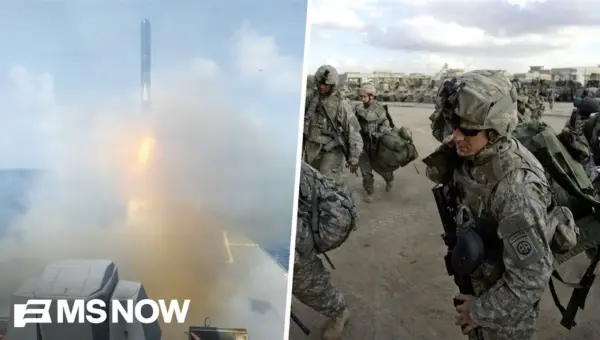
Iran Missile Strikes Injure US Troops, Raise War Concerns
Iranian missile strikes have injured U.S. service members, escalating tensions as the conflict nears one month. The attacks are raising concerns about the effectiveness of U.S. military strategy and the depletion of crucial missile stockpiles. Global oil prices have surged, impacting economies worldwide.


Americans Rally for Democracy Amidst War and Economic Woes
Thousands of Americans are participating in "No Kings" rallies nationwide, demanding accountability from leaders and drawing parallels to historical movements that spurred significant change. The protests occur amidst a controversial war with Iran, economic uncertainty, and a partial government shutdown. Organizers emphasize solidarity, joy, and the power of collective action in defending democracy.