GOP Faces Voter Fury as Trump’s Mideast Gamble Sparks Gas Price Crisis
Rising gas prices, fueled by Donald Trump's Mideast actions, are reportedly causing panic and internal dissent within the Republican party. This "mutiny" highlights the potent link between economic anxieties and electoral success.

GOP Faces Voter Fury as Trump’s Mideast Gamble Sparks Gas Price Crisis
The political landscape is often a delicate balancing act, where economic stability and foreign policy decisions can directly impact electoral fortunes. In the United States, few economic indicators stir public sentiment as powerfully as the price at the pump. Recent events suggest that rising gas prices, exacerbated by geopolitical turmoil initiated by Donald Trump in the Middle East, are creating a significant internal crisis for the Republican party, bordering on what can be described as a “mutiny” among its own ranks.
The Volatile Equation of Gas Prices and Voter Anger
While wars and rising food prices can certainly pose challenges for an incumbent party, the transcript highlights a crucial point: for a nation deeply reliant on fossil fuels, spikes in gasoline costs often translate directly into voter anger. This phenomenon appears to be at the heart of the current predicament facing Republicans. The turmoil in the Strait of Hormuz, a vital chokepoint for global oil supply, has been directly linked to actions taken by Donald Trump. Reports indicate that a blockade and potential mining of the waterway have led to attacks on tankers that proceeded through the area at Trump’s behest, a move that has clearly backfired, leading to increased oil prices and, consequently, higher gas prices for consumers.
Internal Dissent Within the GOP
The rising cost of fuel comes at a particularly inconvenient time for Republicans, who were already anticipating an uphill battle in upcoming elections. The escalating situation has reportedly triggered panic within the party, with even staunch MAGA loyalists beginning to voice public concerns. Senator Rick Scott, a prominent Republican figure, acknowledged the public desire for lower gas prices but also stated that the immediate priority should be neutralizing Iran’s nuclear capabilities and military strength. However, his assertion that high prices are likely to persist, contradicting the administration’s initial assessment of a “temporary little bitty spike,” reveals a growing disconnect and a potential fracturing of party messaging.
The transcript suggests that members of both the House and Senate have been briefed on the classified situation, and those emerging from these briefings express grave concern, indicating the problem is far more severe and prolonged than publicly acknowledged.
The War Powers Dilemma and Political Fallout
The unfolding crisis presents a complex dilemma. While a Democratic-controlled Congress could theoretically pass a War Powers Resolution to curb presidential authority in initiating military actions, the transcript argues that this would likely be ineffective against a figure like Donald Trump, who has a history of defying orders. Nevertheless, pursuing such a resolution is seen as a necessary step, potentially offering grounds for impeachment if Trump were to violate the act.
Regardless of the legislative or impeachment outcomes, the underlying message is that Republicans are in a precarious position. The analysis posits that the party is, once again, perceived as prioritizing foreign entanglements and tax cuts for the wealthy over the immediate economic needs of the working class, a strategy that has historically alienated voters.
Historical Context and the Fossil Fuel Dependency
The United States’ deep-seated addiction to fossil fuels is not a new phenomenon. For decades, the nation’s economy and infrastructure have been built around oil, making its citizens particularly sensitive to price fluctuations. This dependency has often made energy policy a contentious issue and a potent electoral weapon. Historically, presidents have faced significant public backlash when gas prices soared, often leading to shifts in political power. The current situation echoes these past patterns, but with the added layer of a foreign policy crisis directly linked to the actions of a former president, creating a unique and volatile political dynamic.
Implications, Trends, and Future Outlook
The immediate implication is a potential exacerbation of the Republican party’s electoral challenges. If voters perceive the party as out of touch with their economic struggles, particularly concerning the cost of living, this could translate into a significant wave of support for the opposition. The trend here is clear: economic anxieties, especially those directly impacting household budgets like fuel costs, remain a primary driver of voter behavior.
Looking ahead, this situation underscores the persistent vulnerability of political parties to external shocks, especially when those shocks intersect with deeply ingrained economic dependencies. The future outlook suggests that any party seeking to govern effectively will need to address not only the immediate concerns of voters but also the long-term implications of energy policy and foreign entanglements. The current crisis may serve as a wake-up call, forcing a re-evaluation of strategies and priorities within the Republican party, or it could deepen existing divisions, further complicating their path to electoral success.
Why This Matters
This situation is critical because it highlights the direct and tangible impact of foreign policy decisions on the daily lives of citizens and, consequently, on the political fortunes of parties. The transcript’s central argument—that rising gas prices are a potent electoral threat, particularly for Republicans entangled in a foreign conflict initiated by Donald Trump—is a stark reminder of the interconnectedness of global events and domestic politics. It underscores how economic anxieties can become a powerful motivator for voters, potentially reshaping electoral outcomes. Furthermore, it raises questions about the Republican party’s ability to navigate these challenges, particularly its perceived tendency to prioritize certain agendas over the immediate economic well-being of its constituents. The outcome of this “mutiny” and the public’s reaction to the gas price crisis could have significant ramifications for the upcoming elections and the broader political direction of the country.
Source: Trump Facing Republican Mutiny Over Gas Prices (YouTube)

Related Articles

Trump’s War Strategy Faces Skepticism Amidst Shifting Goals
President Trump's strategy in the ongoing Middle East conflict is facing increasing skepticism, even from his own base. While military actions have seen success, strategic goals are unclear and diverging from allies like Israel. The prolonged war and shifting public perception are creating a sense of uncertainty and doubt.

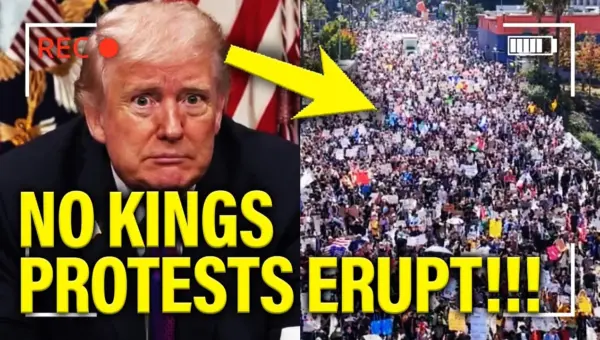
Protests Challenge Trump’s Grip as ‘No Kings’ Movement Grows
Massive 'No Kings' protests swept the nation, challenging the Trump administration and advocating for democratic values. Organizers highlighted growing support and a shift in protest tactics, positioning the movement as a force for positive change.

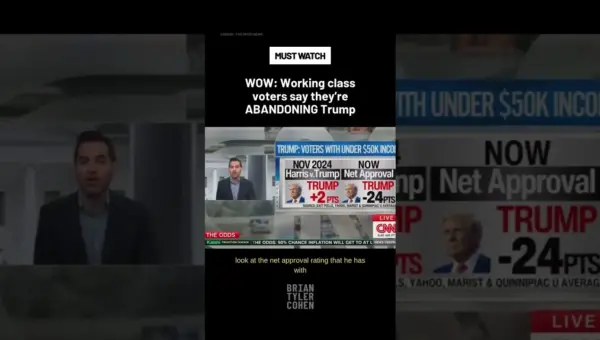
Working Class Voters Flee Trump’s Ship: A 2024 Election Reckoning?
Working-class voters, a crucial base for Donald Trump, are showing a significant decline in approval, according to recent polling. A 26-point drop in net approval among those earning under $50,000 indicates a potential shift away from Trump's coalition. This could have major implications for his future electoral prospects.