AI Job Displacement: Hype vs. Reality
Despite widespread fears of AI-driven mass unemployment, recent data and studies suggest that AI is not significantly displacing jobs. Instead, AI tools are augmenting human productivity, with evidence pointing to limitations in AI's ability to autonomously perform complex tasks and potential inefficiencies when used without proper oversight.

AI Job Displacement: Hype vs. Reality
The narrative surrounding Artificial Intelligence (AI) and its potential to cause mass unemployment has reached a fever pitch, particularly since the widespread adoption of advanced language models like ChatGPT. However, a closer examination of the data suggests that the fear of AI-driven job losses may be significantly overblown, with evidence pointing more towards AI as a productivity tool rather than a wholesale replacement for human workers.
Layoff Data Paints a Different Picture
In 2025, U.S. layoffs attributed to AI accounted for approximately 55,000 of over 1 million total job losses, representing only 5% of the overall figure. This statistic, according to the consulting firm Challenger, highlights that while AI may be cited as a reason for layoffs, it is far from the primary driver of unemployment. Experts suggest that companies may attribute job cuts to AI for strategic reasons, such as making layoffs appear more palatable to stock market analysts, rather than acknowledging underlying issues like overhiring.
The Software Engineering Conundrum
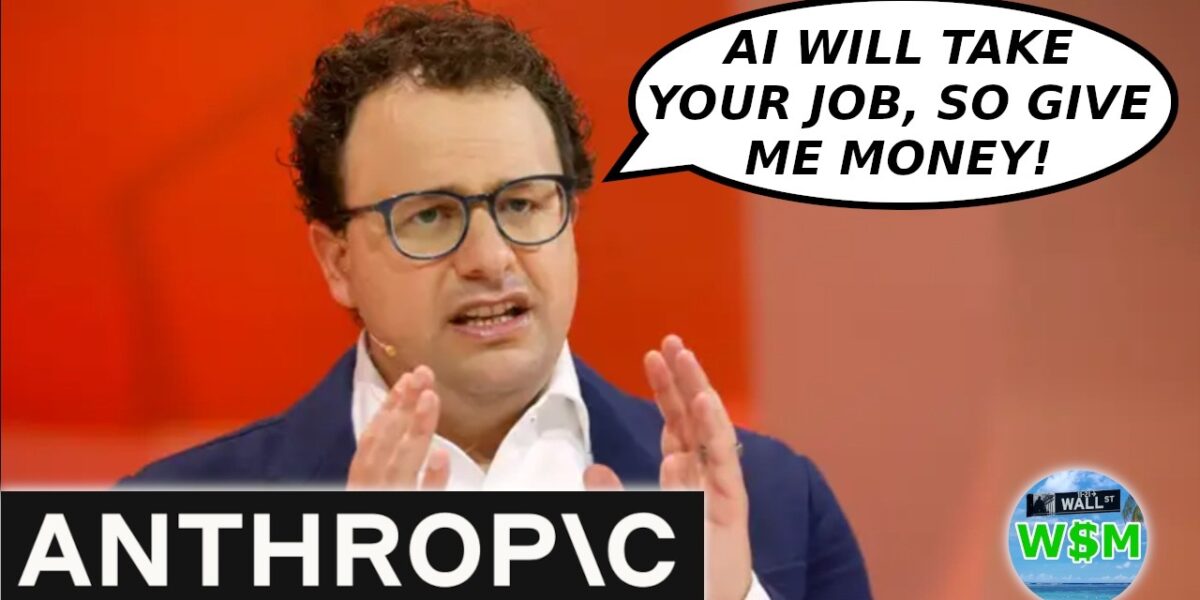
Software engineering has frequently been cited as a sector highly vulnerable to AI displacement. Advanced AI models, trained on vast datasets from platforms like Stack Overflow, can generate code rapidly. Anthropic CEO Dario Amodei, in early 2026, predicted that AI could be performing most, if not all, tasks for software engineers within 6 to 12 months, a sentiment echoed in earlier predictions from March 2025 where he anticipated AI writing 90% of code within 3-6 months and essentially all code within 12 months. Yet, these predictions have consistently failed to materialize.
While AI coding tools are widely adopted—with Google reporting that 90% of technology workers use some form of LLM—this adoption does not equate to job replacement. Software engineers utilize these tools, such as GitHub Copilot or Cursor, to augment their workflow, much like using Stack Overflow in the past. These tools can help find code snippets or automate repetitive tasks, offering efficiency gains. However, the core responsibilities of a software engineer extend far beyond simple code generation. Collaboration with product managers, debugging, system maintenance, code reviews, and ensuring reliability at scale remain critical human-led functions.
‘Vibe Coding’ and Its Limitations
The concept of ‘vibe coding,’ where users attempt to create entire applications using natural language prompts for AI, has shown significant limitations. A prominent example is Moltbook, a social media platform for AI agents, which was reportedly built entirely with AI. Despite its novel concept, the platform suffered from severe security vulnerabilities, leading to the theft of thousands of email addresses and API keys. This incident underscores that while AI can generate code, it often produces software riddled with security flaws and other issues, making it unsuitable for real-world corporate deployment without extensive human oversight and correction.
Productivity Paradox: AI Slows Down Engineers?
A study conducted by the nonprofit Model Evaluation and Threat Research (METR) in early 2025 explored the impact of AI coding tools on software engineer productivity. The experiment involved 16 software engineers with approximately five years of experience. Half were permitted to use AI coding tools (Cursor Pro with Claude 3.7), while the other half worked without them. Counterintuitively, engineers who used AI tools estimated their task completion time to be longer than those who did not. In practice, the non-AI group completed tasks in an average of 1 hour and 40 minutes, while the AI-assisted group took over 2 hours. This suggests that the perceived speed increase from AI tools may be offset by the time spent debugging and correcting AI-generated code, potentially leading to a net decrease in efficiency.
Corporate Hype and Misleading Claims
Several high-profile technology companies have made ambitious claims about their AI integration, which often do not align with observable outcomes. Salesforce CEO Marc Benioff claimed in June 2025 that AI was handling 30-50% of internal work, yet subsequent layoffs affected only about 3% of the workforce, and many customer support roles were reassigned rather than eliminated. Furthermore, reports indicated Salesforce had lost confidence in LLMs for customer service due to poor performance. Similarly, Microsoft CEO Satya Nadella stated in May 2025 that 20-30% of code was AI-generated, coinciding with increased employee numbers and persistent issues with Windows 11.
BlackRock CEO Larry Fink has also championed AI’s transformative impact, suggesting the firm could not function at its current scale of managing $14 trillion without it. However, BlackRock managed $10 trillion in assets before generative AI became widely accessible in 2022, indicating that its operational capacity was not solely dependent on this technology. Moreover, the company has continued to hire more employees, contradicting the notion of AI-driven workforce reduction.
The Remote Labor Index: AI’s Low Success Rate
A study by the Center for AI Safety, funded by Scale AI, analyzed AI’s ability to automate remote work tasks. The ‘Remote Labor Index’ tested various AI models on freelancing jobs like building web pages or creating 3D renderings, which typically cost around $632. The results were stark: even the best-performing AI agent, Manis, achieved only a 2.5% success rate in delivering acceptable outputs. Other models performed even worse, with significant rates of corrupted files, incomplete projects, or outputs of unacceptable quality. Subsequent tests on newer models like Claude Opus 4.5 showed only a marginal improvement to a 3.75% success rate. This indicates that current AI capabilities fall far short of autonomously completing complex real-world tasks.
Debunking AI Scaremongering
The narrative of imminent mass job loss due to AI has been fueled by viral social media posts and media coverage. A notable instance involved Matt Schumer, CEO of AI startup HyperWrite, who claimed in February 2026 that AI had reached an inflection point. His assertions, widely amplified by media outlets, suggested his company had developed a superior open-source LLM. However, investigations revealed that his model was merely a wrapper around Anthropic’s Claude API, designed to mask its origin. This incident highlights the gullibility of some media outlets in amplifying unverified claims from AI company leaders, particularly when these claims serve to generate hype and potentially boost their own ventures.
What Investors Should Know
The current discourse around AI and job displacement is characterized by significant hype, often driven by AI company executives seeking to attract investment and attention. While AI is undoubtedly a powerful tool that can enhance productivity and automate certain tasks, the evidence suggests it is not yet capable of replacing large numbers of human workers across most sectors. Investors should approach claims of imminent AI-driven unemployment with skepticism, focusing instead on companies that demonstrate tangible, practical applications of AI that lead to genuine efficiency gains or new revenue streams, rather than speculative job-replacement scenarios.
Source: The A.I. Job Loss Hoax (YouTube)

Related Articles


AI Data Centers Spark Rural Uprising
Rural American towns are fighting back against a surge of AI data centers. These massive facilities threaten water supplies, farmland, and local infrastructure. Residents and lawmakers are pushing for new rules to control their growth and ensure companies bear more of the costs.

AI Misdiagnoses Medical Cases 80% of the Time
A recent U.S. study reveals that AI chatbots are misdiagnosing medical conditions in 80% of cases, highlighting significant risks in relying on artificial intelligence for health advice. Personal stories shared by individuals demonstrate how online self-diagnoses led to incorrect treatments and prolonged suffering, underscoring the irreplaceable value of human medical professionals.


Magnificent 7 Stocks Surge Amid Market Uncertainty
Tech giants, the 'Magnificent 7,' are surging despite market fears, showing technical breakouts and strong growth potential. Amazon invests heavily for long-term gains, while Google deepens its AI capabilities. Meta refocuses on core strengths, and Apple's services business continues its impressive expansion.