Trump’s War Rhetoric Sparks Fears Amidst Escalating Mideast Conflict
An analysis of Donald Trump's late-night posts amid the Iran conflict reveals sharp criticism of his rhetoric, suggesting it fuels regional instability and undermines U.S. standing. The piece questions strategic decisions and their economic fallout.

Trump’s War Rhetoric Sparks Fears Amidst Escalating Mideast Conflict
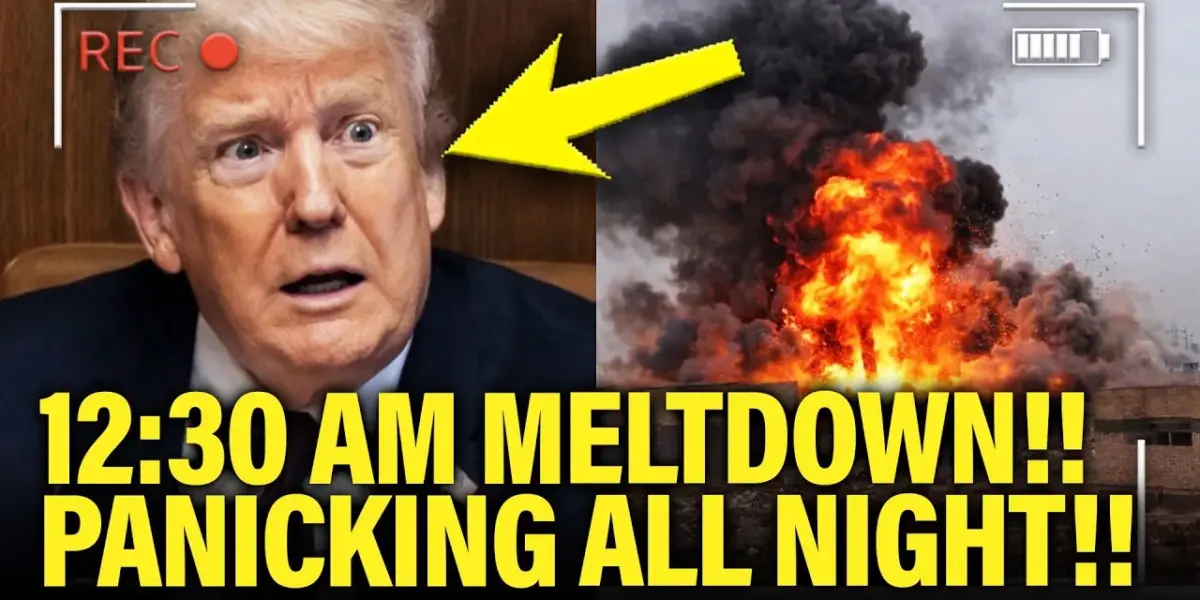
In the early hours of March 13, 2026, a series of social media posts from Donald Trump ignited a firestorm of criticism and concern, coinciding with escalating military actions in Iran. The posts, published at 12:33 a.m., painted a picture of decisive American military superiority, yet were widely interpreted by critics as a sign of deep-seated anxiety and a desperate attempt to control a narrative increasingly slipping from his grasp.
A Midnight Manifesto of Military Might
Trump’s posts declared a total military and economic victory over Iran, stating, “We are totally destroying the terrorist regime of Iran militarily, economically, and otherwise.” He asserted that Iran’s military capabilities were decimated, its leaders eliminated, and that the United States possessed “unparalleled firepower, unlimited ammunition, and plenty of time.” He further stated, “Watch what happens to these deranged scumbags today. They’ve been killing innocent people all over the world for 47 years. And now I, as the 47th president of the United States of America, am killing them. What a great honor it is to do so.”
These pronouncements, particularly the late-night timing and the emphatic declaration of honor in killing, were immediately decried by critics as erratic and indicative of a “psychotic midnight meltdown.” The rhetoric was seen not only as inflammatory but also as a potential tool for Iranian propaganda, aimed at rallying domestic support against a perceived external aggressor.
Strategic Miscalculations and Regional Instability
The analysis presented in the transcript challenges Trump’s narrative of success, suggesting a significant strategic miscalculation in the conflict with Iran. The Strait of Hormuz, a critical chokepoint for global oil transport, has become a focal point of tension. Despite Trump’s encouragement for ships to pass through, the transcript highlights that Iran has successfully targeted and hit numerous vessels, raising concerns about its ability to control a significant portion of the world’s oil supply and achieve a strategic outcome the U.S. has long sought to prevent.
Furthermore, the narrative suggests that the conflict has not weakened Iran but rather strengthened it, leading to a loss of confidence among traditional U.S. allies in the Middle East. These Arab nations, once reliant on U.S. security guarantees, are reportedly seeking assurances elsewhere, potentially from Iran itself. This shift is seen as a direct consequence of perceived U.S. weakness and unreliability under Trump’s leadership.
Historical Context and Allegations of Exploitation
The transcript draws parallels between Trump’s current actions and past behaviors, including allegations of using his presidency for personal financial gain. It references claims that Arab nations, seeking favor, have funneled money into Trump’s businesses. The author suggests that these nations expected tangible security benefits in return, not the erratic and seemingly self-serving actions attributed to Trump.
The piece also touches upon Trump’s personal history, including his draft deferments during the Vietnam War and a controversial social media post featuring a photo of himself in a military-style outfit alongside images of his parents. This is framed as an appropriation of military valor, particularly given his own service record. The timing of such posts, amidst ongoing conflict and casualties, is viewed as insensitive and self-aggrandizing.
Economic and Diplomatic Fallout
The escalating conflict has had tangible economic repercussions, not only for Iran but also for its adversaries and regional partners. The transcript points to reports indicating the U.S. has expended years’ worth of critical munitions, raising concerns about its defense capabilities. Meanwhile, Iran’s relatively inexpensive drones and missiles, compared to U.S. Tomahawks, present a cost-effective challenge.
The situation in the Middle East is further complicated by the involvement of other global powers. The transcript notes Russia and China’s support for Iran and criticizes the lifting of sanctions on Russia, suggesting it enables Russia to fund its war efforts, including support for Iran, which in turn attacks U.S. interests and allies.
A Divided Information Landscape
The analysis highlights the challenges in discerning accurate information amidst a polarized media environment. The transcript contrasts Trump’s pronouncements with reports from outlets like The New York Times and CNN, while also criticizing state-affiliated media for what it deems propaganda. The difficulty in obtaining clear and truthful information from the Trump administration is a recurring theme, contributing to public confusion and mistrust.
The World Cup Controversy
Adding another layer to the complex geopolitical landscape, the transcript references a controversial statement by Trump regarding the Iranian national soccer team’s participation in the World Cup, implying a threat to their safety. This is juxtaposed with a subsequent post from Trump expressing enthusiasm for the U.S. hosting the FIFA World Cup. Critics argue that such actions, particularly threatening a sports team, can backfire by galvanizing support for the targeted regime and alienating potential allies.
Fundraising Amidst Conflict
Perhaps one of the most contentious points raised is the allegation that Trump is actively fundraising off the ongoing conflict. A fundraising email is cited, offering “private national security briefings” to supporters who contribute financially. The use of a photograph from a dignified transfer of fallen soldiers, where Trump wore a campaign hat, is described as a desecration of a solemn event and a cynical exploitation of national tragedy for political and financial gain.
Future Outlook and Unanswered Questions
The transcript concludes by emphasizing the ongoing threat posed by Iran, including potential strikes in the Red Sea and continued efforts to disrupt global shipping. The author expresses concern over the administration’s ability to manage the crisis effectively, pointing to what they perceive as a pattern of strategic blunders, economic self-harm, and a disregard for diplomatic norms.
The overarching sentiment is one of deep concern regarding the direction of U.S. foreign policy, the escalating regional conflict, and the leadership’s capacity to navigate these perilous waters. The analysis suggests that instead of projecting strength, the current approach may be inadvertently fostering instability and empowering adversaries, with potentially devastating long-term consequences for the United States and the global order.
Why This Matters
This analysis delves into the critical intersection of political rhetoric, international conflict, and domestic stability. The concerns raised regarding President Trump’s public statements and actions in the context of the Iran conflict have significant implications for geopolitical stability, U.S. foreign policy, and the global economy. The potential for miscalculation in a volatile region, the erosion of trust among allies, and the economic disruption caused by the conflict are all issues that demand careful consideration. Furthermore, the allegations of exploiting national security and conflict for personal political and financial gain raise profound questions about accountability and the ethical conduct of leadership during times of crisis.
Source: Trump has 12:30 AM MELTDOWN as WAR Scares HIM TO DEATH!!! (YouTube)

Related Articles
U.S. Iran Tensions Rise Amid Shifting Alliances
Rising tensions between the U.S. and Iran are creating a volatile geopolitical situation. With conflicting signals on de-escalation and potential shifts in alliances like NATO and U.S.-Israel relations, the path forward remains uncertain. The global economy and regional stability hang in the balance.

Iran Targets US With Cyberattacks, Escalating Digital Warfare
Iran is increasingly using cyberattacks to challenge the U.S., as seen in a recent hack of the FBI director's account. Experts say this is a strategic shift due to Iran's limitations in conventional warfare. The U.S. needs to strengthen its digital defenses, focusing on encryption and cloud computing, rather than solely relying on traditional security measures.

Protesters Challenge Presidential Power, Ignite Debate
Millions are protesting nationwide under the "No Kings" banner, challenging presidential authority and policies they deem unconstitutional. Organizers emphasize First Amendment rights while debating foreign policy, immigration, and the balance of power.