Iran, Russia Forge Drone Alliance Amid Regional Escalation
Iran and Russia are escalating their collaboration on kamikaze drones, leading to heightened tensions in the Middle East. A recent swarm attack on a base in Erbil, Iraq, housing US and UK troops, highlights the dangerous synergy between the two nations' military advancements. This development comes amidst increasingly aggressive rhetoric from both Iranian leadership and former US President Donald Trump.

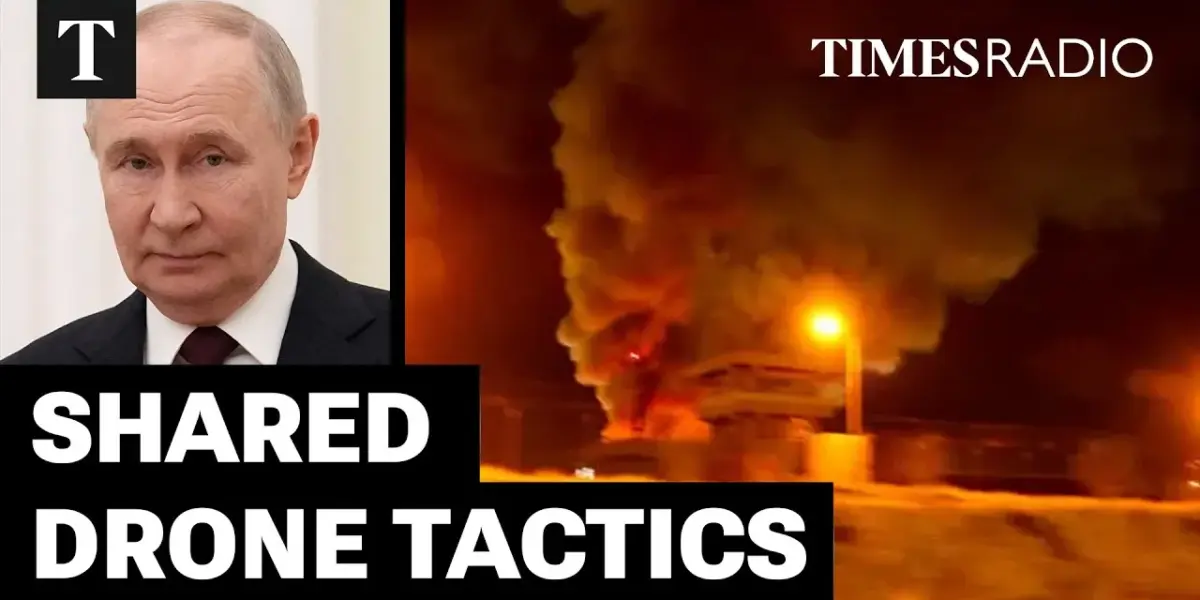
Iran and Russia’s Drone Collaboration Fuels Middle East Tensions
In a significant development highlighting the evolving landscape of modern warfare, Iran and Russia have intensified their cooperation on the development and deployment of “kamikaze” or suicide drones. These explosive-laden unmanned aerial vehicles, which blur the lines between missiles and aircraft, have become a focal point of recent military actions, particularly in the Ukraine conflict, and are now contributing to a surge in regional instability. This burgeoning alliance comes as Iran escalates its rhetoric against Western military presence in the Middle East, drawing sharp condemnation and counter-threats from former US President Donald Trump.
Erbil Base Under Attack: A Swarm of Drones and Missiles
The implications of this collaboration were starkly illustrated by a recent swarm attack on a joint base near Erbil airport in the Kurdish region of Iraq. The base, which hosts UK and US troops alongside other international forces, including an Italian presence involved in training local security forces, came under fire from approximately 20 missiles and kamikaze drones. While the US and UK forces managed to intercept some of the incoming projectiles, a number breached defenses, causing damage and resulting in injuries to American troops. The attack targeted both the US-UK base and a nearby Italian facility, underscoring Iran’s stated intention to strike Western targets throughout the region.
Richard Spencer, The Times’ foreign correspondent, reporting from Erbil, provided context on the strategic importance of the Kurdistan region. “Kurdistan, which is this semi-autonomous region of northern Iraq, has been basically a sort of western ally since the first Gulf War of 1991 when we helped create it by establishing a free trade a no-fly zone over the region to stop Saddam Hussein attacking it,” Spencer explained. He noted that the Erbil base, while not currently used as an airbase with active US or British jets, remains a key location for Western forces and training initiatives.
Russia’s “Hidden Hand” in Iranian Drone Warfare
British defense officials have explicitly accused Russia of having a “hidden hand” in the Iranian strikes, pointing to tactics observed in the Ukraine conflict being deployed in the Middle East. The development of drone technology has been a defining feature of the Ukraine war, with a shift towards the mass use of smaller, more agile drones. The Iranian Shahed drones, described as “effectively suicide drones,” exemplify this evolution. Russia’s utilization of these Iranian-supplied drones in Ukraine, coupled with their own development of drone warfare, suggests a deep and concerning level of technological and tactical exchange.
“One of the interesting things about the Ukraine war was… the development of drone technology. I mean the mass use of consumer drones and small drones rather than the… American unmanned airplanes that could fly at high altitude and fire heavy duty missiles. The Iranians have been developing these Shahed drones that are very different from that. They’re much smaller. They’re effectively suicide drones. You just load them with explosives and fly them at your target. So they’re halfway between a missile and an aircraft, if you like. And Russia has used these in the Ukraine conflict provided by Iran… And it’s clear that there’s been cooperation on both sides between the Iranians and the Russians both in the manufacturer of these drones and in the deployment of them.” – Richard Spencer, The Times Foreign Correspondent
Spencer further elaborated on this synergy: “It’s clear that the Russians have helped the Iranians understand how to use their own drones better because, you know, in war practice makes perfect unfortunately. And seeing and learning from the Russian experience in Ukraine has clearly helped the Iranians deploy them better. And of course, they also contain, as we now know, having inspected a couple of these, they contain Russian technology.” This cross-pollination of military technology and strategy between Iran and Russia poses a significant challenge to international security.
Escalating Rhetoric: Iran’s Supreme Leader and Donald Trump
The military actions are mirrored by a sharp increase in bellicose rhetoric from both sides. Iran’s new Supreme Leader, Ayatollah Seyed Ali Khamenei, has shown no inclination to de-escalate, threatening to “expand the war” and warning countries bordering Iran to clarify their positions. He specifically invoked the Strait of Hormuz, a critical chokepoint for global oil supplies, stating, “Certainly the lever of blocking the Strait of Hormuz must continue to be used.” Khamenei also issued a direct challenge to nations hosting Western military bases, urging them to “shut down bases as soon as possible” and dismissing US security assurances as “nothing more than a lie.”
In parallel, former President Donald Trump has amplified his confrontational stance against Iran. Posting on his Truth Social platform, Trump issued a stark warning: “Watch what happens to these deranged scumbags today.” This aggressive posturing, characterized by Spencer as “verbiage of the schoolyard bully,” appears aimed at galvanizing his political base and projecting an image of strength, though its strategic implications remain debated.
Broader Geopolitical and Economic Ramifications
The escalating tensions have profound implications for regional stability and the global economy. The Gulf states, long reliant on a Western security umbrella, face increased uncertainty. The threat to the Strait of Hormuz, which accounts for roughly 15% of global oil supplies, could trigger significant economic shocks. Reports indicate that the UK economy, even before the latest escalation, experienced a lack of growth in January, highlighting the vulnerability of global markets to such disruptions.
Spencer commented on the gravity of Khamenei’s threats: “That’s a very severe serious threat by Khamenei, and one the Gulf states are taking very seriously.” He also weighed in on Trump’s rhetoric, suggesting it aligns with a faction in Washington advocating for a swift and decisive end to the conflict, even if it involves intensified military action. “You could say this suggests he’s choosing the latter option at the moment,” Spencer remarked, referring to the possibility of pursuing regime change in Iran.
What’s Next?
As diplomatic channels strain and military posturing intensifies, the coming weeks will be critical. The effectiveness of Western interception capabilities against drone and missile swarms will be closely watched. Furthermore, the global economic impact, particularly on oil prices and trade routes, will likely shape international responses. The ongoing cooperation between Iran and Russia on drone technology also necessitates a coordinated counter-strategy from affected nations to mitigate future threats.
Source: Iran And Russia Co-Operate On Kamikaze Drones (YouTube)

Related Articles

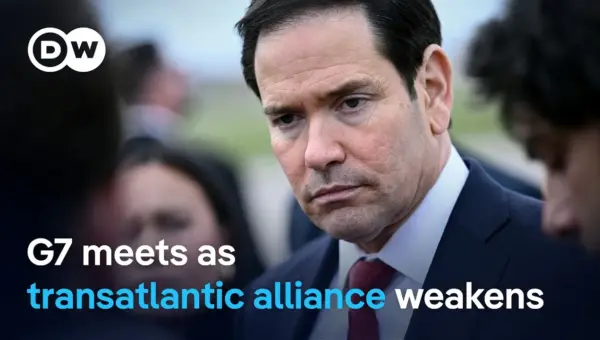
G7 Allies Clash Over Iran War Strategy, Urge Focus on Russia
G7 foreign ministers met in Paris, revealing deep divisions over the U.S. war with Iran. European allies urged the U.S. to pressure Russia, linking its actions to the conflict and fearing support for Ukraine will wane.
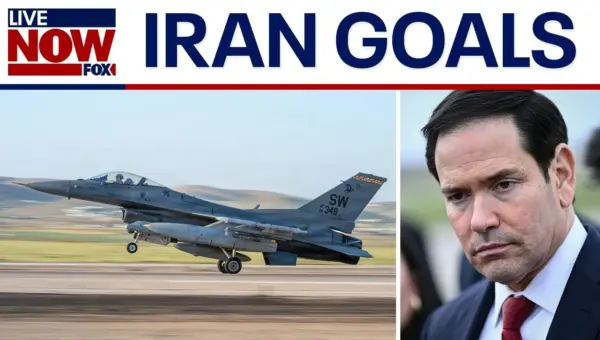
Rubio: US Can Achieve Iran War Goals Without Troops
Senator Marco Rubio outlined a strategy to counter Iran without deploying U.S. ground troops, focusing on weakening the regime and enhancing maritime security. He also criticized Cuba's economic system and expressed concerns about West Bank violence.

Israel Escalates Iran Strikes, Warns of Wider War
Israel has launched significant strikes inside Iran following continued missile fire, warning of further escalation. The conflict risks wider regional instability and economic disruption, especially concerning the Strait of Hormuz.