Zelensky Urges US Pressure on Russia Amid Peace Talk Developments
Ukrainian President Volodymyr Zelensky urged the United States to apply greater pressure on Russia, not on Kyiv, as a key component for achieving peace. He also stressed the critical need for robust security guarantees. Developments include a meeting between US and Russian delegations in Florida and Germany's delivery of Patriot missiles to Ukraine.

Zelensky Calls for Increased US Pressure on Russia in Peace Talks
Ukrainian President Volodymyr Zelensky has publicly stated that the United States should increase pressure on Russia, rather than on Ukraine, to facilitate an end to the ongoing conflict. Speaking in a recent address, Zelensky emphasized the critical need for security guarantees to form the bedrock of any future peace agreement. Politico reports that while Ukraine remains committed to negotiations, Zelensky highlighted the significant influence of former US President Donald Trump in the peace process. However, he reiterated that Washington’s focus should be on pressuring Moscow.
“We don’t trust Russia, but I think and I trust that Americans really want to finish with this war. I hope that they will help us, but we need more pressure on Russia, not on me,” Zelensky stated.
The prospect of security guarantees was previously discussed during talks in December, where the US indicated its readiness to provide such assurances. Yet, Zelensky pointed out that no concrete details regarding these guarantees have been forthcoming. He specifically addressed Donald Trump’s inquiry about whether these security guarantees could surpass NATO’s framework, to which Zelensky responded that it ultimately depends on the US administration and requires parliamentary approval, including from the US Congress, to ensure their long-term validity.
Developments in International Diplomacy and Military Aid
Recent statements from Donald Trump suggested that Ukrainian President Zelensky was hindering peace agreement progress, positing that Ukraine was losing its bargaining power while Russia was ostensibly open to dialogue. Concurrently, Reuters reported on discussions within the US government regarding the potential easing of oil sanctions against Russia as a measure to address global fuel shortages. Trump later indicated that some oil sanctions on Russia could be permanently lifted.
In a significant development for Ukraine’s defense capabilities, the nation received a shipment of PAC-3 missiles for its Patriot air defense systems from Germany. According to Ukraine’s presidential office, this delivery, comprising approximately 35 missiles, is the result of collaborative efforts among several partner countries. Zelensky acknowledged the importance of such aid, stating, “This is one of the air defense packages that we occasionally arrange with our partners. We would have liked more but it turned out as it did.” The arrival of these missiles is deemed critically important for safeguarding Ukrainian airspace.
The Ukraine Defense Contact Group meeting yielded one of the largest military aid packages for Ukraine, with allies prioritizing the enhancement of its air defense systems. Ukraine’s Ambassador to the US, Oksana Markarova, is actively working to reform the Contact Group into a more systematic mechanism for sustained, long-term arms deliveries.
Hungary’s Role and EU Financial Support Challenges
Ukrainian President Zelensky has called for an alternative plan for financial support from the European Union, citing the actions of Hungarian Prime Minister Viktor Orbán as a form of “blackmail” that plays into Russia’s interests. Zelensky urged European partners to develop a backup funding plan to avoid dependency on Budapest’s position, emphasizing that delays in assistance critically impact Ukraine’s economy and defense sector.
“We and Europe. We all need this plan B. I think so as I think that if our European partners and real friends, they know that we defend not only Ukrainian values, we are defending,” Zelensky remarked.
Zelensky openly criticized Orbán for obstructing sanctions against Russia and blocking financial aid to Kyiv, stating that the Hungarian leader’s actions align with the Kremlin’s objectives. Disagreements also extend to the Druzhba oil pipeline, where Hungary and Slovakia are demanding urgent repairs, accusing Kyiv of delays. Ukraine maintains that the pipeline damage is a consequence of Russian attacks.
Orbán’s previous veto of a critical €50 billion EU aid package jeopardized Ukraine’s financial stability. The situation is further complicated by Slovak Prime Minister Robert Fico, who has shown a readiness to follow Orbán’s lead in blocking initiatives favorable to Kyiv. Despite Hungary’s stance, the European Commission is reportedly exploring legal avenues to bypass the veto and ensure Ukraine receives the necessary funds.
US-Russia Delegations Meet Amidst Broader Geopolitical Tensions
A meeting between delegations from the United States and Russia convened in Florida on Wednesday. The discussions, which included US Special Envoy Richard Morning, Donald Trump’s son-in-law Jared Kushner, and White House advisor George Grinbau, focused on various topics, with both sides agreeing to maintain communication. The Russian delegation was led by Dmitry Polyanskiy, Deputy Permanent Representative of Russia to the UN.
Richard Morning characterized the meeting as productive, though details were not disclosed. Dmitry Polyanskiy echoed this sentiment, posting on social media and thanking his US counterparts for the meeting. This follows a similar encounter in Florida at the end of January. While another round of trilateral negotiations was initially planned for this week, it was postponed at the US’s request. Ukraine has consistently affirmed its readiness for negotiations that are realistic and conducive to ending the war.
Iran’s New Leader Reportedly Injured in Strikes
In unrelated geopolitical news, Iran has confirmed that its new Supreme Leader, Mohammad Mokhber, sustained injuries during airstrikes that also resulted in the death of his father, Ayatollah Ali Khamenei. Sky News reported that this confirmation followed speculation about Mokhber’s reduced public appearances. Western media had previously indicated that Mokhber might have been wounded, potentially suffering leg injuries during an attack on February 28th, though the exact circumstances remain unconfirmed. Reports suggest he is conscious but in hiding.
His injury is believed to have occurred during a joint US-Israeli strike on a Tehran residence, which killed his father, his mother, wife, son, and several high-ranking defense officials. The selection of Mokhber as the new Supreme Leader reportedly occurred in an accelerated manner amidst ongoing regional tensions. He is described as an ultra-conservative who advocates for increased support to regional militant groups and a stringent suppression of domestic protests.
Italian Base Struck in Iraq; Meloni Shifts Stance on Strikes
On March 12th, a drone struck an Italian military base in Erbil, northern Iraq. The Italian Ministry of Defense clarified that it was a drone, not a missile, that destroyed a military vehicle. While the origin of the drone is unknown, ministry sources suggest the strike might have been accidental, possibly due to the drone losing altitude. Fortunately, no Italian personnel were casualties or injured.
Italian Prime Minister Giorgia Meloni has seemingly altered her stance regarding US and Israeli operations in Iran. Initially refraining from judgment, she later stated in the Italian Parliament that the operation was outside the bounds of international law. Politico attributes this shift to domestic pressure and the unpopularity of the strikes within Italy, particularly with an upcoming referendum on judicial reform seen as a test of her government’s support.
Looking Ahead
The coming weeks will be crucial in observing whether the US will heed President Zelensky’s call for increased pressure on Russia and how diplomatic efforts, including those involving former President Trump, will evolve. Attention will also remain on the European Union’s ability to navigate internal disagreements, particularly Hungary’s stance, to ensure continued financial support for Ukraine. Furthermore, the confirmation of the new Iranian leader’s injury and the ongoing regional instability warrant close monitoring.
Source: ⚡️Putin and Trump Delegations Spark Outrage in Ukraine — What Happened at the Peace Talks (YouTube)

Related Articles
Ukraine Strikes Russian Oil Refinery, Eyes Iran Threat
Ukrainian forces struck a key Russian oil refinery, disrupting Moscow's war capabilities. Meanwhile, Finland's president urged continued U.S. support for Ukraine, as Kyiv shares its air defense expertise globally amid growing geopolitical complexities involving Iran and potential sanctions against Hungary.

Polls Spell Doom: Republicans Face Voter Backlash
New polling data reveals a sharp decline in public confidence regarding the economic impact of Republican policies, particularly under Donald Trump. A significant majority now feel financially worse off, a trend that is especially pronounced among independent voters. This economic discontent poses a major challenge for the Republican party heading into future elections.

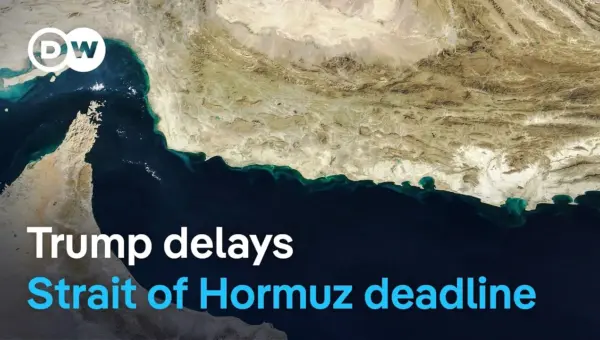
Trump Delays Iran Strike Deadline Amidst Shifting Diplomacy
President Donald Trump has extended his deadline for potential strikes on Iranian energy plants to April 6th, amid reports of U.S.-Iran diplomatic talks mediated by Pakistan. This move comes as Israel continues its strikes on Iran and the U.S. deploys additional military assets to the region. Analysts point to mixed signals, economic pressures, and strategic miscalculations as key factors shaping the evolving situation.