Trump’s Iran War Sparks Chaos, Risks Global Recession
President Trump's initiation of a war in Iran, marked by unclear objectives and escalating oil prices, is creating global instability and domestic political rifts. The conflict's economic repercussions, including a potential recession and divisions within the MAGA movement, threaten Republican electoral prospects, while diplomatic efforts for Ukraine face significant hurdles.

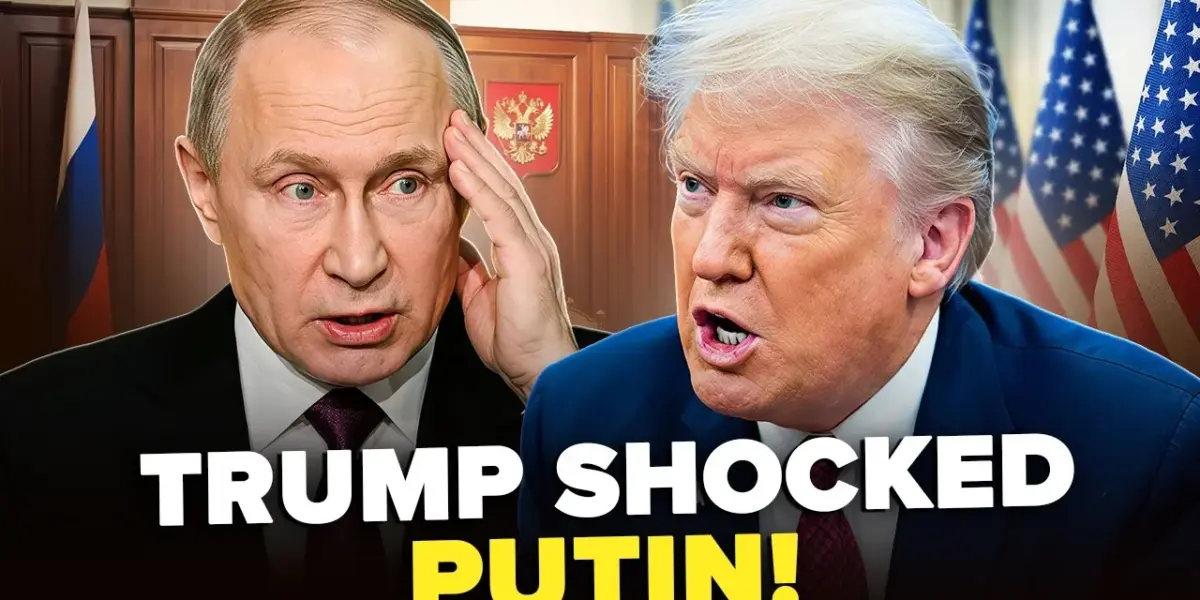
Unclear Objectives Fuel War Concerns Amidst Rising Oil Prices
The ongoing conflict in Iran, initiated by the United States, is shrouded in ambiguity regarding its objectives, a communication strategy drawing parallels to Russian President Vladimir Putin’s approach. This lack of a clear, unified message from President Trump has fueled speculation and raised significant concerns among analysts and the public alike. Unlike previous presidential addresses, explanations for the war have been piecemeal, delivered through social media posts and brief phone calls to reporters, rather than a comprehensive address to the nation. This has left many Americans questioning the fundamental reasons behind the nation’s involvement in a potentially protracted and costly conflict.
The absence of clearly defined war aims presents a dual-edged sword. On one hand, it allows for a potential declaration of unilateral victory, regardless of the actual achievements, by simply stating the objective was never explicitly defined. On the other hand, it leaves the exit strategy undefined, potentially prolonging the conflict and exacerbating its consequences. Experts note that without a clear end goal, such as regime change, the duration and ultimate resolution of the war remain uncertain.
Iran Conflict Could Trigger Refugee Crisis, Echoes of Libya
The scale of the conflict in Iran, a nation of 100 million people, poses a significant threat of a widespread refugee crisis, with neighboring countries and the United States unprepared to absorb the potential influx. The targeting of energy infrastructure, including oil depots, by Israeli forces leading the charge, could destabilize the region further. Analysts draw parallels to the aftermath of NATO’s no-fly zone over Libya in 2012, which, following the death of Muammar Gaddafi, devolved into prolonged sectarian violence, leading to the Benghazi attack and ongoing instability. A similar fragmentation and descent into sectarian violence in Iran could have devastating global repercussions, leaving the international community ill-equipped to manage the fallout.
Oil Price Surge Threatens Recession, Strains MAGA Support
The conflict’s impact on global oil prices is a major concern, with prices per barrel exceeding $100 for the first time in decades, and projections suggesting a potential rise to $150. Such a surge is widely seen as a trigger for a global recession. While the United States has not experienced the immediate 50% price hikes seen in Europe, gradual increases are creating economic pressure. The Trump administration’s assurances of temporary price surges are being met with skepticism, particularly given the strategic importance of the Strait of Hormuz, through which 45% of global oil is transported. Disruptions in this vital chokepoint have already impacted oil refining operations in countries like Qatar.
The escalating oil prices and the war itself are also creating divisions within the MAGA movement. Many supporters who were promised peace by Trump and his surrogates during the 2024 election are now questioning their allegiance. This anti-war sentiment, particularly among independent voters, poses a significant threat to Republican control of Congress in the upcoming November elections. Political prognosticators are increasingly favoring Democratic gains in both the House and Senate, potentially diminishing Trump’s legislative leverage.
Russia Benefits as US Munitions Stockpiles Diminish
The ongoing conflict in Iran appears to be inadvertently benefiting Russia, as the United States expends significant military resources. China and other adversaries are closely monitoring the war, assessing the effectiveness of new American munitions and technologies. Russia, having depleted its own stockpiles in Ukraine, is now observing the U.S. replenish its arsenal, a process that requires substantial financial investment. Concerns are mounting within the Pentagon and Congress over the rapid depletion of critical munitions, such as Patriot batteries and Tomahawk missiles, necessitating billions of dollars in future funding for replacements.
Diplomatic Stalemate: Iran War Hinders Ukraine Peace Talks
The prolonged conflict in Iran is diminishing the urgency for Russia to engage in serious negotiations to end the war in Ukraine. The credibility of key diplomatic figures involved in past negotiations, such as Steve Witkov, has been compromised by perceived deceptions during the lead-up to the Iran conflict. This erosion of trust could impede future diplomatic efforts, not only in the Middle East but also in discussions with Russia. Without the active involvement of figures like Witkov and Jared Kushner, who were instrumental in facilitating trilateral meetings, the prospects for meaningful peace talks regarding Ukraine appear increasingly remote.
Upcoming Trump-Xi Meeting Faces Headwinds Amidst Global Instability
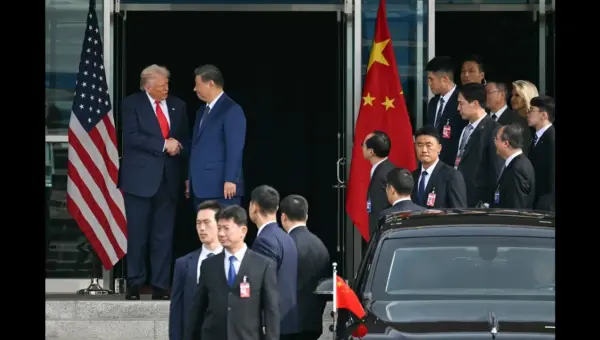
President Trump’s anticipated meeting with Chinese President Xi Jinping at the end of March is set against a backdrop of significant global instability and a weakened negotiating position for the United States. Trump’s approach to foreign policy often harks back to Cold War-era summitry, but he enters this meeting with depleted military resources and a fractured international alliance compared to the coalition built by his predecessor. While some advisors point to potential weaknesses in the Chinese economy as a catalyst for conflict, others suggest that China’s economic challenges might actually embolden them to pursue aggressive actions, such as an invasion of Taiwan, to stimulate their economy.
Past trade negotiations between Trump and China in 2020 resulted in only a partial agreement and incurred significant economic costs for American farmers. The current geopolitical climate, coupled with economic pressures on both nations, suggests that the upcoming summit will be fraught with challenges. The notion that the Iran conflict is strategically weakening China before this meeting is debated, with some arguing that China gains valuable intelligence on U.S. military capabilities from observing the conflict, which outweighs potential oil supply concerns, especially given China’s dominance in renewable energy and potential to increase oil imports from Russia.
Source: 😱Putin and Trump stir chaos! Moscow is in shock over Iran. Something just shifted (YouTube)

Related Articles

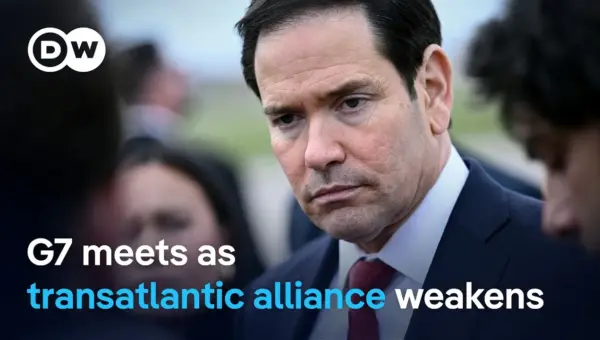
G7 Allies Clash Over Iran War Strategy, Urge Focus on Russia
G7 foreign ministers met in Paris, revealing deep divisions over the U.S. war with Iran. European allies urged the U.S. to pressure Russia, linking its actions to the conflict and fearing support for Ukraine will wane.

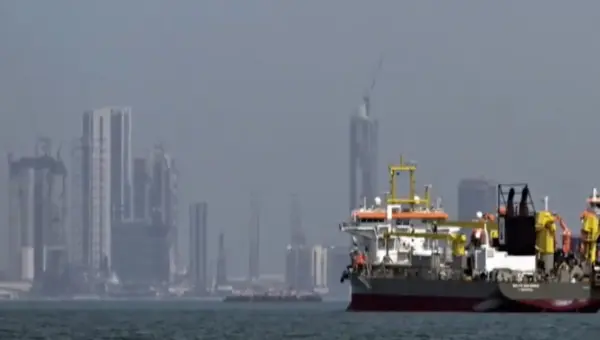
Iran Blocks China Ships, Exposing Beijing’s Weak Grip
Iran's recent decision to block Chinese ships at the Strait of Hormuz is exposing the limits of Beijing's influence in the Middle East. This action is causing delays and cancellations for Chinese manufacturers, turning a perceived geopolitical win into an economic strain.
Trump’s “Walk Away” Tactic Signals Tougher Stance on China
Retired Air Force Brigadier General David Stillwell believes President Trump's strategy of being willing to walk away from negotiations puts pressure on China. This tactic, combined with US global actions and strengthened alliances, signals a more assertive American foreign policy.