War in Iran Sparks Domestic Attacks, Economic Turmoil
The U.S. faces escalating domestic security threats and economic turmoil as the war in Iran intensifies. Targeted attacks on a Michigan synagogue and a Virginia university, coupled with a significant surge in oil prices and gas costs, are raising concerns about the administration's strategy and its impact on the American public. Analysts question the long-term viability of the conflict amidst a perceived lack of a clear exit plan.

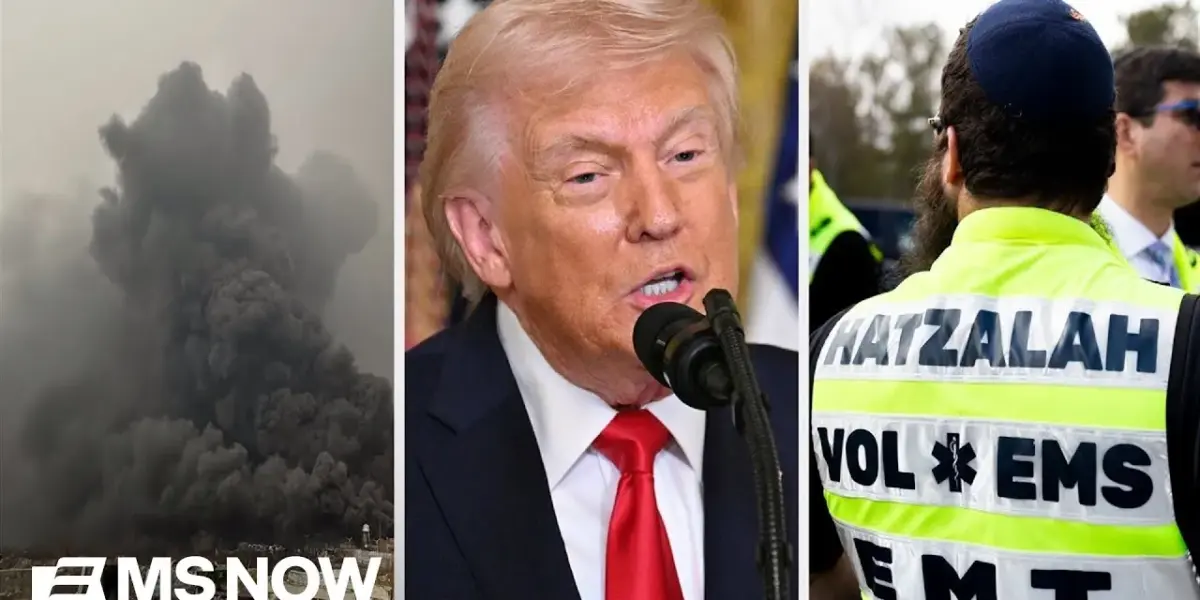
US Rocked by Targeted Attacks Amidst Iran Conflict
The United States is grappling with a series of domestic security concerns that appear to be amplified by the ongoing war in Iran. In West Bloomfield, Michigan, a targeted attack on Temple Israel synagogue resulted in the death of the perpetrator and injuries to a security guard. Meanwhile, at Old Dominion University in Norfolk, Virginia, a shooting claimed the life of an ROTC instructor and injured two others, with the suspect, a U.S. citizen with past ties to ISIS, being neutralized by students.
Michigan Synagogue Attack: A Targeted Act of Violence
Department of Homeland Security officials identified the suspect in the Michigan synagogue attack as Amon Muhammad Gazzali, born in Lebanon in 1985. Gazzali entered the U.S. in May 2011, applied for naturalization in October 2015, and was granted U.S. citizenship in February 2016. While a specific motive has not been detailed, the FBI stated that the incident was a “targeted act of violence against the Jewish community.” The attack saw Gazzali drive a vehicle through the doors of Temple Israel, the largest synagogue in Michigan. The synagogue’s security team, reportedly composed of retired law enforcement officers, opened fire on the vehicle. One security officer sustained injuries from the car but is expected to recover. The suspect died at the scene, and his vehicle caught fire. Law enforcement sources indicated the possibility of explosive materials inside the vehicle, leading to 30 officers requiring hospitalization for smoke inhalation. Investigators are examining the suspect’s background and connections. Notably, the FBI had conducted active shooter prevention training at Temple Israel less than two months prior to the attack.
Virginia University Shooting: Suspect’s Terrorist Links Revealed
In Virginia, the gunman at Old Dominion University was identified as Muhammad Baylor Jalloh, a U.S. citizen who had previously pleaded guilty in October 2016 to attempting to provide material support to ISIS. Jalloh admitted to attempting to donate money to the terror group and expressed a desire to carry out a domestic attack in its name. He was released from prison in December 2024 after serving time, having also served in the Virginia National Guard from 2009 to 2015, achieving the rank of specialist. The FBI is investigating the incident as an act of terrorism, confirming reports that Jalloh uttered “Allahu Akbar” prior to the attack. Lieutenant Colonel Brandon Shaw, an ROTC instructor, was killed in the shooting, which occurred in his classroom. The FBI and the Joint Terrorism Task Force are leading the investigation.
Broader Implications: Heightened Alert Amidst War
Both attacks are being investigated as targeted acts of violence, though authorities have not yet established a direct link between them or the ongoing war in Iran. Law enforcement sources confirm that cities across the country are on high alert following the commencement of hostilities. While no specific or credible threats have been identified, a posture of heightened vigilance is being maintained. The FBI and Joint Terrorism Task Force are investigating the incidents, with potential connections to the international conflict being closely examined.
Economic Fallout: Oil Prices Soar, Public Blames Administration
The war in Iran, now in its 13th day, is having a tangible impact on the U.S. economy. The international price of oil surged by over 9% in a single day, closing above $100 per barrel. This has driven the national average gas price to $3.60 per gallon, a 66-cent increase over the past four weeks. A new poll from Morning Consult reveals that 48% of Americans attribute these rising gas prices directly to President Trump and his administration. The President, however, downplayed the economic impact in a social media post, stating that stopping Iran is “far more important” and noting that higher oil prices benefit American oil companies. Despite this, consumers are bearing the brunt of the increased costs.
White House Response and Strategic Uncertainty
During a Women’s History Month event at the White House, President Trump briefly addressed the situation in Iran, asserting that it is “moving along very rapidly” and that the U.S. military is “unsurpassed.” He characterized Iran as a “nation of terror and hate” that is “paying a big price.” Meanwhile, Iran’s new Supreme Leader has vowed to continue fighting and utilize the Strait of Hormuz to pressure America. U.S. intelligence reportedly believes Iran’s regime remains intact, and many anticipate a harder line from Tehran. Experts and former officials are questioning the administration’s strategy. Peter Baker, Chief White House Correspondent for The New York Times, noted the administration’s desire to influence Iran’s future leadership without taking definitive steps. David Drucker of The Dispatch highlighted the President’s susceptibility to market pressure, suggesting it could influence his approach. Former Ambassador to Israel Dan Shapiro has urged the U.S. to find an “off-ramp” to the conflict, emphasizing that for the Iranian regime, mere survival constitutes a victory that can be leveraged for significant economic damage.
Regime Change Ambitions and Lack of a Clear Plan
Tom Nichols, a staff writer for The Atlantic, suggested that the President may be narrowing his war aims, potentially declaring “mission accomplished” on specific objectives like sinking naval assets, destroying missile stocks, and preventing an Iranian nuclear bomb for the foreseeable future. However, Nichols argued that the initial goal appeared to be regime change, evidenced by calls for the Iranian people to rise up. If regime change is not achieved, the administration will face significant scrutiny regarding the war’s justification and intended outcomes. Both Nichols and Baker expressed concerns about a perceived lack of a concrete plan, with Nichols suggesting that the administration is now scrambling to develop one after 13 days of conflict. The war’s human and economic costs are substantial, raising questions about its long-term viability and the path forward.
Looking Ahead: The Search for an Exit Strategy
As the conflict in Iran continues, the focus is shifting towards the domestic repercussions and the economic strain on American consumers. The administration faces the dual challenge of managing the international crisis while addressing internal security threats and public discontent over rising costs. The coming days will likely reveal whether the President will prioritize de-escalation and seek an “off-ramp,” as suggested by some analysts, or continue the current course despite the mounting pressures. The effectiveness of the U.S. strategy in achieving its stated—and perhaps unstated—goals remains a critical question, with the potential for prolonged instability and further economic consequences looming.
Source: Under pressure: Will the economy of war FORCE Trump to pull out of Iran? (YouTube)

Related Articles

House Funds DHS Short-Term, Senate Stalemate Looms
The House has passed a short-term bill to fund the Department of Homeland Security, but the Senate is expected to reject it. This temporary measure highlights ongoing political divisions and the challenges in reaching long-term budget agreements in the U.S. Congress.

Congress Stalemate Threatens Border Security Funding
The U.S. House passed a temporary funding bill for the Department of Homeland Security, but Senate Democrats are expected to block it. This recurring stalemate highlights deep divisions over border policy and funding, potentially impacting national security and international perceptions of U.S. stability.
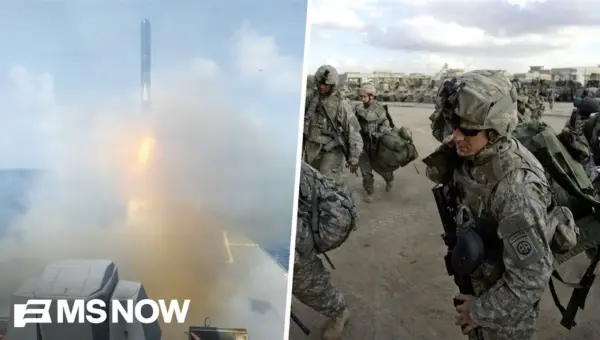
Iran Missile Strikes Injure US Troops, Raise War Concerns
Iranian missile strikes have injured U.S. service members, escalating tensions as the conflict nears one month. The attacks are raising concerns about the effectiveness of U.S. military strategy and the depletion of crucial missile stockpiles. Global oil prices have surged, impacting economies worldwide.