Iran War Shifts Global Power: Ukraine Emerges as Key Player
The war in Iran is unexpectedly elevating Ukraine's global standing, challenging traditional power dynamics. Ukraine's expertise in drone warfare and its demonstrated reliability are making it a sought-after partner, reshaping the international arms trade and the broader world order.


Iran War’s Ripple Effect: Ukraine’s Unexpected Rise on Global Stage
The ongoing conflict involving Iran, though relatively new, is already demonstrating a profound capacity to reshape the global order. While warfare has always been a catalyst for change, the current situation is particularly striking because the most significant shifts are not confined to the directly involved parties—the United States, Iran, and Israel—but are prominently featuring unexpected third actors. Foremost among these is Ukraine, a nation that, contrary to prevailing narratives of its dire straits, is emerging as a significant global player due to its advanced military technology and hard-won expertise.
The Unforeseen Appeal of Ukrainian Military Prowess
In a surprising turn of events, countries embroiled in the Iran conflict have begun seeking assistance not from traditional military powerhouses like the United States or European allies, but from Ukraine. This development challenges the common perception of Ukraine as a nation solely reliant on aid and struggling for survival against Russia. Instead, Ukraine is now being called upon to provide crucial support, including advanced interceptor drones and trained personnel adept at countering Iranian Shahed drones—a weapon system Ukraine has become intimately familiar with through years of defending against Russian attacks.
This reliance on Ukraine extends beyond a single weapon system, signifying a broader, more fundamental shift in Ukraine’s global standing. For years, the author has posited that the conflict in Ukraine would lead to such a redefinition of its role. Now, these theories are materializing, indicating that Ukraine is carving out a new, significant niche in the international arena, one that does not necessarily replace established powers but complements them in unexpected ways.
Challenging the Dominance of Traditional Powers
The fact that nations, even those with formidable military capabilities like the United States and Israel, are turning to Ukraine for supplemental aid raises critical questions. The United States is globally recognized as the preeminent military power, and Israel possesses highly advanced military technology. Their combined strength should, in theory, be sufficient to counter any threat. However, the pursuit of Ukrainian assistance suggests a perceived inadequacy in existing capabilities or a strategic calculation that relying solely on traditional providers carries inherent risks.
This is not an indictment of American military strength but an acknowledgment that modern warfare presents complex challenges that even the most dominant powers may not be able to address alone. The core issue lies in the economics of defense: while U.S. and Israeli military technologies are highly effective, they are prohibitively expensive to produce in mass quantities, and stockpiles can be depleted. Iran’s potential to deploy a vast number of drones, estimated in the tens of thousands, poses a significant threat to these limited, high-cost interceptor systems. Over time, Iran could theoretically exhaust an adversary’s missile reserves, leaving them vulnerable.
Lessons from Ukraine: The Economics of Drone Warfare
The war in Ukraine offers a stark historical parallel. A technologically and numerically superior Russian military was unexpectedly challenged by Ukrainian tactics that leveraged inexpensive, mass-produced drones against sophisticated and costly Russian equipment. This approach demonstrated that overwhelming numbers of cheaper assets can overcome technologically superior but fewer, more expensive ones. This dynamic is particularly relevant to the current conflict, where Iran’s substantial drone arsenal could potentially deplete the limited interceptor missiles held by the U.S. and its allies.
The cost disparity is staggering: U.S. Patriot missiles can cost millions of dollars, while a Shahed drone might cost tens of thousands. Ukraine, however, has developed methods to counter these drones for a fraction of the cost, perhaps only a few thousand dollars. This is not because Ukrainian technology is inherently inferior, but because it was designed and refined for mass-scale, wartime deployment by a nation with limited resources. Ukrainian drones are engineered for cost-effectiveness and mass production, a stark contrast to U.S. systems developed for theoretical future wars with a focus on maximum capability per unit, often at exorbitant prices.
Crucially, the efficacy of these Ukrainian systems relies heavily on sophisticated software, honed through thousands of combat missions, and, perhaps more importantly, skilled human operators. The time and expertise required to train new pilots and develop such software mean that Ukraine’s involvement is indispensable in scenarios where rapid, effective drone defense is needed.
A Shifting Global Arms Trade and Political Realignment
The implications of these trends extend beyond the immediate conflict. The war in Ukraine has fundamentally altered the global arms trade, driven by two key factors: the changing nature of warfare and a political realignment stemming from a diminished trust in the United States as a reliable arms supplier.
European nations, recognizing the vulnerability exposed by the war and the changing face of conflict, have proactively integrated Ukraine into their defense strategies. They are establishing Ukrainian drone production facilities on European soil, not merely licensing technology but fostering direct partnerships. This move signifies a strategic commitment to Ukraine’s defense, understanding that its security is intrinsically linked to Europe’s own. This integration is evidenced by significant financial commitments, such as a €90 billion loan to Ukraine, financed by Russian assets, ensuring Ukraine’s continued capacity to defend itself and, by extension, Europe.
The Erosion of U.S. Influence and the Rise of Trust as a Commodity
The shift in global power dynamics is exacerbated by perceived U.S. unreliability. Actions such as pausing weapon deliveries and intelligence sharing to Ukraine during critical junctures have fostered a sense of betrayal among allies. This behavior has broken a fundamental model of trust that underpinned the global weapons industry for decades, where buyers depended on suppliers for ammunition, spare parts, training, and expertise.
In contrast, Ukraine, despite being embroiled in its own intense conflict, has actively offered assistance to nations facing threats from Iran. This proactive and supportive stance, even under duress, positions Ukraine as a dependable partner, a stark contrast to the U.S. approach, which has been perceived as transactional and, at times, opportunistic. This psychological shift is crucial; countries are now reorienting their defense partnerships, moving away from perceived unreliability towards nations that demonstrate steadfast support.
Why This Matters
The emergence of Ukraine as a critical military technology provider and a trusted partner signifies a major geopolitical realignment. It challenges the long-held dominance of established military powers and highlights the growing importance of adaptability, cost-effectiveness, and reliability in modern warfare and international relations. The conflict in Iran is not merely a regional dispute; it is a crucible forging a new global order where technological innovation, economic realities of warfare, and the restoration of trust are paramount.
Implications, Trends, and Future Outlook
The trend indicates a decentralization of military power and a diversification of arms suppliers. Nations will likely seek a broader range of partners, prioritizing those who can offer advanced, cost-effective solutions and demonstrate unwavering commitment. This could lead to increased regional defense cooperation and a more multipolar international security landscape. For the United States, this shift necessitates a re-evaluation of its foreign policy and defense strategies, emphasizing reliability and consistent support for allies to maintain its global influence.
Historical Context and Background
Historically, major conflicts have always redrawn the global map. The post-World War II era saw the rise of U.S. military and economic dominance, largely built on alliances and a stable international order. The Cold War further solidified bipolar power structures. The current geopolitical shifts, accelerated by the war in Ukraine and now amplified by the conflict in Iran, represent a departure from these established norms, ushering in an era where new actors and new forms of warfare are redefining international relations.
The reliance on drone technology and asymmetric warfare tactics, pioneered by smaller nations against larger adversaries, is a direct evolution from earlier conflicts. The strategic importance of trust in military supply chains, a concept often overlooked in times of peace, is being starkly illuminated. The narrative of a single superpower dictating terms is giving way to a more complex interplay of alliances and capabilities, where even nations perceived as vulnerable can ascend to positions of significant influence.
The author’s ongoing analysis, supported by platforms like Plaude for note-taking, allows for tracking these subtle yet profound shifts. The ability to process information and identify emerging trends is crucial in understanding a world order that is in constant flux, reminding us that even the strongest powers must remain humble and adaptable in the face of evolving global dynamics.
Source: The Iran War Is Already Reshaping the World Order (YouTube)

Related Articles

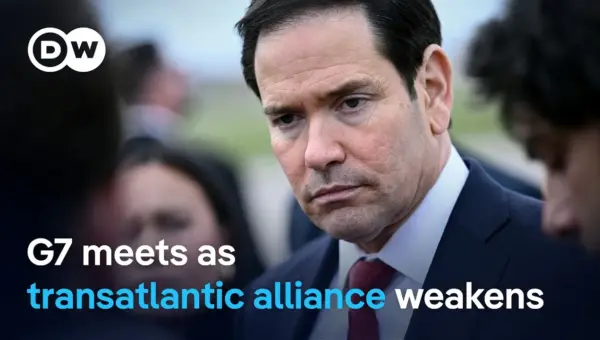
G7 Allies Clash Over Iran War Strategy, Urge Focus on Russia
G7 foreign ministers met in Paris, revealing deep divisions over the U.S. war with Iran. European allies urged the U.S. to pressure Russia, linking its actions to the conflict and fearing support for Ukraine will wane.

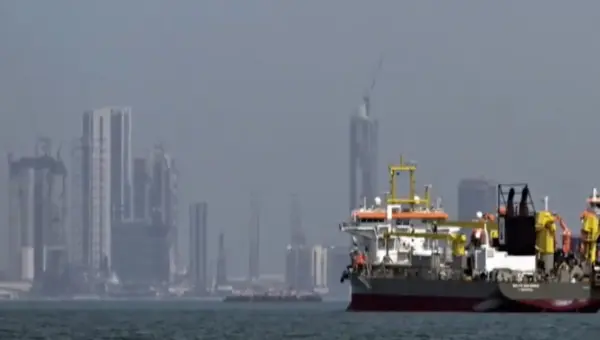
Iran Blocks China Ships, Exposing Beijing’s Weak Grip
Iran's recent decision to block Chinese ships at the Strait of Hormuz is exposing the limits of Beijing's influence in the Middle East. This action is causing delays and cancellations for Chinese manufacturers, turning a perceived geopolitical win into an economic strain.
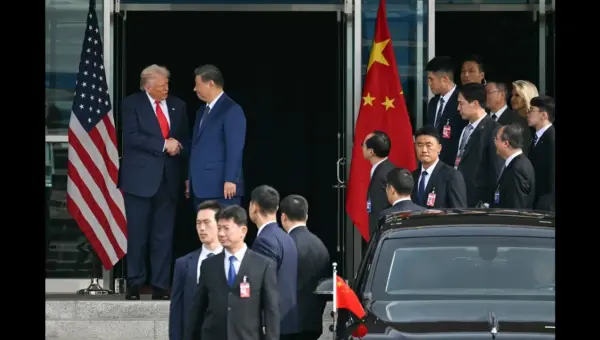
Trump’s “Walk Away” Tactic Signals Tougher Stance on China
Retired Air Force Brigadier General David Stillwell believes President Trump's strategy of being willing to walk away from negotiations puts pressure on China. This tactic, combined with US global actions and strengthened alliances, signals a more assertive American foreign policy.