Miller’s Maelstrom: Hypocrisy Fuels Escalation Rhetoric
Stephen Miller's recent media appearances reveal a striking pattern of contradictory statements regarding Iran, juxtaposing hawkish rhetoric with past claims of peace. This analysis unpacks the hypocrisy, the spectacle of war footage, and the implications for foreign policy discourse.

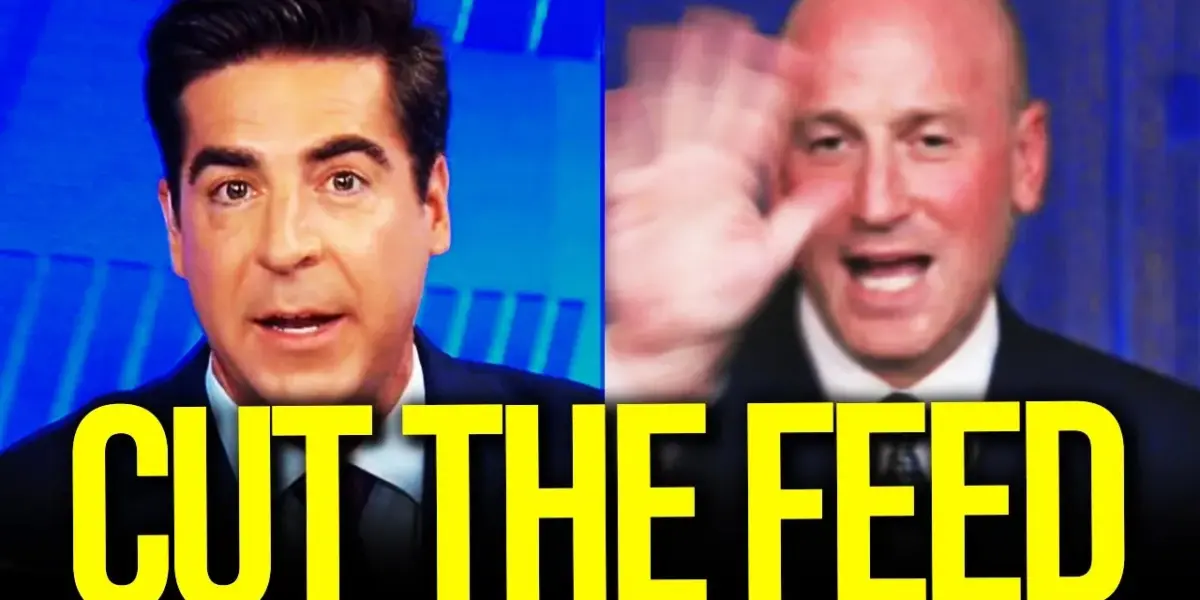
Miller’s Maelstrom: Hypocrisy Fuels Escalation Rhetoric
In a political landscape often characterized by shifting narratives and convenient amnesia, Stephen Miller appears to be a master of both. A recent analysis of his public statements reveals a striking pattern of contradiction, particularly concerning foreign policy and the perceived threats emanating from Iran. This analysis delves into Miller’s recent pronouncements on Fox News, juxtaposing them with his own past claims, to expose what critics argue is a profound hypocrisy that fuels a dangerous escalation in rhetoric.
The Rhetorical Meltdown
The speaker in the original transcript notes Miller’s tendency to appear on news channels shortly after significant geopolitical events, often exhibiting extreme emotional responses. “I’m surprised it took him 12 days after we struck Iran to be out on the news channels just spitting and screaming, but here we are,” the speaker states, highlighting a perceived pattern of Miller capitalizing on moments of tension.
Miller’s recent appearances have seen him describing military actions against Iran in stark, almost apocalyptic terms. He spoke of the “asymmetric annihilation of the enemy,” claiming the United States under President Trump had “annihilated their navy, has annihilated their missile capabilities, has dealt devastating strikes to the IRGC and their command structure.” He painted a picture of Iran as a severely crippled entity, its capacity for violence “completely wiped out.”
Contradictions Emerge
However, this portrayal starkly contrasts with Miller’s own rhetoric during the 2024 election cycle. At that time, he allegedly warned of dire consequences if Trump was not elected, stating, “Liz Cheney will be Kamala’s defense secretary. She will draft your children to fight in the Middle East, Russia, and Asia. All Americans, including Muslim communities across Michigan, must vote for Trump to stop World War II.” This framing paints a picture of imminent global conflict and a Democratic party eager to involve Americans in foreign wars.
The analysis points out the irony that Miller, now seemingly advocating for aggressive military action, previously positioned Trump as the candidate of peace. “Trump equals peace,” was a supposed campaign slogan Miller invoked, directly opposing the narrative of impending war allegedly championed by Democrats. The speaker notes, “This aged so poorly,” underscoring the disconnect between Miller’s past warnings and his current stance.
Islamophobia and Shifting Alliances
Beyond foreign policy, the transcript touches upon a concerning rise in Islamophobia from the right-wing, which the speaker links to the current political climate. References are made to online vitriol directed at Muslims during Ramadan, with figures reportedly calling for deportations and making derogatory comparisons. This, the speaker suggests, is part of a broader trend that contradicts any claims of unity or inclusivity.
Furthermore, the analysis highlights a specific contradiction regarding the threat posed by Iran. While Miller now emphasizes Iran’s capacity to threaten the US and global commerce, citing long-range missiles and potential nuclear capabilities, past statements from within the Trump administration itself, such as from Caroline Levit, reportedly dismissed such immediate threats. Levit is quoted as saying, “To be clear, no such threat from Iran to our homeland exists and it never did.” This presents a significant divergence, suggesting that the perceived threat level is being manipulated for political purposes.
The Spectacle of War Footage
A particularly striking element of Miller’s recent media appearances, as described, is the backdrop against which he speaks. The transcript details Miller appearing on Fox News with videos of explosions in the Persian Gulf playing behind him, sourced from the IRGC itself. This visual accompaniment to his hawkish rhetoric is described as reminiscent of the early 2000s, when the US was escalating its involvement in the Middle East.
The speaker draws a parallel between the current situation and the past, noting the immense financial cost of those “forever wars,” which added trillions to the national debt. The implication is that a similar cycle of conflict and financial strain may be repeating, with media outlets like Fox News playing a role in normalizing and promoting such actions.
Debunking the “Annihilation” Narrative
The claim of Iran’s “annihilation” is also challenged. The transcript argues that the Iranian regime is far from defeated, pointing to the millions within the IRGC who are described as deeply ideological and committed to the regime. “The regime is still standing,” the speaker asserts, countering Miller’s portrayal of a complete military collapse.
The analysis also scrutinizes Miller’s invocation of worst-case scenarios, such as a nuclear-armed Iran, as a justification for current actions. The speaker argues that this fear-mongering tactic is employed to make present actions seem less severe by comparison. Moreover, the transcript points out that actions taken by the Trump administration, such as lifting oil sanctions on Russia, have inadvertently enriched entities that may then provide intelligence to Iran, potentially harming US service members.
The Iran Nuclear Deal: A Point of Contention
The discourse surrounding Iran’s nuclear capabilities is another area where past and present narratives diverge. Miller’s current rhetoric implies a dangerous path towards nuclear armament for Iran. However, the transcript argues that the Obama-era JCPOA (Joint Comprehensive Plan of Action) was a carefully negotiated deal that limited Iran’s enrichment capabilities and provided oversight. The subsequent withdrawal from this deal by the Trump administration, without a viable alternative, is presented as a critical misstep that allowed Iran to resume enrichment.
Regime Change Rhetoric
The analysis culminates in Miller’s suggestion that the conflict presents an opportunity for regime change in Iran. This is framed as a significant escalation, particularly given that Miller himself had previously been associated with a stance against such interventions. The speaker expresses skepticism about the efficacy and wisdom of this approach, noting the consolidation of power by a more radical faction within Iran and the potential for unintended consequences, especially for the Iranian people who are depicted as oppressed and seeking liberation.
Why This Matters
The repeated contradictions in Stephen Miller’s public statements raise critical questions about the reliability of political rhetoric, particularly during times of international crisis. His apparent willingness to adopt opposing narratives—portraying Democrats as warmongers while advocating for military action himself, and alternately emphasizing and downplaying the threat of Iran—suggests a strategic manipulation of facts and emotions for political gain. This is not merely an academic exercise in hypocrisy; it has real-world implications. The language used by influential figures can shape public opinion, influence policy decisions, and contribute to an environment where diplomatic solutions are overshadowed by the drums of war. The analysis underscores the importance of critical media consumption and the need to hold public figures accountable for their words, especially when those words can lead to heightened tensions and potentially devastating conflicts. The historical context of US involvement in the Middle East serves as a somber reminder of the costs associated with poorly conceived or emotionally driven foreign policy decisions.
Implications, Trends, and Future Outlook
The trend observed in Miller’s rhetoric—oscillating between fear-mongering and downplaying threats, and shifting alliances in narrative—is indicative of a broader political strategy that prioritizes partisan advantage over consistent policy. The normalization of war footage as a backdrop for political commentary on cable news suggests a desensitization to the realities of conflict and a potential erosion of public discourse. The future outlook hinges on whether a more discerning public and media landscape can challenge such narratives, demanding accountability and prioritizing reasoned, fact-based discussions over inflammatory rhetoric. The potential for miscalculation in the current geopolitical climate, especially concerning Iran, remains a significant concern, making the integrity of public discourse more crucial than ever.
Source: Stephen Miller STUNS Fox Host and SPITS EVERYWHERE (YouTube)

Related Articles
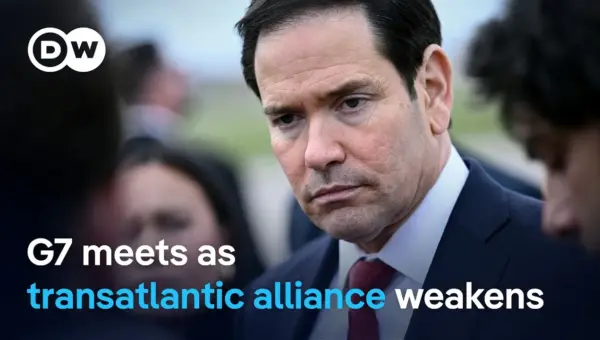
G7 Allies Clash Over Iran War Strategy, Urge Focus on Russia
G7 foreign ministers met in Paris, revealing deep divisions over the U.S. war with Iran. European allies urged the U.S. to pressure Russia, linking its actions to the conflict and fearing support for Ukraine will wane.

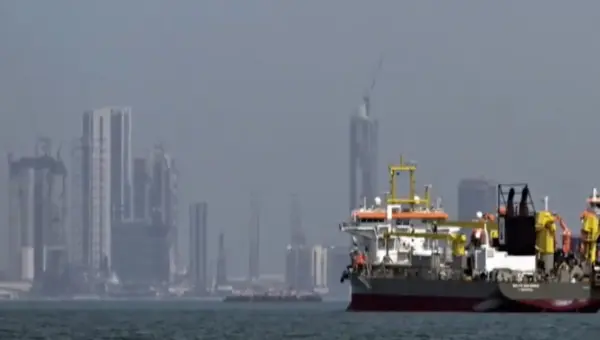
Iran Blocks China Ships, Exposing Beijing’s Weak Grip
Iran's recent decision to block Chinese ships at the Strait of Hormuz is exposing the limits of Beijing's influence in the Middle East. This action is causing delays and cancellations for Chinese manufacturers, turning a perceived geopolitical win into an economic strain.
Rubio: US Can Achieve Iran War Goals Without Troops
Senator Marco Rubio outlined a strategy to counter Iran without deploying U.S. ground troops, focusing on weakening the regime and enhancing maritime security. He also criticized Cuba's economic system and expressed concerns about West Bank violence.