US Delays Strait of Hormuz Escorts Amid Escalating Iran Tensions
The US is not yet ready to escort oil tankers through the Strait of Hormuz, a critical global energy chokepoint, due to ongoing military operations to degrade Iranian threats. This admission comes as Iran's attacks have effectively closed the waterway, causing oil prices to surge and markets to become jittery.

US Not Ready for Strait of Hormuz Tanker Escorts, Energy Secretary Admits
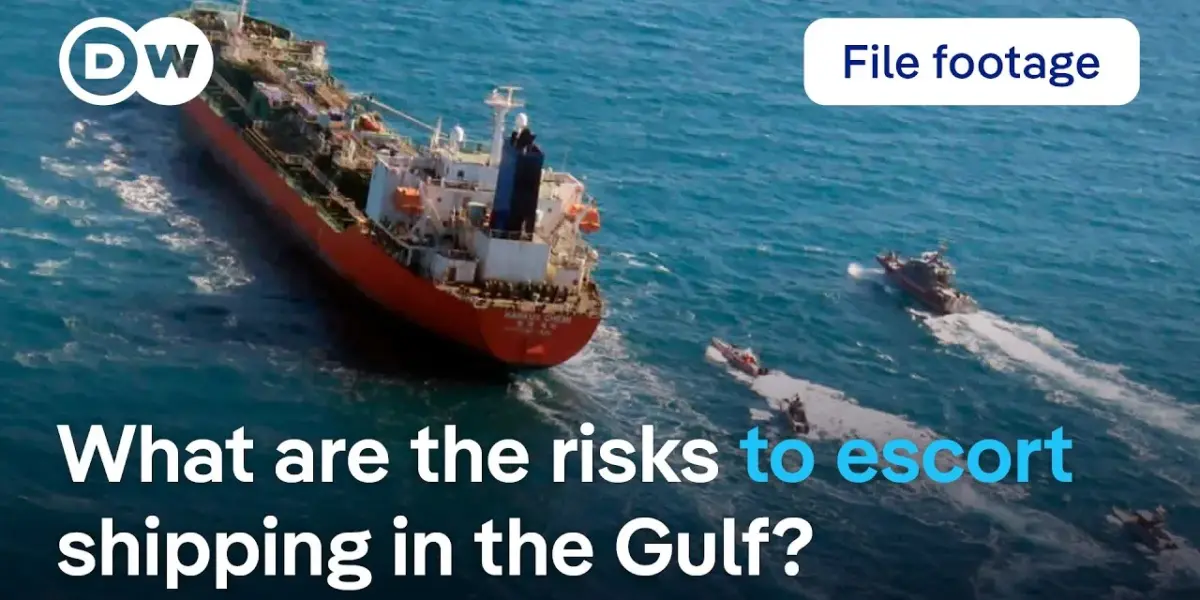
The United States is currently not prepared to escort commercial oil tankers through the vital Strait of Hormuz, a critical chokepoint for global energy supplies, Energy Secretary Chris Wright stated recently. The admission comes amid escalating tensions in the Gulf region, where Iran has intensified attacks on shipping traffic, effectively disrupting oil flow through the waterway. The announcement has sent ripples through already volatile energy markets, with oil prices surging despite coordinated efforts by major economies to stabilize them.
Iran’s Aggression Closes Key Global Oil Route
The Strait of Hormuz, a narrow maritime passage connecting the Persian Gulf to the open ocean, handles approximately one-fifth of the world’s seaborne oil shipments. In recent days, Iran’s Revolutionary Guard naval forces have escalated their actions, with a commander posting on social media that their strategy involves delivering “severe blows to the aggressor by cutting off traffic through the waterway.” This threat has been underscored by direct attacks on vessels. Two tankers in Iraqi waters were recently hit by explosive-laden Iranian boats, leading most maritime nations to halt or significantly reduce their operations in the area. The last loaded tankers are now awaiting the cessation of hostilities in a secured zone before they can resume their journeys.
US Military Focuses on Degrading Iranian Capabilities
In response to the rising threat, the United States and Israel have conducted strikes targeting Iranian military and government infrastructure. Images released by the US Central Command, though unspecified in location within Iran, indicate ongoing military action. Energy Secretary Wright, in a statement to CNBC, clarified the US position on providing escorts: “It’ll happen relatively soon, but it can’t happen now. We’re simply not ready. All of our military assets right now are focused on destroying Iran’s offensive capabilities and the manufacturing industry that supplies their offensive capabilities.” This strategic focus means that immediate naval escorts for commercial traffic are not feasible.
Market Jitters as Oil Prices Spike
The disruption at the Strait of Hormuz has predictably rattled global energy markets. The benchmark Brent crude oil price surged above $100 per barrel, a significant jump occurring just a day after 32 oil-consuming nations announced the release of historic levels of emergency oil reserves in an attempt to counter price increases and supply fears. The market’s anxious reaction highlights the fragility of global energy security when key transit routes are threatened.
Expert Analysis: What’s Needed for Safe Passage
Retired Rear Admiral Mark Montgomery, now with the Foundation for the Defense of Democracies, provided a detailed assessment of the military requirements for re-establishing safe passage through the Strait of Hormuz. He outlined a two-phase approach, estimating each phase would take approximately 10 to 12 days to complete.
Phase One: Degrading Iranian Threats
The initial step involves an air campaign to “significantly degrade” Iran’s missile, drone, mine, and unmanned surface vessel capabilities that pose a direct threat to shipping. “Once we’ve removed those as a significant military risk, you can then begin convoy operations,” Montgomery explained.
Phase Two: Establishing Convoy Operations
This phase focuses on the actual escort missions. It requires sustained intelligence, surveillance, and reconnaissance (ISR) capabilities, including maintaining “four to eight aircraft in a combat air patrol” over the strait. These aircraft would be equipped with advanced counter-drone weaponry, such as the precision kill weapon system, which has proven effective against Iranian drones.
Montgomery further elaborated on the necessary assets:
- Air Support: Combat air patrols equipped with counter-drone rockets.
- Attack Helicopters: Ready to neutralize small attack boats.
- Naval Destroyers: The critical missing element is a sufficient number of air-defense-capable destroyers. Montgomery estimates a need for “10 to 14 Aegis destroyers” (or equivalent from allied navies) to “properly convoy operations back and forth.”
He believes these preconditions could be met within “week three and four of this overall campaign,” roughly two to three weeks from the current assessment. However, he cautioned against a timeline driven by political pressure rather than military readiness, stating, “The problem we have is that’s to establish the proper level of military risk. We’re going to hear now the president feeling political pressure to change that and go faster. And that’s my concern is that what we can’t meet is a timeline driven by the president’s political risk calculations.”
Sustaining Operations and International Burden-Sharing
The prospect of sustained naval escorts would undoubtedly strain US Navy readiness. Montgomery drew a parallel to the late 1980s, when similar operations were conducted for about 14 months. “It will strain overall Navy readiness, but I was part of this back in the late 1980s and we did it for about 14 months total,” he noted. While acknowledging it was a less demanding environment then, he affirmed that “it’s executable” but would have “long-term readiness impacts.”
To mitigate this strain, Montgomery emphasized the need for international cooperation and burden-sharing. He pointed to allies with similar naval capabilities, such as Japan, South Korea, Australia, France, Britain, and Spain, urging them to contribute their Aegis destroyers or equivalent vessels to assist in escort operations.
Key Risks: Mines and Advanced Drone Threats
When asked about the primary risks involved, Montgomery identified naval mines as the most significant threat. Unlike drones or attack craft, which can be intercepted by aircraft or ship-based missiles, mines require specialized mine-sweeping or mine-hunting capabilities. “Mines on the other hand, once they get in the water, uh, it’s a very specific mine sweeping or mine hunting capability that’s required and that will slow things down dramatically,” he stated, adding that operations would have to halt until the mine threat is neutralized.
While acknowledging that Iran may be holding back some of its arsenal, particularly advanced cruise missiles, Montgomery believes drones remain a concern but perhaps less so than mines. “Certainly drones getting fired out will require the planes and then the ships to shoot them down. Um, I don’t think that’s to me, the mines are probably a greater concern than the drones,” he concluded. However, he conceded that if Iran deploys high-end cruise missiles, it would present a considerable problem, though their launchers are typically harder to conceal than man-portable drones.
Looking Ahead: A Race Against Time and Market Volatility
The coming weeks will be crucial as the US military works to build the necessary capabilities to ensure safe passage through the Strait of Hormuz. The pressure to act quickly, driven by global energy market instability and political considerations, will be immense. Observers will be watching closely to see if the projected timelines for degrading Iranian threats and deploying sufficient escort assets can be met, and whether international partners will step up to share the burden, preventing a prolonged period of severely disrupted oil flows and continued market volatility.
Source: US 'not ready' to escort oil tankers through Strait of Hormuz | DW News (YouTube)

Related Articles


Trump Halts Iran Strikes Amid Stalled Diplomacy
President Trump announced a pause on planned strikes against Iran, citing productive talks, though Iran denies negotiations occurred. Reports also suggest a potential U.S. ground operation on Iran's Hark Island. The situation raises concerns about international support for Ukraine and potential shifts in U.S. foreign policy.


Iran’s Missile Threat Reduced by 90%, Analyst Says
An analyst reports that Operation Epic Fury has degraded Iran's missile launchers by 90%, despite challenges in targeting hidden sites. The conflict's duration and media coverage are also discussed, with implications for global energy markets and investor confidence.
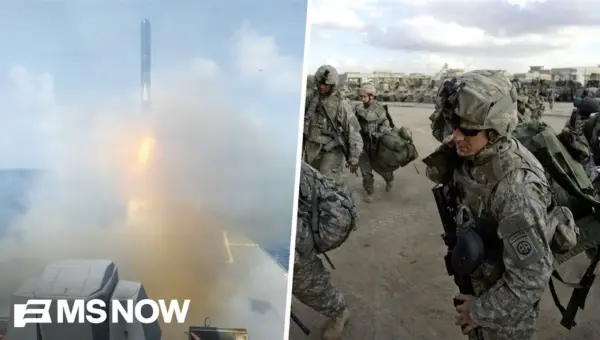
Iran Missile Strikes Injure US Troops, Raise War Concerns
Iranian missile strikes have injured U.S. service members, escalating tensions as the conflict nears one month. The attacks are raising concerns about the effectiveness of U.S. military strategy and the depletion of crucial missile stockpiles. Global oil prices have surged, impacting economies worldwide.