VW Profit Plummets 44% Amid China Woes and EV Struggles
Volkswagen Group has suffered a significant blow, with profits plummeting 44% in 2025 amid intense competition in China and slower-than-expected EV demand. The automotive giant is now planning massive cost cuts, raising concerns about potential job losses, while its luxury division, Porsche, also faces a severe profit collapse.


Volkswagen Faces Steep Profit Decline, China Market Share Erodes
Berlin, Germany – The Volkswagen Group, a titan of the global automotive industry, is confronting a significant downturn, having witnessed a staggering 44% drop in profits in 2025. This sharp decline, coupled with increasing pressure in its crucial Chinese market and slower-than-anticipated electric vehicle (EV) demand, has prompted the German automaker to announce massive cost-cutting measures, including potential job reductions.
China’s Shifting Landscape and the Rise of Local Competitors
A primary driver of Volkswagen’s profitability crisis is its diminishing market share in China, its largest single market. The company is facing intense competition from aggressive local manufacturers, most notably BYD, which has rapidly ascended to become a dominant force in the electric vehicle sector. BYD and other Chinese EV makers are capturing market share with compelling, more affordable electric models, a segment where Volkswagen currently appears to be lagging.
The transcript highlights a critical gap in Volkswagen’s EV offerings: the absence of a sub-$20,000 electric vehicle. This price point is crucial for mass adoption, particularly in competitive markets like China, where consumers are increasingly seeking value and advanced technology at lower costs. While Volkswagen is investing billions in its electric transition, the current product lineup and pricing strategy seem misaligned with evolving market demands.
Porsche’s Unexpected Slump Adds to Group-Wide Woes
The challenges are not confined to the core Volkswagen brand. Porsche, historically a significant profit engine for the group, has also experienced a dramatic downturn. In 2025, Porsche’s operating profits plummeted by 98%, falling from over €5 billion to a mere €90 million. This sharp decline in the performance of its luxury sports car division further exacerbates the group’s overall financial strain.
“Volkswagen Group is struggling. 50,000 job cuts in Germany by 2030. The company lost almost half its profits in a single year. In 2025, Volkswagen profit dropped 44%. Now, the company is planning massive cost cuts.”
Massive Cost Cuts and Job Security Concerns
In response to these mounting pressures, Volkswagen is reportedly planning significant cost-cutting initiatives. While the specifics are still emerging, the transcript alludes to potential job cuts, with a figure of 50,000 job reductions in Germany by 2030 being mentioned. Such measures underscore the severity of the financial situation and the company’s determination to streamline operations and adapt to the new automotive reality.
The Broader Implications for the Automotive Industry
Volkswagen’s predicament serves as a stark warning for the entire automotive industry, particularly for established legacy automakers. The rapid acceleration of the EV transition, coupled with the disruptive force of new market entrants and evolving consumer preferences, presents an unprecedented challenge to traditional business models.
The industry is at a critical juncture. The question of whether traditional car brands can survive and thrive in the ongoing EV race is becoming increasingly pertinent. The success of companies like BYD in China suggests a fundamental shift in the competitive landscape, where agility, cost-effectiveness, and a deep understanding of local market needs are paramount.
Furthermore, the potential for significant job losses in the German automotive sector raises broader socio-economic concerns. The industry has long been a cornerstone of the German economy, providing stable employment for hundreds of thousands. Preventing massive job losses will require strategic planning, investment in retraining and upskilling the workforce, and potentially a re-evaluation of manufacturing and supply chain strategies.
What Lies Ahead for Volkswagen and the Auto Sector
Volkswagen’s immediate future will be defined by its ability to execute its cost-cutting strategies effectively while simultaneously revitalizing its EV product portfolio and regaining competitiveness in key markets like China. The company’s success in navigating this complex transition will not only determine its own fate but also offer valuable insights for other traditional automakers grappling with similar challenges. The industry will be closely watching Volkswagen’s strategic decisions regarding product development, market positioning, and workforce management as it attempts to steer through this turbulent period and secure its long-term viability in the electric era.
Source: VW just lost half its profit… What happened? | DW News (YouTube)

Related Articles


EV Charging Summit Unveils Future of Reliable Power
The 2026 EV Charging Summit in Las Vegas showcased significant advancements in charging technology, emphasizing reliability and driver convenience. Key players like SWTCH, XCharge, and Tesla unveiled solutions addressing connectivity issues, high-power charging, and new business models for deploying charging infrastructure.


Police Test EVs for Patrol Duty
The Gaingo Police Department is testing two electric vehicles, a Ford Mustang Mach E and an F-150 Lightning, to see if they can handle the demands of police work. Chief Nielsen highlighted concerns about battery life, charging times, and vehicle durability for patrol duties.
Lucid’s Profitability Path Faces Steep Hurdles
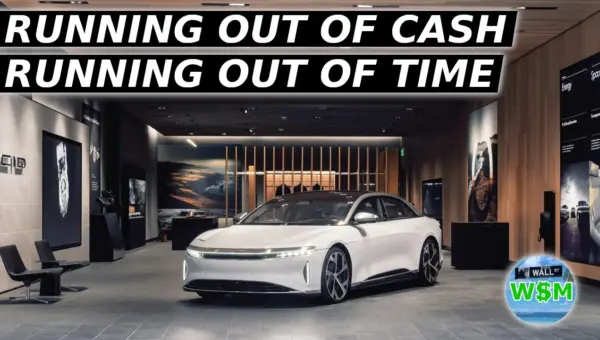
Lucid Motors faces significant financial headwinds, with a 96% stock decline since going public. The company's plan to reach profitability by 2030 relies on launching cheaper EVs and advancing autonomous driving, but faces challenges from low sales, high production costs, and uncertain market demand. Continued funding from the Saudi Arabian sovereign wealth fund is crucial for its survival.