Iran Vows Strait Closure Amid Escalating Oil Crisis
Iran has vowed to keep the Strait of Hormuz closed amid escalating attacks on regional energy infrastructure, causing global oil prices to surge. The U.S. faces challenges in securing the vital waterway, while the International Energy Agency intervenes with a massive release of oil reserves. The conflict's broader implications for global markets and regional stability are significant.

Iran Vows Strait Closure Amid Escalating Oil Crisis
TEHRAN, IRAN – The global energy market is facing unprecedented disruption as Iran, following significant strikes that decimated its senior leadership, has vowed to maintain the closure of the Strait of Hormuz, a critical chokepoint for approximately 20% of the world’s oil supply. This defiant stance, purportedly from Iran’s new Supreme Leader, comes amid a surge in oil prices and intensified Iranian attacks on energy infrastructure across the region. The situation presents a critical test of wills between the U.S. and Iran, with significant economic implications for the world.
New Leadership’s Defiant Stance
In what state media described as his first public statement since the war began, Iran’s new Supreme Leader issued a strong vow to continue blocking transit through the Strait of Hormuz. While the leader himself did not appear on camera or speak, his message was read by a state TV anchor. This lack of direct public appearance has fueled speculation about his condition, with unconfirmed reports circulating about injuries sustained during the initial conflict. Despite these uncertainties, the message conveyed was clear and echoed by other Iranian military officials: the disruption of oil transit will persist.
Escalating Attacks and Market Impact
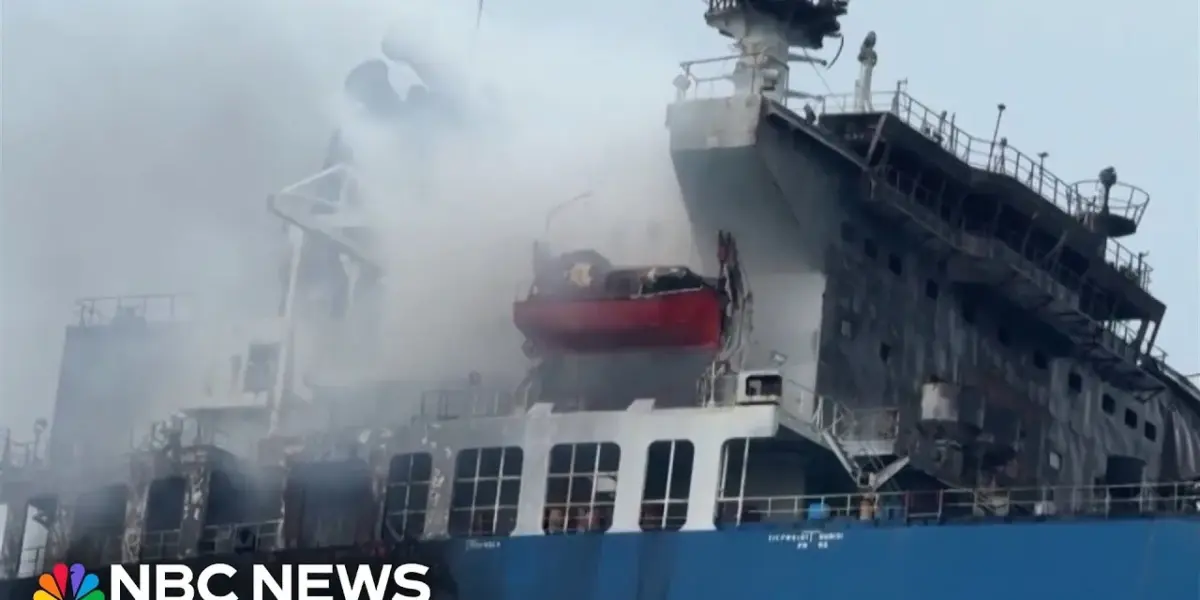
Iran has been actively intensifying its strikes on oil-related targets throughout the region. This past week alone saw attacks on a fuel tank at a port in Oman, two fuel tankers off the coast of Iraq, and an energy refinery in Bahrain. These actions have had a direct and dramatic impact on global energy markets. Crude oil prices have settled around $96 a barrel, marking a 42% increase since the war’s commencement. In Europe, a separate oil price benchmark has surpassed $100 for the first time since August 2022.
President Trump, while acknowledging the rising prices, has framed the situation differently. He suggested on social media that higher oil prices can be beneficial for domestic oil production, stating, “When oil prices go up, we make a lot of money from domestic oil production.” He further emphasized the strategic importance of preventing Iran from acquiring nuclear weapons.
U.S. Response and Challenges
The U.S. administration has pledged to escort oil tankers through the Strait of Hormuz, a promise that faces significant logistical and military challenges. Officials have indicated that these operations cannot commence immediately, as military assets are currently focused on dismantling Iran’s offensive capabilities and its supporting manufacturing industry. There is an expectation that the U.S. Navy, possibly with an international coalition, will begin escorting vessels as soon as it is militarily feasible, with some projections suggesting this could happen by the end of the month.
However, concerns remain about the effectiveness and readiness of these escort missions. Britain’s Defense Minister has suggested that Iran may be laying mines in the Strait, a development that would significantly complicate de-mining efforts and pose a long-term threat to maritime traffic. Mines are difficult to detect, can remain submerged for extended periods, and pose a substantial risk to shipping, potentially leading to increased insurance and shipping costs.
International Energy Agency Intervention
In an effort to mitigate the escalating crisis, the International Energy Agency (IEA) has agreed to coordinate the release of a record 400 million barrels of oil from various national petroleum reserves worldwide. This significant move aims to substantially reduce oil prices and alleviate supply concerns. The IEA’s monthly report warns of the “largest supply disruption in the history of the global oil market,” noting that traffic through the Strait of Hormuz has dwindled to a near standstill. While the release of reserves is a substantial step, experts caution that it will take time for this oil to reach the market, and it may only slow the rise of gas prices rather than cause an immediate drop.
Regional Escalation and Hezbollah’s Role
The conflict is also escalating regionally, with Hezbollah, a Lebanese militia backed by Iran, joining the fray. Reports indicate that Israel is conducting extensive strikes in southern Lebanon and the southern suburbs of Beirut, targeting Hezbollah strongholds. Hezbollah has responded by firing rockets and drones into Israel, turning the conflict into a multi-front engagement for Israel. While Hezbollah was perceived by some to have been weakened in previous conflicts, it appears to remain capable of coordinated attacks with Iran, despite Israeli efforts to degrade its capabilities.
Military analysts describe the current situation as a “test of wills,” where both sides are assessing how much physical punishment and economic pain the other can withstand. The effectiveness of Iranian asymmetric warfare, targeting economic vulnerabilities, is being weighed against the U.S. and its allies’ military actions. The difficulty in completely eradicating Iran’s drone capabilities, described as small, cheap, and effective, presents a persistent challenge.
Mixed Messaging and Future Outlook
The U.S. administration has presented mixed messaging regarding the conflict’s progress and economic impact. While acknowledging the pain at the pump for consumers, President Trump has also highlighted the financial benefits of rising oil prices for domestic production. The administration is reportedly considering waiving the Jones Act, a century-old statute governing U.S. maritime shipping, in an effort to ease logistical bottlenecks, though the effectiveness and speed of such a measure remain uncertain. The White House has also offered differing timelines for the conflict’s resolution, adding to the confusion about the overall strategy and endgame.
As the situation evolves, attention will remain focused on the U.S. Navy’s ability to secure the Strait of Hormuz, the effectiveness of the IEA’s oil reserve release, and the potential for further regional escalation. The long-term implications for global energy security and the potential for a protracted economic struggle between Iran and the West are significant factors to watch.
Source: U.S. locked in a ‘test of wills’ as Iran vows to keep Strait of Hormuz closed: Military analyst (YouTube)

Related Articles


G7 Allies Clash Over Iran War Strategy, Urge Focus on Russia
G7 foreign ministers met in Paris, revealing deep divisions over the U.S. war with Iran. European allies urged the U.S. to pressure Russia, linking its actions to the conflict and fearing support for Ukraine will wane.
Iran Blocks China Ships, Exposing Beijing’s Weak Grip
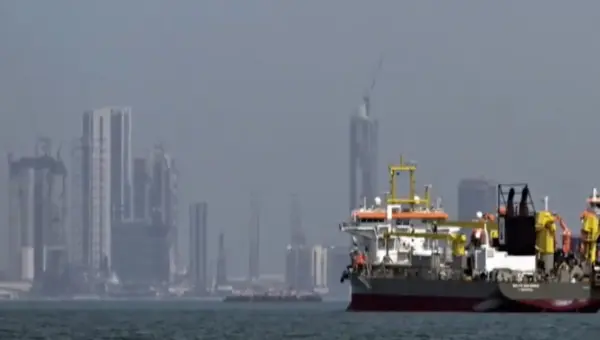
Iran's recent decision to block Chinese ships at the Strait of Hormuz is exposing the limits of Beijing's influence in the Middle East. This action is causing delays and cancellations for Chinese manufacturers, turning a perceived geopolitical win into an economic strain.
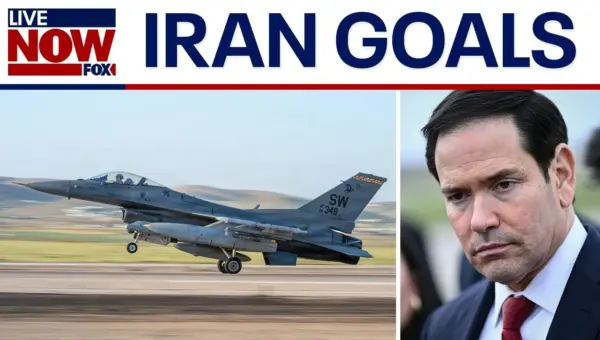
Rubio: US Can Achieve Iran War Goals Without Troops
Senator Marco Rubio outlined a strategy to counter Iran without deploying U.S. ground troops, focusing on weakening the regime and enhancing maritime security. He also criticized Cuba's economic system and expressed concerns about West Bank violence.