Iran’s Leader Critically Wounded; US Unleashes New Drone Arsenal
Unconfirmed reports suggest Iran's new leader is critically wounded, raising questions about regime stability. Meanwhile, the U.S. deploys advanced drone technology and escalates air strikes, intensifying regional conflict.

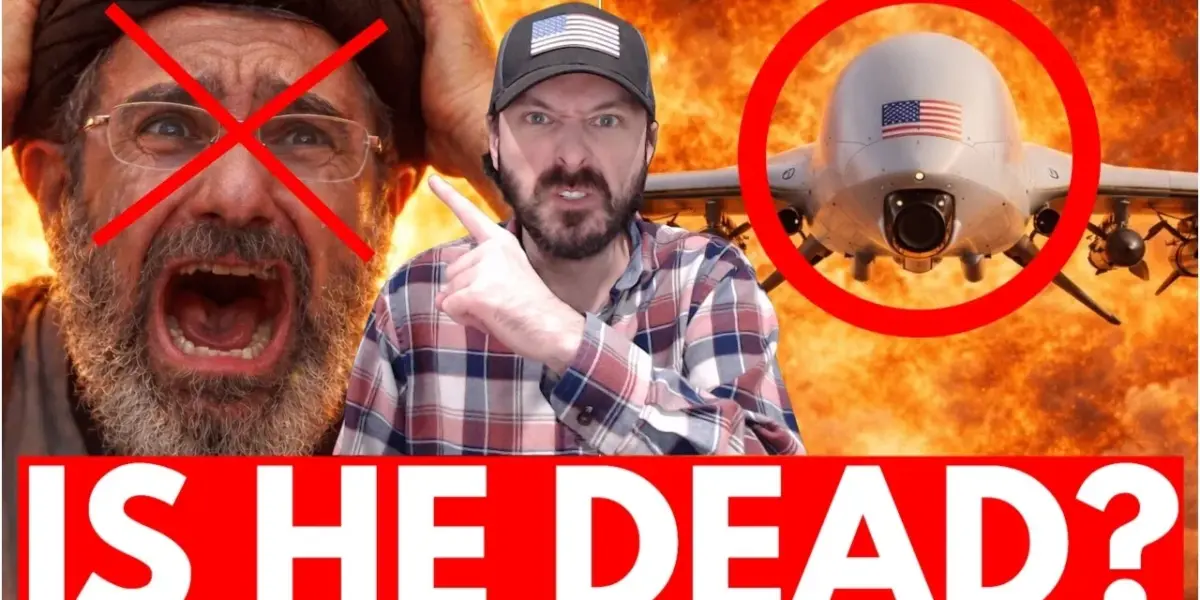
Tehran’s Succession Crisis: A Leader in Critical Condition?
Recent reports suggest a tumultuous period for Iran, with significant developments concerning its newly appointed leader, Moshaba Hani. While official statements from Tehran vow defiance and continued conflict, unconfirmed but persistent reports indicate that Hani is critically wounded, potentially in a coma and having undergone amputations. This raises profound questions about the stability of Iran’s leadership and its strategic direction amidst escalating regional tensions.
The Unseen Leader and a Vow of Revenge
Following the appointment of Moshaba Hani, the son of a previously deceased figure, Iran has presented a unified front, at least publicly. A statement attributed to Hani, read on live state television, declared a commitment to continuing the fight, seeking revenge, and maintaining the closure of the Strait of Hormuz indefinitely. However, the absence of Hani from public view, with no photographs or live appearances, has fueled speculation. The lack of direct visual confirmation has led to doubts about his current state and capacity to lead.
Reports of Critical Injury and Strategic Deception
Multiple outlets, including The Hill and the Daily Mail, have cited reports suggesting Hani’s severe incapacitation. These reports claim he has been in a coma since his appointment and suffered amputations after being wounded. Initially, rumors spoke of a fractured foot, but the current accounts paint a far more dire picture. The implication is that Iran’s leadership, or elements within it like the IRGC, might be attempting to use Hani as a figurehead. The strategy, according to these analyses, would be to project an image of strong leadership to the world while a incapacitated leader, possibly unaware of his own position, is effectively a ‘ghost’ at the helm, with the true power residing elsewhere.
America’s Evolving Arsenal: The Lucas Drone and HIMARS
Amidst this uncertainty in Tehran, the United States appears to be escalating its military operations in the region with the deployment of advanced weaponry. Footage has emerged showcasing the ‘Lucas drone,’ an American reverse-engineered version of the Russian Shahid drone. This weapon system, described as an American improvement on Iranian technology, has been demonstrated striking targets in Iraq with significant destructive power. The narrative presented is one of American engineering prowess, taking an adversary’s technology and repurposing it with enhanced accuracy and effectiveness against Iranian-backed forces.
Furthermore, footage released by the U.S. government depicts the deployment of HIMARS (High Mobility Artillery Rocket System) rockets, targeting Iranian assets. These strikes are part of a broader campaign aimed at degrading Iran’s military capabilities and influence in the region.
Iran’s Continued Barrage and Regional Impact
Despite these advancements in the U.S. arsenal and the reported critical condition of its leader, Iran continues its offensive actions. The UAE Ministry of Defense has reported a significant number of ballistic missile firings from Iran, with 10 missiles launched on a single day and a total of 26 in the preceding 24 hours. These attacks, along with a substantial number of drones and cruise missiles fired at the UAE over time, highlight Iran’s persistent willingness to engage U.S. allies. Kuwait has also reported coming under attack, indicating a widespread and ongoing campaign of missile and drone strikes across the region.
Escalated Strikes on Tehran and Internal Control Measures
In response to Iran’s continued aggression and the internal leadership crisis, reports indicate a significant escalation of U.S. and Israeli air strikes targeting Tehran. Footage shows explosions across the sky, with smoke plumes rising from the capital. These strikes are reportedly aimed at military command centers and Iranian-aligned militias. Notably, there are claims that the U.S. and Israel are specifically targeting Iranian security checkpoints within Tehran. This strategy, if accurate, suggests an effort to dismantle the regime’s internal control mechanisms, potentially to facilitate popular uprisings.
The IRGC and the Basij militia are reportedly enforcing strict curfews and checkpoints in Iran, with orders to shoot on sight anyone attempting to take to the streets. The destruction of these checkpoints by external forces is framed as an act of enabling the Iranian populace to reclaim their government.
Hiding in Plain Sight: Iranian Forces Under Duress
Compellingly, footage has surfaced showing Iranian military forces seeking cover under bridges, with armored personnel carriers visible. This imagery suggests that Iranian forces are actively attempting to evade U.S. air strikes, highlighting the pressure they are under and the effectiveness of the ongoing aerial campaign.
Quantifying the Conflict: CENTCOM’s Operational Tempo
U.S. Central Command (CENTCOM) has released figures detailing the scale of operations. As of March 12th, approximately 6,000 targets have reportedly been hit, with 60 ships sunk and 30 mine layers neutralized. These numbers underscore the high operational tempo and the significant impact of U.S. military actions in the region.
A Shadow Over the Homeland: The Michigan Incident
On a somber note, an incident in Michigan involving an attack on a synagogue, where an armed individual was killed by a security guard, has been highlighted. While details remain scarce, this event is presented as an example of internal threats and potential ‘sleeper cell’ activities within the homeland, adding another layer of complexity to the current security landscape.
Why This Matters
The confluence of a potential leadership vacuum in Iran, coupled with escalating military actions by the U.S. and its allies, presents a volatile and unpredictable geopolitical situation. The reports of Iran’s leader being critically wounded, if true, could destabilize the regime, leading to internal power struggles or a more desperate external posture. The U.S.’s deployment of advanced weaponry like the Lucas drone signifies a technological edge and a willingness to escalate. The targeting of internal checkpoints in Tehran, if part of a deliberate strategy, suggests a move towards encouraging internal dissent. The sheer scale of military operations, as indicated by CENTCOM’s figures, points to a sustained and intense conflict. Furthermore, the mention of domestic threats, such as the Michigan incident, underscores the multifaceted nature of current security challenges, extending beyond international conflicts to internal vulnerabilities.
Implications, Trends, and Future Outlook
The implications of these developments are far-reaching. A weakened or incapacitated Iranian leadership could lead to a more erratic foreign policy or a power vacuum that extremist groups could exploit. The U.S. strategy of employing reverse-engineered and advanced weaponry suggests a trend towards asymmetric warfare and technological dominance. The potential for internal unrest in Iran, if encouraged by external actions, could reshape the region’s political landscape dramatically. The ongoing missile and drone exchanges with U.S. allies like the UAE and Kuwait indicate a persistent regional threat that requires continuous vigilance and defense. The future outlook remains uncertain, but it is clear that the region is at a critical juncture, with the potential for significant shifts in power dynamics and security paradigms.
Historical Context
Iran’s current geopolitical standing is deeply rooted in its history, particularly the 1979 revolution that established the Islamic Republic. Decades of internal political maneuvering, international sanctions, and regional proxy conflicts have shaped its current posture. The tension between the clerical leadership and internal reformist or dissenting voices has been a recurring theme. The U.S.’s involvement in the region, including past interventions and ongoing strategic partnerships, has also played a significant role in shaping regional alliances and antagonisms. The development and deployment of advanced military technologies, such as drones and precision-guided munitions, are part of a broader global trend in modern warfare, reflecting a continuous arms race and evolving battlefield tactics.
Source: Iran's Dictator CRITICALLY Wounded – U.S. UNLEASHES New Weapon (YouTube)

Related Articles

G7 Allies Clash Over Iran War Strategy, Urge Focus on Russia
G7 foreign ministers met in Paris, revealing deep divisions over the U.S. war with Iran. European allies urged the U.S. to pressure Russia, linking its actions to the conflict and fearing support for Ukraine will wane.

Iran Blocks China Ships, Exposing Beijing’s Weak Grip
Iran's recent decision to block Chinese ships at the Strait of Hormuz is exposing the limits of Beijing's influence in the Middle East. This action is causing delays and cancellations for Chinese manufacturers, turning a perceived geopolitical win into an economic strain.
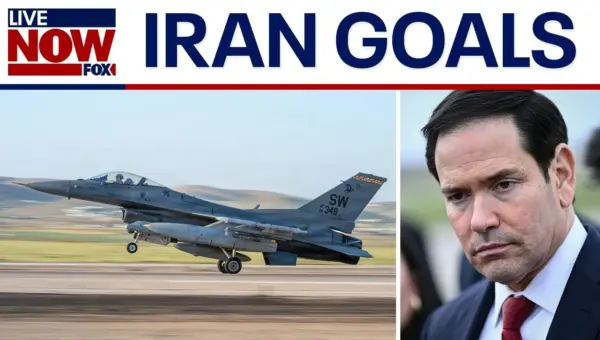
Rubio: US Can Achieve Iran War Goals Without Troops
Senator Marco Rubio outlined a strategy to counter Iran without deploying U.S. ground troops, focusing on weakening the regime and enhancing maritime security. He also criticized Cuba's economic system and expressed concerns about West Bank violence.