Trump’s ‘Insane’ Gas Price Spin: A Patriotic Tax?
Donald Trump's assertion that rising gas prices benefit the U.S. is met with sharp criticism, framing it as a 'Trump gas tax' that enriches elites while burdening consumers. The analysis highlights broken promises and perceived hypocrisy, urging voters to scrutinize leaders' actions over rhetoric.

Trump’s ‘Insane’ Gas Price Spin: A Patriotic Tax?
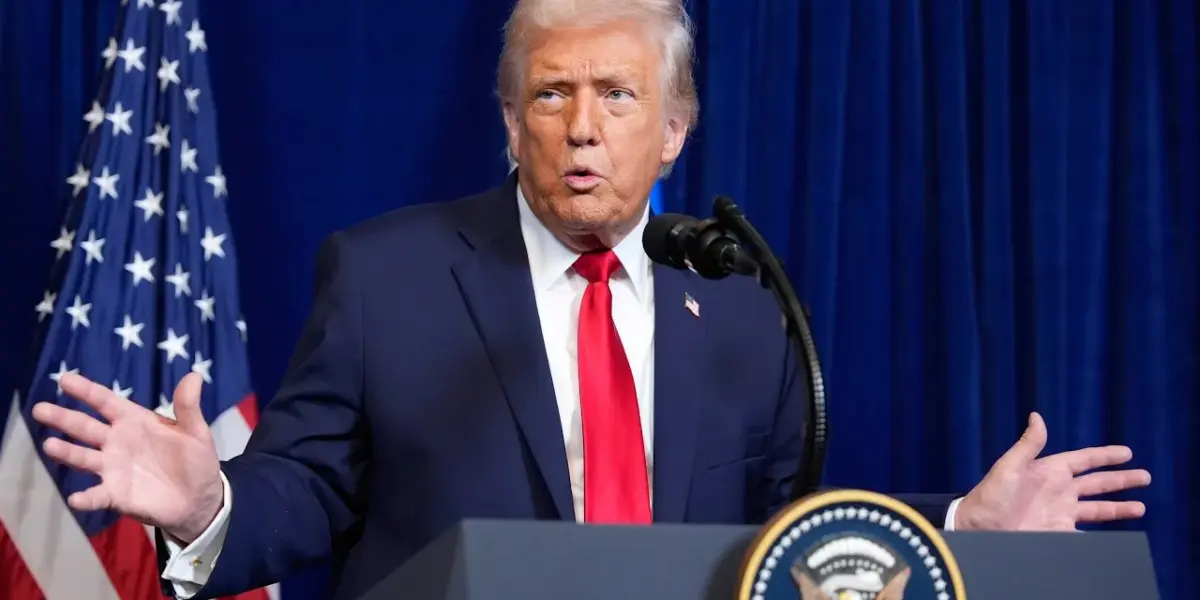
Donald Trump has once again ignited controversy with a statement on his social media platform, Truth Social, regarding oil prices. In a declaration that has left many observers questioning its logic and intent, Trump stated, “The United States is the largest oil producer in the world by far. So when oil prices go up, we make a lot of money. But of far greater interest and importance to me as president is stopping an evil empire, Iran, from having nuclear weapons and destroying the Middle East and indeed the world. I won’t ever let that happen. Thank you for your attention to this matter, President Donald J. Trump.” This statement appears to frame high gas prices as a beneficial outcome, suggesting that increased costs translate into greater national wealth, while simultaneously linking it to a strategic imperative to counter Iran.
The ‘We’ Problem: Who Benefits from High Gas Prices?
The immediate reaction to Trump’s announcement is a profound disconnect between his assertion that “we make a lot of money” and the reality experienced by most Americans. The speaker in the transcript highlights this discrepancy, asking, “Who is we?” The implication is clear: the “we” benefiting from higher oil prices are not the average consumers filling their tanks, but rather wealthy donors and oil company executives. This framing positions Trump as aligned with elite interests rather than the working-class populism he has often espoused.
This perspective suggests that Trump, despite his populist rhetoric, remains fundamentally aligned with the economic elite. The argument is that while he may have “cosplayed as a populist” and a “working-class champion,” his policies and pronouncements ultimately serve the interests of “the very elite that he spent so much time railing against.” Consequently, the burden of increased costs falls upon ordinary citizens, while Trump and his associates profit.
The ‘Trump Gas Tax’: An Unforced Error?
The analysis draws a direct line between Trump’s actions and the current spike in gasoline prices. Citing petroleum analyst Patrick Dhan, the transcript estimates that Americans are spending “roughly 250 million more on gasoline than they did 30 days ago. That’s over $1.5 billion per week.” This is characterized as the “Trump gas tax,” an avoidable financial burden imposed on the public.
This directly contrasts with Trump’s past promises. During his presidency and previous campaigns, he vowed to lower gas prices and end the “era of forever wars” in the Middle East. The transcript points out the apparent contradiction: instead of ending wars, Trump is accused of initiating a new conflict in the Middle East, which in turn has led to oil price surges, with oil reportedly nearing $100 a barrel. The Wall Street Journal is quoted as calling this the “most severe energy crisis since the 1970s.” The critical point is that this crisis is presented not as an unavoidable consequence of global events, but as an “unforced error” – a voluntary choice made by Trump, especially since the administration itself reportedly conceded that no attack on the United States was imminent.
Broken Promises and Hypocrisy
The transcript argues that Trump’s presidency is a “graveyard of broken promises.” It lists several unfulfilled pledges from his first term, including an infrastructure law, a healthcare plan, a middle-class tax cut, a jobs boom, and a manufacturing renaissance. The argument extends to his current term, with promises of reduced costs for groceries, lower rents, and justice for Epstein’s victims also allegedly unfulfilled. The only consistent action cited is tax cuts for himself and his wealthy friends.
A significant point of contention is the perceived hypocrisy of Trump supporters. The transcript notes the strong Republican stance against measures perceived as burdensome, such as mask mandates during the pandemic, often framed as infringements on liberty. Yet, when faced with high gas prices resulting directly from Trump’s alleged actions, the same individuals are quoted as accepting it as “short-term pain for long-term gain.” This is contrasted with their fierce opposition to even minor inconveniences for public health reasons, highlighting a perceived double standard.
Predicting the Future: A History of Miscalculations?
The analysis casts doubt on Trump’s ability to accurately predict future outcomes, particularly when his own decisions shape those outcomes. His statement that “short-term oil prices will drop rapidly” is met with skepticism, drawing a parallel to his early pronouncements about the COVID-19 pandemic: “We have it totally under control… It’s going to be just fine.” The transcript points to the eventual death toll as evidence of his unreliable foresight.
The core argument is that Trump’s actions, including the decision to engage in Middle Eastern conflict and the subsequent rise in oil prices, are not anomalies but rather consistent patterns of behavior. His presidency, the transcript contends, is characterized by prioritizing personal gain and legacy over the well-being of his constituents. The “broken promise on lower gas prices is a feature, not a bug,” of his administration.
Why This Matters
This analysis is crucial for understanding the complex relationship between political rhetoric, economic policy, and public perception. It challenges the notion that political leaders are powerless against market forces, suggesting that presidential actions can indeed have direct and significant economic consequences for citizens. The piece forces a re-evaluation of Trump’s populist image, suggesting a disconnect between his stated aims and the lived experiences of his base. Furthermore, it highlights the role of media and public discourse in shaping narratives around economic hardship and political accountability. The perceived hypocrisy among some political factions when facing different types of sacrifice also underscores broader trends in political polarization and the selective application of principles.
Implications, Trends, and Future Outlook
The implications of this analysis extend beyond immediate economic concerns. It points to a potential trend where political leaders might attempt to reframe negative economic outcomes as strategic necessities or even patriotic duties. This could embolden future administrations to take actions with significant economic repercussions, relying on narrative control to mitigate public backlash. The reliance on elite beneficiaries (“oil company CEOs,” “rich donors”) as the primary “we” in political discourse is a significant trend that could further alienate working-class voters if not addressed.
The future outlook suggests a continued struggle for transparency and accountability in political decision-making. As politicians increasingly leverage social media for direct communication, the ability to critically analyze their pronouncements becomes paramount. The transcript’s call for independent media and direct communication channels (like newsletters) reflects a growing concern about censorship and the control of information in the digital age. Voters are urged to look beyond promises and examine the tangible outcomes of policies, questioning whether leaders are truly working for them or for themselves and their allies.
Historical Context and Background
The reference to the “most severe energy crisis since the 1970s” provides critical historical context. The oil shocks of the 1970s, stemming from the OPEC embargo, had profound and lasting impacts on the global economy, leading to inflation, recession, and significant shifts in energy policy. By invoking this comparison, the transcript suggests that the current situation, if exacerbated by political decisions, could echo those turbulent times. Furthermore, the history of “forever wars” in the Middle East and their economic and human costs provides a backdrop against which Trump’s actions are judged. The repeated cycle of promises to end conflicts and subsequent escalations, as alleged, speaks to a persistent theme in recent geopolitical history.
The analysis also implicitly touches upon the historical tension between populist rhetoric and elite interests. Many political movements have successfully courted the working class by promising to challenge established elites, only to find themselves either co-opted by those elites or unable to fundamentally alter the status quo. Trump’s career is presented as a case study in this dynamic, where the promise of disruption ultimately served to consolidate existing power structures for a select few.
Conclusion: A Call for Scrutiny
The central thesis is that Donald Trump’s recent announcement, framing high gas prices as a national benefit tied to confronting Iran, is a disingenuous attempt to spin a negative economic reality. The analysis contends that this is not an isolated incident but part of a pattern of broken promises and policies that primarily benefit the wealthy while burdening the general public. The piece concludes with a direct appeal to Trump supporters, urging them to question whether their leaders are truly serving their interests or demanding their sacrifice. It emphasizes the need for critical thinking and a clear-eyed assessment of political actions versus stated intentions, especially in an era where promises are easily made and accountability is increasingly elusive.
Source: OMG: Trump makes INSANE announcement (YouTube)

Related Articles
Trump’s Name Everywhere: A ‘Stain’ on GOP Legacy?
Former President Donald Trump's efforts to brand national symbols, including a proposed signature on dollar bills, spark debate. Critics view this as an authoritarian attempt to embed his legacy, potentially staining the Republican Party's history and contrasting with democratic ideals of public ownership.
Trump’s War Talk Stuns Financial Crowd
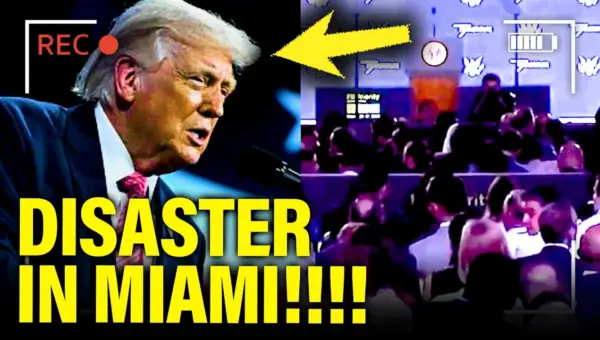
Donald Trump's recent speech in Miami focused on his foreign policy, particularly his critical views on NATO and his vision for international relations. He declared the U.S. would no longer defend NATO allies, questioned the value of existing alliances, and suggested renaming the Strait of Hormuz. The speech also touched on his personal views of success, his allies, and his perceived role as a global peacemaker.
Trump’s Warpath: New Threats Signal Imperial Ambitions
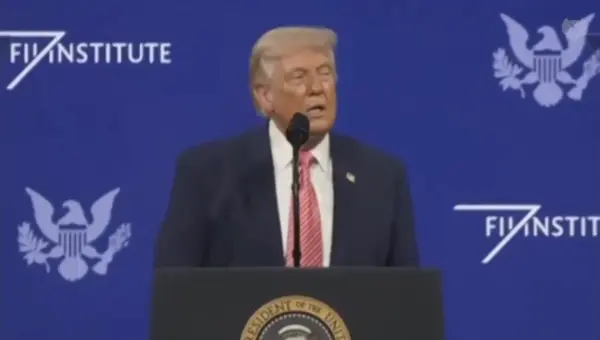
Recent statements from Donald Trump reveal a potential embrace of increased military action and interventionist foreign policy. This approach, characterized by critics as "imperialism 2.0," contrasts with his past promises of peace and has even drawn criticism from parts of his own base. The implications for U.S. global engagement and domestic priorities are significant.