US Housing Market Faces Shifting Dynamics: Sellers Outnumber Buyers
The U.S. housing market is showing signs of strain as sellers increasingly outnumber buyers. Elevated mortgage rates and rising inventory are leading to localized price corrections, though a widespread crash similar to 2008 remains unlikely. Analysts anticipate a period of price stagnation or modest declines in 2026.

US Housing Market Faces Shifting Dynamics: Sellers Outnumber Buyers
The U.S. Housing market is exhibiting signs of increasing pressure, with sellers now outnumbering buyers by a significant margin. Data indicates a notable shift in market conditions, particularly as mortgage rates remain elevated and inventory levels climb. While a nationwide crash on the scale of 2008 appears unlikely, localized corrections and a potential period of price stagnation are becoming more probable scenarios for 2026.
Seller Dominance and Inventory Concerns
Recent reports highlight a growing imbalance between sellers and buyers. In October, sellers outnumbered buyers by a record 36.8%, according to Redfin data.
This figure has been on a steady climb since December 2021, indicating a sustained trend of more sellers than active buyers in the market. The number of buyers in the market dropped by 1.7% in the same period, reaching the lowest level recorded outside of the initial pandemic phase.
This imbalance is also affecting home builders. The number of completed but unsold new homes has reached levels not seen since the summer of 2009.
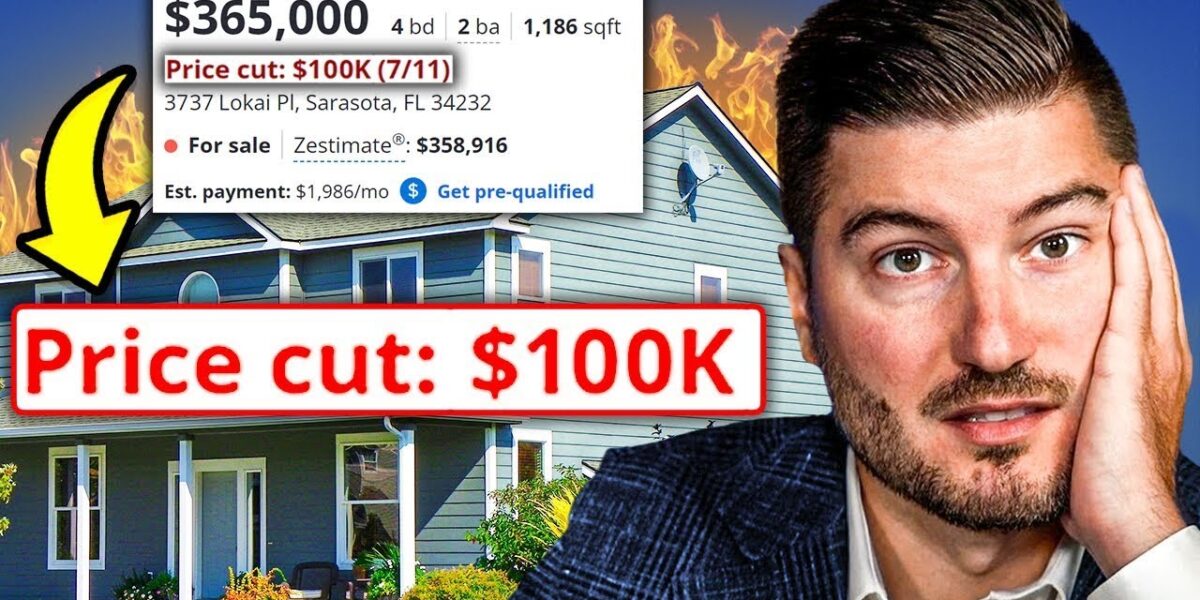
Builders, who had anticipated a strong rebound in demand for 2025, are now holding significant unsold inventory. Data suggests that nearly 60% of homes sold in 2025 had experienced at least one price cut, highlighting the challenges sellers face in moving properties at their desired price points.
Mortgage Rates and Price Trends
The surge in mortgage rates, from below 3% in early 2022 to consistently above 6% for three years, has been a primary driver of these market shifts. Despite these higher borrowing costs, national home prices have shown resilience, with data from Case-Shiller indicating a 6% increase in 2023, a 4% rise in 2024, and nearly a 2% increase year-to-date in 2025.
Historically, nominal home prices have only seen significant national declines during major financial crises. Over the past 76 years, prices have only fallen in seven instances, all clustered around periods of economic turmoil.
However, the current elevated rate environment, coupled with a potential economic slowdown, could alter this historical pattern. If mortgage rates remain above 6%, a modest correction in prices is not out of the question. The expectation of a substantial 20-30% nationwide price crash, however, is not supported by current data, as it would likely require a more severe economic downturn or a systemic financial crisis.
Regional Market Divergence
The U.S. Housing market is characterized by significant regional variation. While national prices have trended upward, certain metropolitan areas are experiencing price declines. Between their peak in 2022 and October 2025, some markets have seen notable corrections.
For instance, Jacksonville, Florida, experienced a year-over-year median sale price decrease of 4%. Conversely, other areas have shown robust growth, with Cleveland, Ohio, leading at an 11.6% increase, followed by Newark, New Jersey, and Detroit, Michigan. Milwaukee and Chicago also reported price increases, with Chicago’s growth being particularly noteworthy given population outflow trends.
Some of the most significant market corrections, such as Austin and Cape Coral seeing declines of 26% and 18% respectively, are in areas that experienced rapid price appreciation between 2020 and 2022. These corrections are often viewed as a return to more normalized levels after periods of overheating, rather than a broad market collapse.
Looking Ahead to 2026
Forecasting the housing market for 2026 remains challenging amidst economic uncertainties, including planned layoffs and the evolving impact of artificial intelligence on the job market. However, a prevailing view suggests that home prices may stagnate, with flat to slightly negative growth, allowing incomes to potentially catch up. A small correction would not be surprising if mortgage rates persist above 6%.
The current housing market is also distinct from the 2008 crisis. Homeowners’ loan-to-value ratios are significantly lower than in the pre-2008 era, and the market lacks the systemic risks associated with complex financial instruments like Collateralized Debt Obligations (CDOs) and the widespread betting against clients by investment banks that characterized the previous crisis.
Demographic trends also play a key role. The largest population cohort, individuals aged 32-36 in 2024, are in their prime home-buying years.
This sustained demand, coupled with Baby Boomers remaining in their homes due to unfavorable mortgage rates for downsizing, could provide a floor for prices. The desire for homeownership, tied to life events like marriage and starting families, continues to be a strong underlying factor.
Market Impact and Investor Considerations
For investors, the current housing market suggests a shift from rapid appreciation to a more stable, potentially flat or slightly declining price environment in many areas. The divergence between regional markets implies that a granular, localized approach to real estate investment may be more prudent than a broad national strategy.
The elevated mortgage rate environment is a key factor to monitor. Should rates begin to fall due to economic weakness, this may not necessarily stimulate housing demand if the underlying cause is a contracting economy. Conversely, a significant decrease in rates without a corresponding economic slowdown could reignite buyer interest.
While a large-scale crash is improbable, the increasing inventory and the higher cost of borrowing mean that the market is unlikely to return to the rapid price gains of recent years. Investors should prepare for a period of slower growth, potential price adjustments in overheated markets, and a continued emphasis on local economic fundamentals and demographic trends when evaluating real estate opportunities.
Source: Housing Market Crash Fears Rise (Homes Are NOT Selling) (YouTube)

Related Articles


Median Home Price Now Out of Reach for Median Income
The median home price in the U.S. has now surpassed what the median household income can afford, creating a significant barrier to homeownership. Analysis shows a required salary of over $112,000 for the median home price, far exceeding the median income of $84,000. This affordability gap challenges the traditional dream of owning a home for many Americans.


Wall Street Landlords Slash Rents Amid Oversupply
Wall Street landlords are cutting rents by up to 10% in cities like Atlanta due to a surge in accidental landlords and market oversupply. This trend is leading to significant discounts on homes, impacting both renters and sellers.


AI Spots Top 5 Housing Markets for Investors
Artificial intelligence identifies top real estate investment markets like Charlotte, Dallas-Fort Worth, Raleigh-Durham, Columbus, and Indianapolis. While AI highlights growth, experts caution that appreciation may slow, and finding cash flow requires careful analysis, especially in competitive markets.