Beyond Bullets: Nations Wage War in the Digital Meme Arena
Nations are increasingly leveraging internet culture and viral content to wage psychological warfare. The US, Iran, and China are engaging in a new form of conflict, using memes to shape public opinion and score geopolitical points.

Beyond Bullets: Nations Wage War in the Digital Meme Arena
While the world’s attention is understandably fixed on the grim realities of physical conflict in the Middle East, a parallel battle is quietly intensifying – the meme war. In an era where information, and disinformation, travels at the speed of a retweet, nations like the United States, Iran, and China are increasingly leveraging internet culture and viral content to wage psychological warfare, shape public opinion, and score geopolitical points.
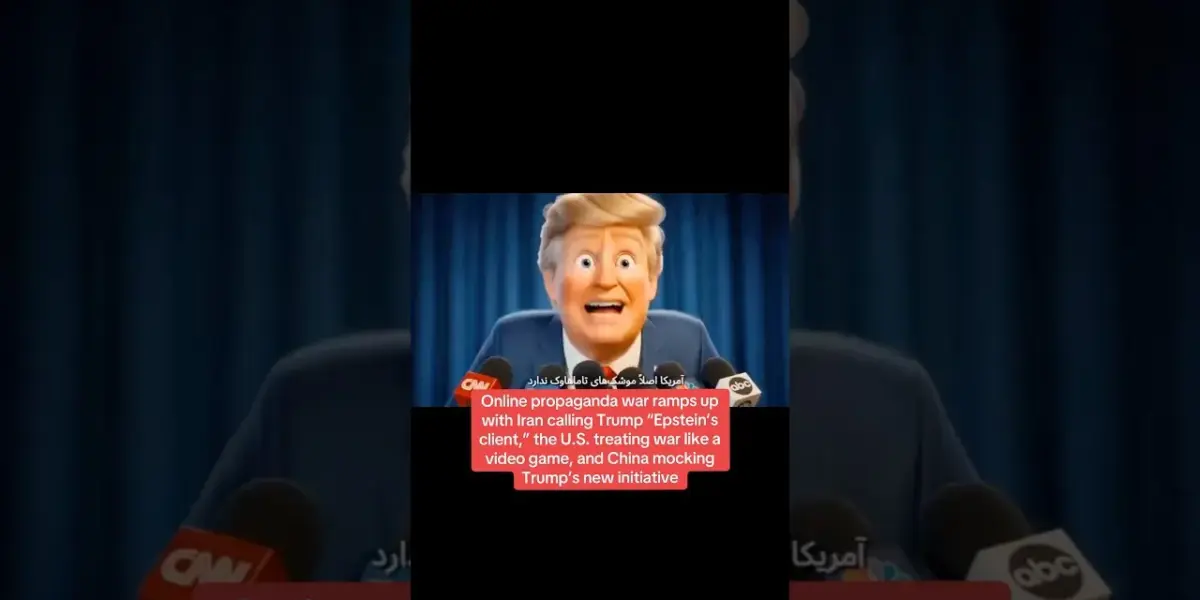
The past 24 hours have offered a stark illustration of this evolving battlefield. The Iran embassy, in a move that blends tragedy with digital provocation, posted a video memorializing the victims of an attack on a school in Kahn. This wasn’t a somber news report; it was a parody of the Pixar film Inside Out, reimagined to accuse the United States of complicity. The video directly challenges American claims of civilian protection, sarcastically asking, “Why did you attack the Manob school?” and culminating in a pointed jab at former President Donald Trump, labeling him “Epstein’s client.” This tactic, employing a widely recognized cultural format to deliver a scathing political message, highlights a sophisticated understanding of how to capture attention and evoke emotion online.
The United States, in response, has not shied away from this digital arena. The White House account posted a video declaring itself “undefeated,” featuring footage reminiscent of the Nintendo Wii gaming system. The clip, with its retro aesthetic and energetic sound effects, seems designed to project an image of playful dominance and unassailable strength. While lacking the overt accusatory tone of the Iranian message, its intent is clear: to counter narratives of weakness or defeat with a display of swagger and technological prowess, albeit in a decidedly low-fidelity, almost ironic, presentation.
China, meanwhile, has entered the fray by directly mocking a recent initiative by Donald Trump, dubbed the “Shield of the Americas.” This initiative, which aimed to bring right-wing Latin American leaders into a security alliance, was framed by the Chinese embassy in the United States as a tool of control rather than protection. Their accompanying video questioned the initiative’s true purpose, with characters suggesting, “Security comes with a little control.” The embassy’s post, asking “Shield of the Americas or Shackles of the Americas?” employs a classic propaganda technique: reframing the opponent’s initiative as something sinister and restrictive, using a popular meme format to amplify the critique.
The Meme as a Weapon
These instances are not isolated incidents but rather symptomatic of a broader trend. Memes, once confined to niche internet forums, have become potent tools in the arsenal of state-sponsored information operations. Their power lies in their inherent shareability, their ability to distill complex messages into easily digestible and emotionally resonant formats, and their capacity to bypass traditional media gatekeepers.
The virality of memes allows them to spread rapidly across social media platforms, reaching vast audiences that might be impervious to traditional news or official statements. Furthermore, the often humorous or satirical nature of memes can disarm recipients, making them more receptive to the underlying message, even when that message is hostile or propagandistic. This creates a fertile ground for influencing public perception, sowing discord, and undermining adversaries.
Historical Context: The Evolution of Propaganda
The use of propaganda is as old as conflict itself. From ancient battle cries and Roman banners to World War I posters and Cold War radio broadcasts, nations have always sought to influence the hearts and minds of their own populations and those of their enemies. However, the digital age has introduced unprecedented speed, reach, and sophistication to these efforts.
The internet, and social media in particular, have democratized the creation and dissemination of information. While this has empowered citizen journalists and grassroots movements, it has also provided a powerful platform for state actors to conduct sophisticated information warfare campaigns. The visual and often playful nature of memes represents a significant evolution from the more overtly propagandistic materials of the past. It’s a subtler, more insidious form of influence, one that can be easily dismissed as harmless internet humor while simultaneously achieving strategic objectives.
Why This Matters
The increasing reliance on meme warfare signifies a critical shift in geopolitical strategy. It suggests that traditional diplomatic channels and military posturing are now being complemented, and in some cases perhaps even supplanted, by battles fought in the digital ether. The ability to rapidly deploy viral content can shape narratives in real-time, influencing public opinion during critical moments of international tension.
This trend poses significant challenges. It blurs the lines between genuine public discourse and state-sponsored manipulation. It makes it increasingly difficult for individuals to discern fact from fiction, and for governments to counter foreign influence operations effectively. The psychological impact of these digital campaigns, while harder to quantify than military casualties, can be profound, eroding trust, fostering division, and impacting national morale.
Implications, Trends, and Future Outlook
As meme warfare becomes more sophisticated, we can expect to see several trends emerge. Firstly, the production of memes will likely become more professionalized, with state actors employing dedicated teams of content creators and digital strategists. Secondly, the content will become more targeted, leveraging data analytics to tailor messages to specific demographic groups and cultural contexts. We may also see an increase in the use of AI-generated content to create highly personalized and persuasive propaganda.
The future outlook is one where the digital battlefield is as critical as the physical one. Nations will need to develop robust strategies not only for defense against cyber-attacks but also for countering sophisticated information warfare. This will require a multi-faceted approach, including media literacy education for the public, rapid fact-checking initiatives, and international cooperation to establish norms and accountability in the digital space.
Ultimately, the meme wars are a stark reminder that conflict in the 21st century is fought on multiple fronts. While the images of physical destruction are devastating, the invisible battles waged through viral content have the power to shape perceptions, influence allegiances, and alter the course of international relations in ways we are only beginning to understand.
Source: The Meme Wars Heat Up 😳 (YouTube)

Related Articles

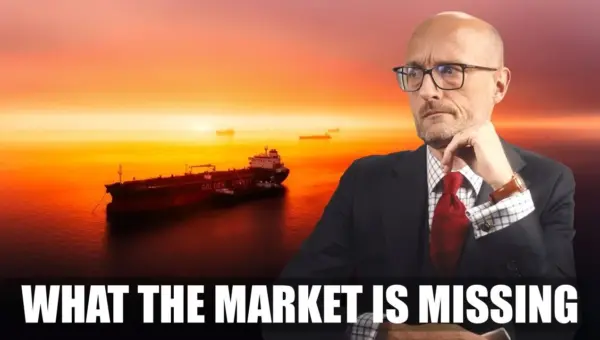
Stocks Ignore War Risks, Focus on “Taco Moments”
Stock markets appear to be overlooking the severe supply chain risks stemming from the Iran conflict, focusing instead on potential diplomatic de-escalations. While the S&P 500 shows resilience, bond and commodity markets signal deep concern over disruptions to critical resources like LNG, helium, and fertilizers.
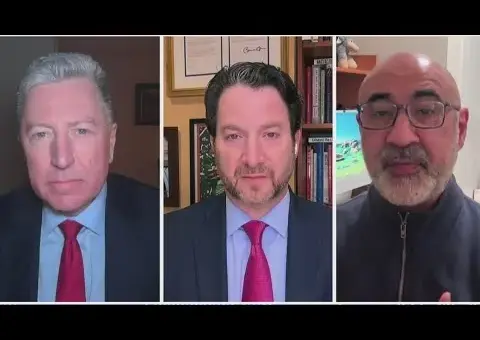
U.S. Iran Tensions Rise Amid Shifting Alliances
Rising tensions between the U.S. and Iran are creating a volatile geopolitical situation. With conflicting signals on de-escalation and potential shifts in alliances like NATO and U.S.-Israel relations, the path forward remains uncertain. The global economy and regional stability hang in the balance.


Iran Targets US With Cyberattacks, Escalating Digital Warfare
Iran is increasingly using cyberattacks to challenge the U.S., as seen in a recent hack of the FBI director's account. Experts say this is a strategic shift due to Iran's limitations in conventional warfare. The U.S. needs to strengthen its digital defenses, focusing on encryption and cloud computing, rather than solely relying on traditional security measures.