Settler Violence Escalates in West Bank Amid Iran Conflict
Escalating settler violence and movement restrictions are intensifying the humanitarian crisis in the occupied West Bank, overshadowed by the Iran conflict. Two brothers were killed in a settler attack, while new barriers and economic hardship plague Palestinian communities.

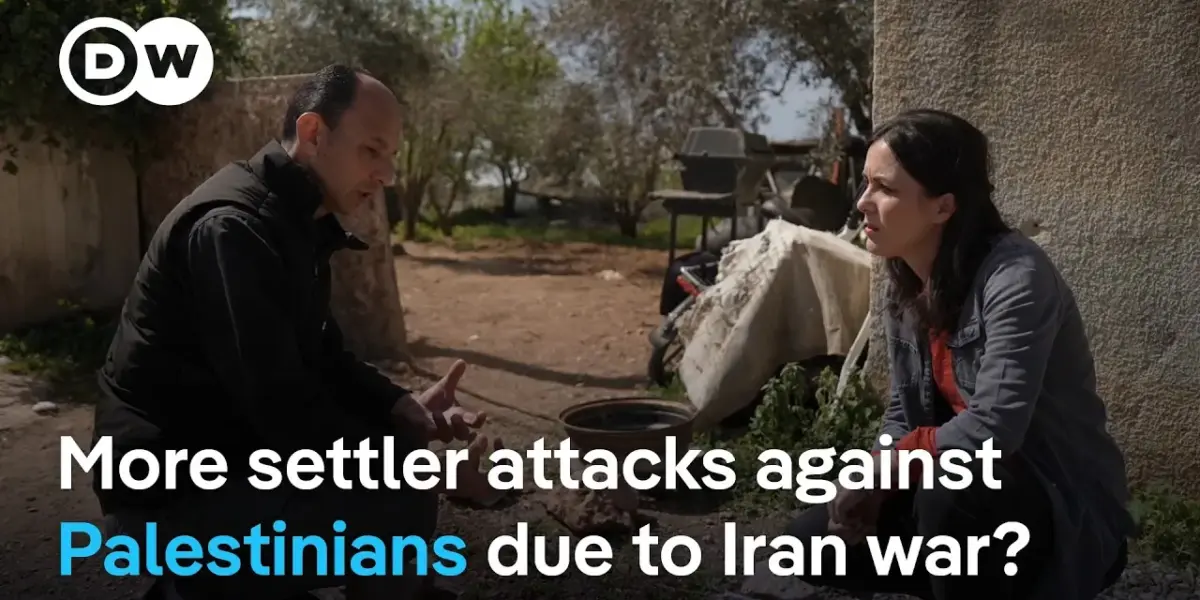
Settler Attacks Intensify in Occupied West Bank as Global Focus Shifts to Iran
KUT, Occupied West Bank – Amidst the escalating international tensions surrounding Iran, a disturbing surge in violence against Palestinians in the occupied West Bank is threatening to be overshadowed. As the world’s attention is diverted, concerns are mounting that Israeli settlers will exploit this shift to intensify their attacks on Palestinian communities, mirroring patterns observed during previous regional conflicts. Simultaneously, the Israeli army has implemented further restrictions on movement, erecting new iron gates in areas where such barriers were previously absent, exacerbating the daily challenges faced by Palestinians.
Tragedy Strikes Kut: Brothers Killed in Settler Attack
The village of Kut, near Nablus, bears witness to the brutal reality of this escalating violence. Just days after Israel’s war against Iran began, two brothers, Muhammad and Fahim Muamar, were killed. Their grieving mother clutches their photograph, a poignant symbol of her profound loss. Disturbing footage captured the moments leading up to the fatal attack on March 2nd, showing several armed settlers opening fire on the village. The Israeli human rights group B’Tselem confirms that the brothers were killed by settler gunfire. The Israeli Defense Forces have stated that the shooter was an active reservist and that the incident is currently under investigation.
“Muhammad stood here while the settlers attacked the house where the kids are. He wanted to protect the house and they killed him right here.”
– Bashar al-Karuti, a neighbor who witnessed the attack.
Bashar al-Karuti, a neighbor, recounted the harrowing events, describing how Muhammad was killed while trying to defend his home and family. His brother, Fahim, was subsequently killed as he attempted to save Muhammad. “It’s one of the hardest moments we’ve experienced that people are being killed in their own homes while they’re defending their kids, women, and their families. This is a catastrophe,” al-Karuti stated, underscoring the terror and helplessness felt by residents.
A Climate of Fear and Expansion
Kut is not an isolated case. The surrounding area is dotted with Israeli settlements, several of which were established shortly after the commencement of the Iran war. These settlements are considered illegal under international law. Residents of Kut live under a constant cloud of fear and anxiety. “We live in fear and worry. We’re always under alert in this region. We’re confronted with problems every single day,” a resident shared, painting a grim picture of daily life.
According to the Israeli NGO Yesh Din, at least 50 incidents of settler violence were documented in 37 different Palestinian communities within the first four days of the Iran war alone. This marks a significant escalation in settler-driven aggression.
Movement Restrictions and Economic Hardship
Further west, in the Palestinian town of Al-Mazra’a al-Sharqiya near Ramla, the impact of the conflict is also palpable. The landscape is marked by numerous Israeli flags, symbolizing Israeli claims over routes passing through occupied territory. At the war’s outset, Israel imposed a total military closure across the West Bank, effectively placing Palestinians under a blockade. Medics and human rights groups report that these army-imposed roadblocks impede the timely evacuation of patients by ambulances.
A newly installed iron gate at Al-Mazra’a al-Sharqiya exemplifies the tightening control. While Israel cites security concerns, Palestinians and human rights organizations view these barriers as a means of further subjugating the population under the guise of the ongoing war. The town, like many others, faces increasing settler pressure and land seizures. Palestinians who once cultivated their olive groves can no longer access their land, with new settler outposts appearing on nearby hilltops.
The deputy mayor of Al-Mazra’a al-Sharqiya described the current situation as an aggressive campaign, accelerated by the war. “Israel is using the current war situation to accelerate the settlement expansion to increase the pressure on the people. They have their own plans and they’re working on speeding up the annexation,” he stated.
Muhammad Shatara, a lifelong resident and baker, detailed the economic repercussions. New movement restrictions have led to a significant drop in customers and reduced spending. “The thing with Iran, it affected the work in the whole West Bank, not only here in Al-Mazra, it’s connected to the whole economic cycle. They are working on three projects. Not only the war with Iran but hitting the economic system here, destroying the olive trees because the roots of the trees are the roots of the people and now they forbid the people to go to their land,” Shatara explained, highlighting the interconnectedness of the violence and economic distress.
His bakery business has halved in the past two years. “This means everything in my life. It is because of this bakery I can raise the kids, build a house, and survive economically and protect my daily bread,” he said, expressing his deep concern for his family’s future.
Stark Contrasts in Healthcare Preparedness
In Ramla, a local hospital grapples with the stark reality of inadequate infrastructure. The hospital director explained that there are no proper bomb shelters, forcing them to prepare a makeshift triage area in a corridor. “Unfortunately, this will be the triage place where we are receiving patients. The shelter is one of our storage rooms there. The triage is this area is the corridor for the ambulances. It will be usually filled by three ambulances,” he said, gesturing to the limited space.
In a striking contrast to an underground intensive care unit prepared for hundreds of patients at an Israeli hospital in Jerusalem, Palestinian hospitals face severe resource limitations. “How unfortunate we are with our situation at the moment. I can’t imagine if there is a disaster happens nearby where 50 people need to come at once here. What we will do?” the director lamented.
The Muamar brothers’ delayed evacuation due to roadblocks highlights the critical impact of these restrictions on emergency medical care. Their deaths, leaving behind 12 children, underscore the devastating human cost of the escalating violence and movement restrictions. “What kind of life is this? It’s not safe. Neither safe at home nor safe for the kids nor at work. Nowhere,” a distraught resident lamented.
UNRWA Highlights Humanitarian Crisis
Jonathan Fowler, Senior Communications Manager for UNRWA (the UN Relief and Works Agency for Palestine Refugees), provided a grim assessment of the humanitarian situation in the West Bank. “The humanitarian situation in various parts of the the West Bank is incredibly troubling and it’s getting worse,” Fowler stated. He noted the mass displacement of thousands from camps in the north following Israeli forces’ Operation Iron Wall in January 2025, with 33,000 people still displaced.
Fowler highlighted that since October 2023, over 1,000 Palestinians have been killed in the West Bank, including numerous victims of settler attacks, with over 230 children among the deceased. “The overall assessment of the humanitarian situation is that violence, pressure, um, expulsions, um, settlement expansion, all flying in the face of international law are causing a huge humanitarian crisis on the ground,” he explained.
UNRWA monitors the escalating violence, which affects both registered refugees and the broader Palestinian population. Fowler described a constant spike in violence and an ambient fear that permeates communities, leading to anxiety and uncertainty about daily safety. “People worrying about risking their life and limb if they are going out to try and live their lives basically and and often, you know, families not knowing if people are coming home at the end of the day,” he said.
Accountability and International Pressure
Fowler emphasized that under international law, Israeli authorities, as the occupying power, have a responsibility to ensure the well-being of the population and prevent settler violence. He pointed to incidents involving off-duty reservists and the operation of semi-uniformed squads from settlements, stating, “This has to be stopped by the powers that be that that that have the you know h have the military under their control.”
He called for increased international pressure and focus to halt the violence, which is occurring under the radar, overshadowed by the conflicts in Gaza, Lebanon, and Iran. “And yet this is continuing. You know, it’s not happening in plain sight necessarily, but it is plain sight for people who live in the West Bank,” Fowler added.
Economic Collapse and Future Uncertainty
The economic impact of the violence and restrictions is severe, with the West Bank’s economy teetering on the brink of collapse for over two years. Declining tourism revenues, restrictions on movement to work in Israeli territory, and rising poverty rates have worsened the situation. “And now you know, the the rising situation, the closures, the huge number of extra movement restrictions, the gating off of of communities, these kind of things that have been happening um that that simply makes economic life even even more difficult,” Fowler explained.
The ongoing violence, coupled with movement restrictions and settlement expansion, paints a bleak picture for the future of Palestinian communities in the occupied West Bank. As global attention remains fixed on the Iran conflict, the humanitarian crisis unfolding on the ground risks further exacerbation without sustained international scrutiny and intervention.
Looking Ahead
The coming weeks will be critical in observing whether the international community increases pressure on Israel to curb settler violence and ease movement restrictions. The effectiveness of ongoing investigations into settler attacks and the potential for accountability will be closely watched. Furthermore, the impact of these escalating tensions on the broader regional stability and the ongoing humanitarian crisis in the West Bank will remain a key focus.
Source: Israeli settler attacks on Palestinians amid Iran war | DW News (YouTube)

Related Articles


Tiger Woods Arrested for DUI After Crash
Golf legend Tiger Woods was arrested for DUI in Florida following a dramatic rollover crash. Meanwhile, a government shutdown continues as House Republicans block a Senate deal, leading to airport chaos and TSA worker pay issues. The stock market also plummeted into correction territory amid fears of a prolonged Iran conflict.


Trump’s Iran War Plans Criticized Amid Border Funding Standoff
Lawmakers and analysts are criticizing the Trump administration's handling of the Iran conflict and its approach to border funding, arguing that a lack of clear planning and a focus on political battles are making the U.S. less safe. Concerns are particularly high regarding the FBI's priorities and the potential impact of these issues on national security.

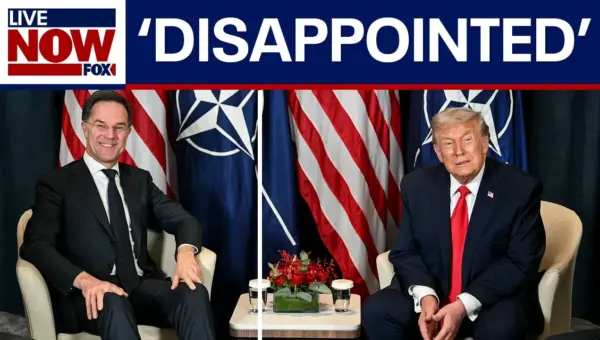
Trump Critical of NATO as Iran Conflict Escalates
President Trump voiced frustration with NATO's lack of involvement in the Iran conflict while the U.S. military prepares for a sustained campaign. Reports indicate significant damage to Iran's military, but tensions remain high with ongoing missile strikes and a recent attack on a Saudi air base wounding U.S. personnel.