Karoline Levit’s Slip-Up Exposes War Lies
Karoline Levit's recent statement questioning the existence of an imminent threat from Iran has inadvertently undermined the Trump administration's justifications for military action. This slip-up highlights a pattern of shifting narratives and raises serious questions about transparency and accountability in foreign policy.

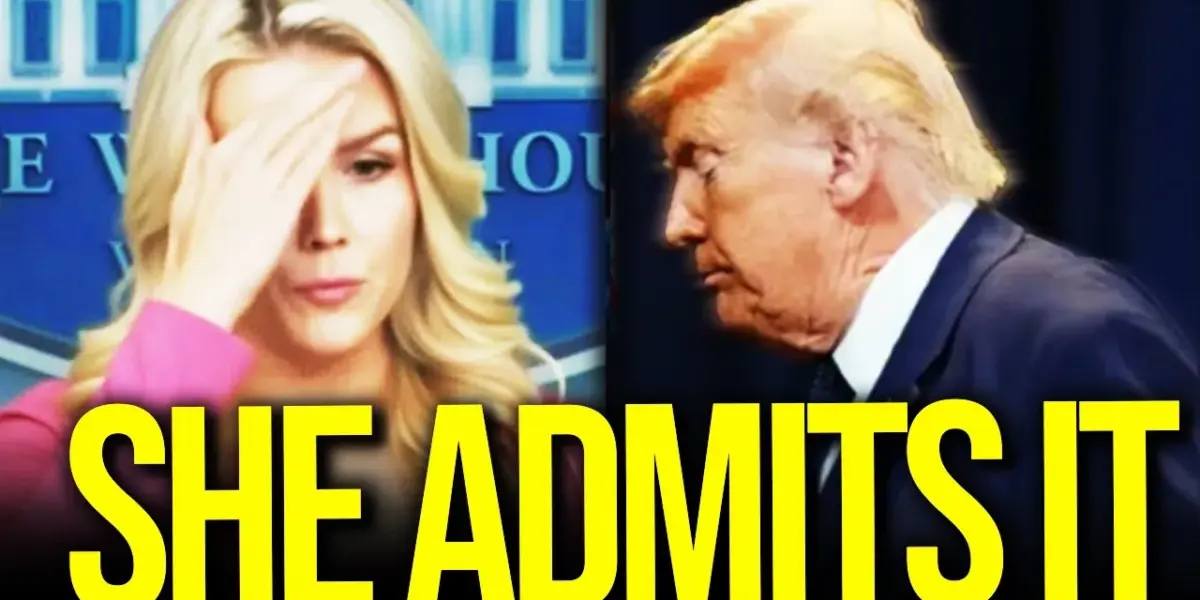
Karoline Levit’s Slip-Up Exposes War Lies
In a political landscape often characterized by carefully crafted narratives, a recent statement by Karoline Levit, a spokesperson for the Trump administration, has inadvertently shed light on what critics are calling a pattern of disingenuous justifications for military action. The assertion, made in response to a news report about a potential Iranian threat, has been interpreted by many as a direct contradiction of the very rationale used to escalate tensions and engage in conflict. This seemingly minor gaffe has ignited a larger debate about the transparency and veracity of government claims when it comes to matters of war and national security.
The ‘Imminent Threat’ Playbook
The core of the controversy lies in the repeated use of the term ‘imminent threat’ by Republican officials to describe Iran’s posture towards the United States. Senator Tom Cotton, for instance, stated, “Iran has been an imminent threat to the United States for 47 years.” This statement, and others like it from figures such as Representative Brian Mass and Senator Marco Rubio, form the bedrock of the administration’s argument for a more aggressive stance. However, the very definition of ‘imminent’ implies an immediate or near-future danger. Critics argue that a threat that has persisted for nearly five decades cannot, by definition, be considered imminent.
The argument is that such rhetoric echoes tactics employed in the lead-up to previous conflicts, notably the justifications used during the Bush administration for the Iraq War. The playbook, as described by observers, involves presenting a vague but alarming threat, emphasizing urgency, and demanding swift action, often with limited public debate or scrutiny. The concern is that this repetition of historical justifications is an attempt to manipulate public opinion and secure support for prolonged military engagements, a strategy that has historically led to protracted and costly ‘forever wars’.
Levit’s Unintended Concession
The pivotal moment came when Karoline Levit responded to an ABC News report detailing an FBI warning about potential Iranian drone attacks on the West Coast, based on an ‘unverified tip.’ While acknowledging the need for homeland security officials to remain vigilant, Levit took a strong stance, tweeting, “This post and story should be immediately retracted by ABC News for providing false information to intentionally alarm the American people.” She further clarified, “To be clear, no such threat from Iran to our homeland exists and it never did.”
This statement, intended to debunk a specific news report, has been widely interpreted as an admission that the broader narrative of an ‘imminent threat’ from Iran is unfounded. If, as Levit stated, “no such threat from Iran to our homeland exists and it never did,” then the foundational justification for increased military action appears to crumble. This has led to sharp criticism from various quarters, including Senator Chris Murphy, who hailed Levit’s statement as a clear admission that Iran poses no direct or imminent threat to America, questioning the logic of engaging in war under such circumstances.
Economic Repercussions and Geopolitical Fallout
Beyond the immediate debate over threat perception, the situation has significant economic and geopolitical implications. The transcript points to rising oil prices as a direct consequence of the escalating tensions, with Russia reportedly earning an additional $150 million per day from increased oil sales. This comes at a time when Russia is also alleged to be assisting Iran in targeting U.S. service members. The narrative suggests a concerning paradox: the United States is allegedly strengthening its adversaries, Russia and Iran, while simultaneously weakening its own economy and endangering its citizens.
The economic impact is felt directly by American consumers, with reports of significant gas price spikes. One individual noted a 70-cent increase in the past few weeks, a sentiment echoed by the speaker’s own observations in Illinois and Indiana. This economic strain, coupled with the human cost of military engagement, including the reported deaths of U.S. service members and civilian casualties abroad, paints a grim picture of the consequences of the current foreign policy approach.
Shifting Justifications and the ‘Elephant in the Room’
The analysis highlights a perceived inconsistency in the administration’s stated reasons for its actions. The justification for engaging with Iran appears to have shifted from regime change to an ‘imminent threat,’ and then to the possibility of Iran obtaining nuclear weapons, which are described as ‘about a year away’ – a timeline that, again, challenges the notion of imminence. This fluidity in justification leads to the central question posed by critics: if Iran is not an imminent threat, why is the United States engaged in conflict with it?
The situation is further complicated by President Trump’s own public statements. While acknowledging the importance of preventing Iran from acquiring nuclear weapons, he has also expressed a view that rising oil prices benefit the U.S. due to its status as a leading oil producer. This has led to accusations that the administration is simultaneously escalating tensions and downplaying their negative consequences, particularly when it might make the President appear weak. The juxtaposition of his rhetoric on oil prices and his stated goal of confronting Iran creates a complex and, to many, contradictory policy stance.
Why This Matters
The unscripted admission from Karoline Levit, however unintentional, underscores a critical issue in modern political discourse: the reliability of information presented to the public regarding national security. The reliance on potentially exaggerated or misleading justifications for military action erodes public trust and can lead to support for policies that may not align with national interests or ethical considerations. The ability of officials to confidently state that a perceived threat “never did” exist, after weeks of rhetoric framing it as an immediate danger, raises serious questions about accountability and transparency.
Implications and Future Outlook
This incident serves as a microcosm of broader trends in international relations and domestic politics. It highlights the power of independent media and social media in disseminating information and holding officials accountable. The ease with which a single statement can be amplified and analyzed suggests a more informed, and perhaps more skeptical, public. The trend towards personalized diplomacy and the direct communication of policy justifications, while potentially democratizing, also opens the door for impulsive statements and strategic ambiguity.
Looking ahead, the situation calls for a renewed emphasis on clear, evidence-based justifications for foreign policy decisions. The public deserves a consistent and truthful accounting of the threats faced and the rationale behind military engagements. The economic and human costs of war are too high to be predicated on shifting narratives or loosely defined ‘imminent threats.’ The debate ignited by Levit’s statement is a crucial reminder that scrutiny and critical analysis are not merely academic exercises, but essential components of responsible governance and informed citizenry.
Historical Context
The current situation draws parallels to historical instances where the justifications for war have been questioned. The lead-up to the Iraq War in 2003, for example, was marked by significant debate over the intelligence presented regarding weapons of mass destruction. Critics at the time argued that the Bush administration exaggerated the threat to garner public support for military intervention. The current discourse echoes these past debates, with the term ‘imminent threat’ being a recurring element in the rhetoric used to build a case for conflict. Understanding these historical precedents is vital for contextualizing the present situation and recognizing potential patterns in how governments communicate about war.
Source: Karoline Didn't Mean to Say This… But She Did (YouTube)

Related Articles
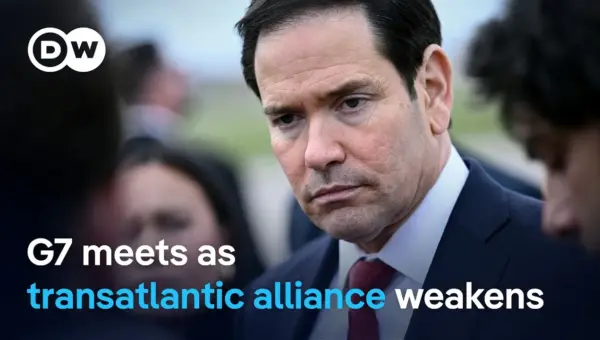
G7 Allies Clash Over Iran War Strategy, Urge Focus on Russia
G7 foreign ministers met in Paris, revealing deep divisions over the U.S. war with Iran. European allies urged the U.S. to pressure Russia, linking its actions to the conflict and fearing support for Ukraine will wane.

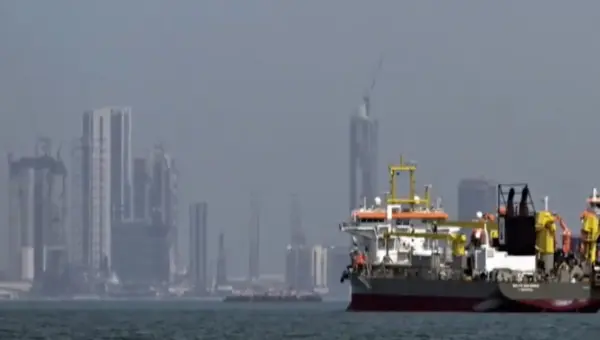
Iran Blocks China Ships, Exposing Beijing’s Weak Grip
Iran's recent decision to block Chinese ships at the Strait of Hormuz is exposing the limits of Beijing's influence in the Middle East. This action is causing delays and cancellations for Chinese manufacturers, turning a perceived geopolitical win into an economic strain.
Rubio: US Can Achieve Iran War Goals Without Troops
Senator Marco Rubio outlined a strategy to counter Iran without deploying U.S. ground troops, focusing on weakening the regime and enhancing maritime security. He also criticized Cuba's economic system and expressed concerns about West Bank violence.