Rogan’s MAGA Betrayal Claim: A Mirror to Uncritical Support?
Joe Rogan's recent claim that Donald Trump betrayed the MAGA base is analyzed not as a genuine shift in Rogan's stance, but as a reflection of his audience's potential lack of critical thinking. The piece questions Rogan's own convictions and challenges the idea of political betrayal for those who have not critically evaluated Trump's past.

Rogan’s MAGA Betrayal Claim: A Mirror to Uncritical Support?
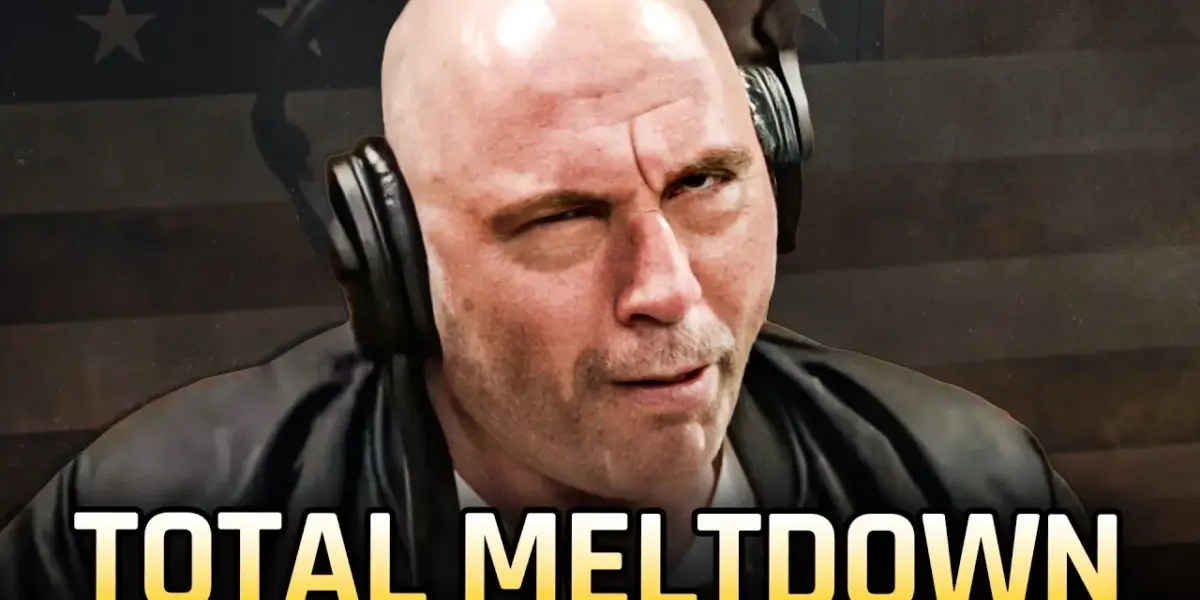
Joe Rogan, the ubiquitous podcast host whose pronouncements often ripple through the cultural and political landscape, recently ignited a fresh wave of commentary by suggesting that Donald Trump has “betrayed the MAGA base.” This assertion, amplified by clips shared across social media, paints Rogan as a pundit wrestling with the former president’s actions. However, a closer examination, particularly of the transcript’s critical lens, reveals a more complex narrative: one where Rogan’s perceived flip-flopping might be less about a change of heart and more about a reflection of the very audience he engages with. The core of the critique suggests that Rogan’s pronouncements are not indicative of deep-seated ideological shifts, but rather a response to prevailing winds and perhaps a lack of genuine conviction.
The Shifting Sands of Rogan’s Stance
The transcript humorously, if critically, characterizes Rogan’s relationship with Donald Trump as a “roller coaster.” This imagery suggests an inconsistency, a perpetual state of indecision or perhaps a strategic adaptation to popular sentiment. “Oh, I love Trump. Oh, I hate Trump. Love him. Hate him. Love him. Hate him,” the narrator posits, before leveling a sharp critique: “He can’t make up his damn mind because he’s not smart enough to know how to make up his mind.” This is a provocative assertion, questioning not just Rogan’s judgment but his intellectual capacity to form stable opinions.
Rogan’s specific complaint, as relayed, centers on Trump’s perceived deviation from his campaign promise of “no more wars.” The implication is that Trump, who ran on a platform of ending protracted military engagements, has now presided over or initiated conflicts that feel “stupid, senseless” and whose justifications are unclear. This sentiment, the transcript argues, is precisely what leads many in the MAGA base to feel “betrayed.” It taps into a core tenet of Trump’s populist appeal: a rejection of established foreign policy and a promise to prioritize domestic concerns.
Beyond the Headlines: The Rogan Paradox
However, the analysis quickly pivots to challenge the notion that Rogan is genuinely turning against Trump. It points to a prevailing narrative, supported by other media analyses, that the clips of Rogan criticizing Trump are often sensationalized and do not represent the full scope of his podcast. The argument is that the vast majority of Rogan’s content, potentially hours of nuanced or even supportive discussion of Trump, remains outside the spotlight. This creates a “Rogan paradox”: his occasional critical remarks gain outsized attention, leading to the perception of a fundamental shift, while his sustained engagement with Trump’s narrative, whether critical or not, flies under the radar.
The clips we see where he criticizes Trump, the ones that makes the headlines, that’s what everybody sees. What we don’t see are the other, you know, 2 hours and 55 minutes of his podcast where he’s still supporting Trump. That’s not making the headlines the way these other things do.
This suggests that Rogan’s public image, at least concerning Trump, is curated by the media’s focus on controversy and novelty. It implies that he is not necessarily a political commentator evolving in his views, but a performer whose most attention-grabbing moments are amplified, regardless of their representational accuracy.
The Absence of Conviction?
The transcript escalates its critique by questioning Rogan’s very capacity for genuine belief. “He has no heart. He has no true beliefs. He has no ideals,” the narrator declares. This is a harsh indictment, framing Rogan not as a thoughtful individual grappling with complex issues, but as a hollow figure who simply “says things.” The implication is that his pronouncements are ephemeral, easily contradicted by his next utterance. This perspective dismisses any notion of Rogan becoming “anti-Trump,” viewing his critical comments as inconsequential blips in an otherwise unanchored discourse.
A Call to Critical Thinking for the MAGA Faithful
The most pointed critique, however, is reserved for the MAGA base and, by extension, Rogan’s listeners. The transcript directly challenges the idea of feeling “betrayed” by Trump, especially concerning his promises on foreign policy. The argument is that such a feeling stems from a fundamental failure of critical thinking. “If any of you were capable of critical thinking, you wouldn’t be betrayed because you wouldn’t have fallen for all of this man’s other lies to begin with.” This is a direct accusation: that those who feel betrayed by Trump’s alleged broken promises have demonstrated a prior susceptibility to deception by not critically evaluating his past statements and actions.
The rhetorical question posed is stark: “Did you really think he was going to lie about 99% of everything, but not about this 1%?” This frames Trump as a consistent purveyor of falsehoods, and suggests that any surprise at being deceived on a specific issue is naive. The conclusion is blunt: “Well, you get what you voted for.” This places the responsibility squarely on the shoulders of the voters and, by extension, those who championed Trump’s message, including figures like Rogan who have platformed him extensively.
Why This Matters
This analysis, while harsh, taps into a broader conversation about the nature of political discourse, the role of influential media figures, and the dynamics of political loyalty. It raises crucial questions about:
- The Influence of Podcasting: Joe Rogan’s platform is immense. When he comments on political figures, his words carry significant weight, shaping perceptions for millions. This incident highlights the power of such platforms and the responsibility that comes with them.
- Media Amplification: The transcript points out how media selectively highlights controversial clips, potentially misrepresenting the overall message of a podcast. This underscores the need for audiences to seek out full contexts rather than relying on soundbites.
- Political Loyalty and Critical Thinking: The piece directly confronts the concept of uncritical political support. It argues that genuine “betrayal” is only possible if one fails to critically assess a political figure’s history and patterns of behavior.
- The Nature of Populism: Trump’s appeal often rested on promises of disruption and a rejection of traditional political norms. When those promises are perceived as unfulfilled, it can lead to internal contradictions within the movement, as suggested by Rogan’s critique.
Historical Context and Future Outlook
The dynamic between political figures and popular media personalities is not new. From talk radio hosts in the 20th century to the current digital age, individuals with large followings have wielded considerable influence over public opinion. Rogan’s position, however, is unique in its scale and its perceived neutrality, which often lends his pronouncements an air of authenticity, even when they are critical. His audience spans a wide ideological spectrum, making his occasional critiques of Trump particularly noteworthy, even if, as the transcript argues, they lack foundational conviction.
The future outlook suggests a continued tension. Rogan will likely continue to offer his unvarnished, and often contradictory, opinions, and segments of his audience will continue to parse them for deeper meaning or, conversely, dismiss them as mere entertainment. The more significant implication lies in the critical thinking of the audience. As political polarization continues, the ability to discern genuine policy shifts from rhetorical flourish, and to hold leaders accountable based on consistent evaluation rather than shifting allegiances, becomes ever more critical. The transcript’s sharp critique serves as a stark reminder that the responsibility for informed political engagement ultimately rests with the individual consumer of information.
Source: Sad Joe Rogan Can’t Believe Trump Did This… (YouTube)

Related Articles

Polls Spell Doom: Republicans Face Voter Backlash
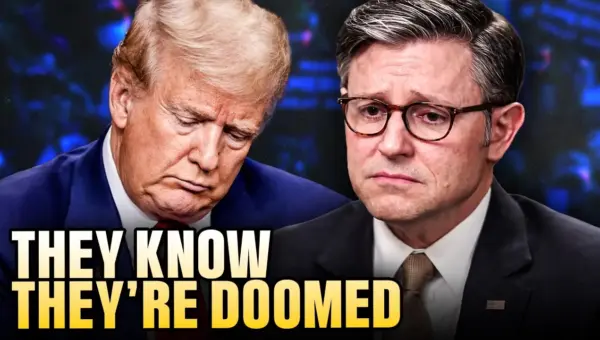
New polling data reveals a sharp decline in public confidence regarding the economic impact of Republican policies, particularly under Donald Trump. A significant majority now feel financially worse off, a trend that is especially pronounced among independent voters. This economic discontent poses a major challenge for the Republican party heading into future elections.

Trump Delays Iran Strike Deadline Amidst Shifting Diplomacy
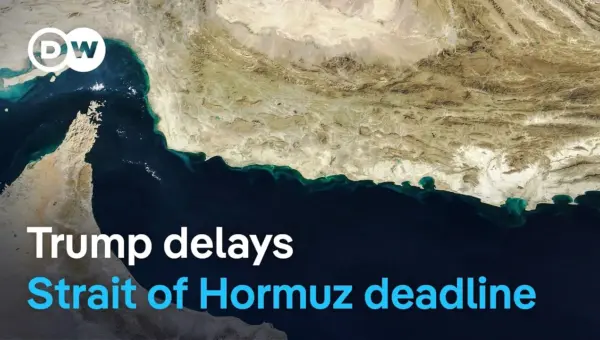
President Donald Trump has extended his deadline for potential strikes on Iranian energy plants to April 6th, amid reports of U.S.-Iran diplomatic talks mediated by Pakistan. This move comes as Israel continues its strikes on Iran and the U.S. deploys additional military assets to the region. Analysts point to mixed signals, economic pressures, and strategic miscalculations as key factors shaping the evolving situation.
Iran War Claims Ring Hollow as US Troops Injured in New Attack
Days after Donald Trump claimed "we've won" the war with Iran, a new attack injured approximately a dozen U.S. troops and damaged aircraft. This incident contradicts Trump's assertions of victory and raises serious questions about the strategy and reality of the ongoing conflict.