Robinson: Stewart’s Dual Nature Defines Fierce Competitor
Duncan Robinson and Isaiah Stewart delve into the unique competitive nature of Stewart, explaining his ability to switch from a friendly teammate to a fierce opponent. They also discuss the public's often narrow perception of Stewart and the lessons learned from the Charlotte incident.

Robinson: Stewart’s Dual Nature Defines Fierce Competitor
In the intense world of professional basketball, the line between camaraderie and confrontation can blur in an instant. For players like Duncan Robinson and Isaiah Stewart, this duality is not just a part of the game; it’s a fundamental aspect of their identities on the court. Stewart, in particular, embodies a unique ability to shift from a supportive teammate to a formidable opponent, a trait that Robinson believes is often misunderstood.
“Everyone’s super close… and then all of a sudden we start playing pickup and like, there’s this switch,” Robinson explained, highlighting the rapid transformation that occurs when the competitive juices begin to flow. “Like Steu’s talking [expletive], like protecting the rim like doing all these things, blocking dunks and like letting people know about it. And I think that is really unique to be able to oscillate back and forth between being really close and like having a genuine care and relationship with one another and then stepping in between the lines and realizing like, alright, we can put that on the side.”
This shift is not a sign of animosity, but rather a testament to Stewart’s intense competitive spirit. “There’s no love lost, but like we’re gonna get after it,” Robinson added. He further elaborated on Stewart’s persona: “Everyone knows that like that’s Steu’s identity. Like he loves you like a brother and then he wants to like hit you in the mouth when he’s competing against you. That’s just how it is.”
The Competitive Flip
Stewart himself acknowledged this transformation, describing it as a natural response to the high-stakes environment of an NBA game. “I would just say, you know, I’m just very competitive and, you know, I view the court as like, uh, like us going to war, you feel me? So, like, you know, I know the other team, shoot, they’re trying to take our heads off. So, it’s just like a flip. Like, I got something to defend.” He emphasized the pride that fuels this intensity: “And, you know, I just got pride, you know, I got pride and, you know, I’m not going to lay down and, you know, let you have an easy game.”
Off the court, however, the narrative changes completely. “Like he mentioned, like, off the court, um, you know, we chilling, we talking, vibing, but, you know, once we get on the court, you know, it’s just a different, a different, uh, switch that comes on.”
Beyond the Enforcer Narrative
Robinson expressed frustration with how Stewart is often perceived by those outside the Pistons organization. “One thing about Stu that really bothers me when I hear it publicly is that people try to boil him down to like certain moments,” he stated. “Like Stu does so much more than just being like a physical force or intimidator. Like obviously the protecting the rim thing is talked about, but passing, spacing the floor, like there’s so much more to his game. And people that actually watch Pistons games know that.”
He contrasted this with the perception of national media or casual observers: “I think people like national media or people that are tuning in and out, you know, might see the moments where he’s, you know, trying to be, you know, an enforcer the way that he is.” Robinson feels this narrow focus “minimizes everything you do on the court, honestly.”
Stewart echoed this sentiment, seeing it as a sign of his true character being unknown. “Yeah, no, no, you’re right. I just think it just goes to show that, you know, they don’t know me,” he said. “You know, they don’t know me. And, you know, that’s just them judging me off of, um, you know, a moment.” He added that many former opponents who have since become teammates have expressed admiration for his character once they experienced it firsthand. “I don’t had so many, um, so many different teammates that, you know, I competed against that didn’t like me. Um, you know, then they came to Detroit and be like, you know, it’s just dang like, you know, Steu is different. You know, it’s great to have him as a teammate, you know, as a brother.”
The Charlotte Incident and Lessons Learned
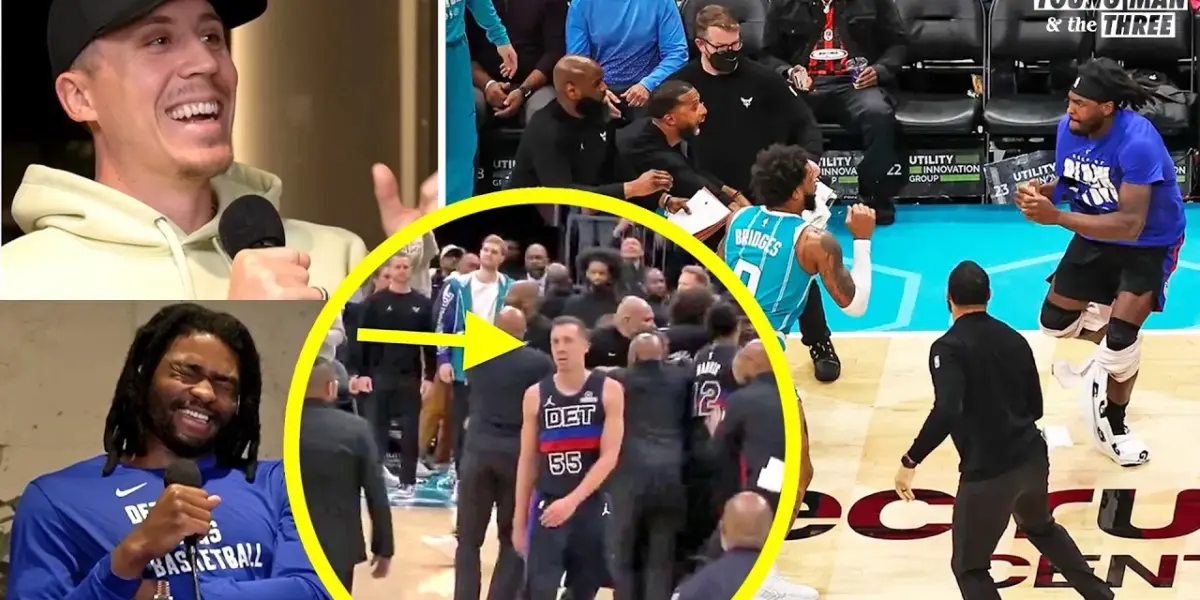
The infamous incident in Charlotte, where Stewart became involved in a on-court altercation, cast a shadow that both players felt was unfairly characterized. Robinson admitted that the optics were not ideal. “It looked bad. It did, to be honest, right? Like it didn’t look like I was down for the cause.” He reflected on his role, or lack thereof, in the situation: “Next time I’m going to grab someone, at least make it, you know, kind of get in the middle. But it’s like, you know, I felt like it was like helping Bill and I with a science project. Like he’s got it taken care of. You know what I mean? Like there was nothing that I was going to bring to that situation that he wasn’t already handling.”
Robinson’s primary regret stemmed from Stewart’s subsequent seven-game suspension. “The one aspect of it that I wish I do have regret over and I couldn’t have stopped it, but like, you know, I hate not seeing him on the court. So like if I could have done something to stop him from, you know, getting to Miles, but he’d obviously made up his mind. And there was nothing I was going to do in that moment. But that is the aspect of it that I have regret over like man, like to see him miss seven games.” He believes this suspension also contributed to the public narrative that paints Stewart as solely wanting to fight.
Stewart, who has since spoken privately with Robinson about the incident, acknowledged the public’s perception. “He’s like, I know you saw that one,” Stewart recalled Robinson saying about a particular meme, highlighting the viral nature of the event.
The Nuance of Fighting in the NBA
The conversation then broadened to the general concept of fighting in the NBA. Robinson questioned whether every player needs to engage in such confrontations. “Do you feel like everyone needs to fight? you know, like, like is there a world where it’s like, are there some people it’s like, you do this well, you do this well, like this is just not your thing?” he asked.
Stewart offered a candid assessment: “I’ve had a lot of different teammates. I would say 99% 99.9% of the NBA is not really trying to fight. Stu is one of the few where he’ll, he’ll go there. Like he’s about that. Like he really is.” He suggested that for most players, altercations are often performative. “I think most of it is like posturing and people trying to, you know, whatever, act like they’re they’re this and that.”
Robinson agreed, noting that in his experience, most scuffles end with teammates and coaches intervening before any real escalation. “People starting to push and talk and to hold me back, you know, coaches get in there, grab and it’s done, right? Like that’s just what it was. Obviously, in this case, it it went further.”
Stewart believes that many incidents are driven by players attempting to instigate and get opponents ejected rather than a genuine desire to fight. “You know, all that came down to was me having my brother back,” Stewart said, referring to his motivation in Charlotte. “But what you said 100%. You know, I think they’re more so trying to like, you know, do silly things to try to get you out the game so they don’t got to deal with you, which to me, I think that’s the most softest thing ever.” He criticized the strategy of attempting to provoke opponents: “Like the instigating. Like, like you coming into a game if your game plan is, hey, I’m going to do, um, I’m going to do silly things to get this guy out the game because I don’t want to deal with him all night, you know? I think that’s that’s the most softest thing.”
Source: Duncan Robinson and Isaiah Stewart on the Charlotte Hornets Fight (YouTube)

Related Articles

NBA Floats 3 Radical Plans to Kill Tanking
The NBA is considering three new proposals to combat intentional losing, or 'tanking,' by teams. These complex ideas aim to change the draft lottery system and incentivize winning, but experts question if they can truly solve the long-standing issue.

Clippers’ Comeback: From 6-21 to Contenders
Nicolas Batum details the LA Clippers' incredible turnaround from a 6-21 start to becoming contenders. He highlights the impact of trades, a mid-season reset, and Kawhi Leonard's dominant play as key factors in their remarkable season shift.

Wemby MVP Bid? Spurs Chase Top Seed Over OKC
Victor Wembanyama's MVP case is heating up as the Spurs chase the top seed. Meanwhile, LeBron James and Luka Doncic led the Lakers to a dominant win, and the Nuggets' offense shined despite defensive worries.