Iran’s New Leader Silent: Power Struggle or Calculated Move?
Iran's new Supreme Leader, Moshtaba Khamenei, remains unseen and unheard following his appointment, fueling speculation about his condition and the authenticity of a defiant message broadcast in his name. Experts suggest the message reflects hardline elements within the regime, potentially the IRGC, amid questions about Khamenei's well-being and the integrity of Iran's command structure.

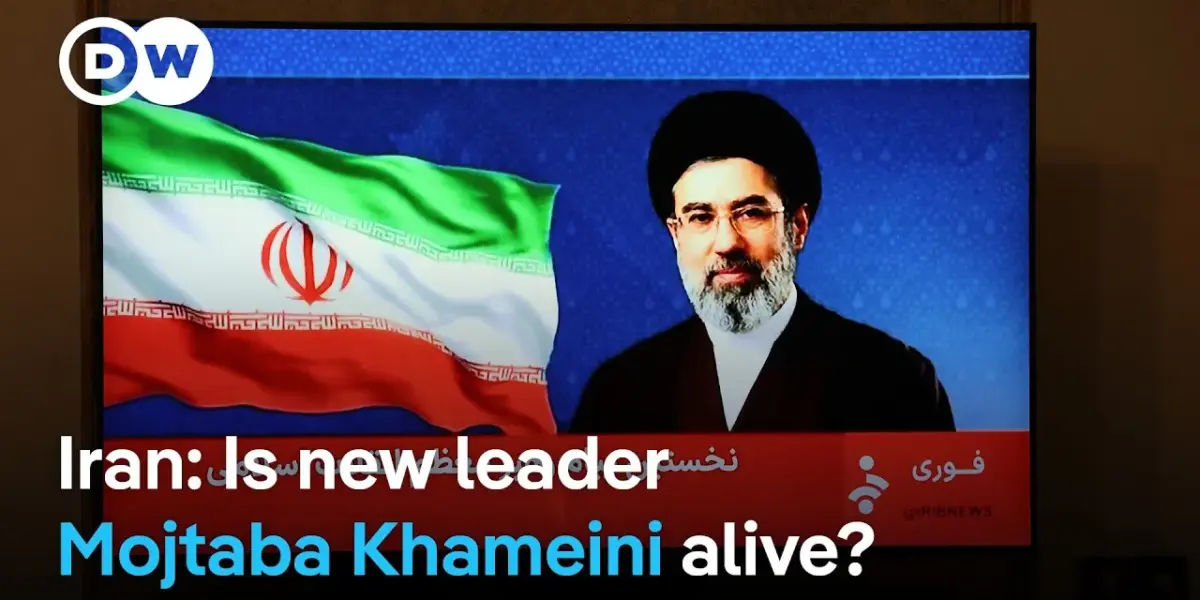
Iran’s New Leader Silent: Power Struggle or Calculated Move?
Tehran, Iran – The first address attributed to Iran’s newly appointed Supreme Leader, Ayatollah Moshtaba Khamenei, has sent ripples of speculation through the international community. Broadcast on state television, the message, which vowed revenge for Iranian deaths and threatened a “lasting cut-off” of Gulf oil supplies, was read by a TV presenter, raising immediate questions about the new leader’s condition and the authenticity of his involvement. Khamenei, the son of the former Supreme Leader Ali Khamenei, has not appeared on camera since the conflict began, fueling rumors of incapacitation or even death following alleged U.S. and Israeli attacks that killed his father.
A Hardline Stance, Behind the Scenes
Dr. Rowena Binti Abdul Rasak, a lecturer specializing in Middle Eastern history, noted the symbolic nature of the statement, suggesting it reflects the hardline government now in place. “Even though he is not present, it is very much a statement that would have come from the more hardline elements in the government,” Dr. Abdul Rasak explained. “He has very strong links with the IRGC and the assembly of experts who are filled with more conservative and strong-handed members of the government probably are behind this statement.” This suggests a collective effort, orchestrated by the powerful Islamic Revolutionary Guard Corps (IRGC) and other conservative factions, even if Khamenei himself did not directly deliver the message.
Questions Surrounding Khamenei’s Condition
The absence of Moshtaba Khamenei from public view has amplified concerns about his well-being. “He to begin with Mochaba was quite an enigmatic figure to begin with. He never held public office,” Dr. Abdul Rasak stated. “He was quite a mysterious figure. Although we do know that he held a lot of power behind the scenes.” While Khamenei was known to wield significant influence behind the scenes as his father’s gatekeeper, his current public invisibility is unprecedented for a Supreme Leader, a role that typically demands a high public profile.
The lack of visual confirmation has led to widespread speculation. “There are lots of rumors of whether he’s actually even alive, whether he is in a coma, how injured he is and so on,” Dr. Abdul Rasak observed. “And the fact that he hasn’t been produced on TV is speaks to the fact that either he is incapacitated in some way or that they are very worried because there were lots of threats against his life.” Security concerns, particularly in light of threats from the U.S. and Israel, are cited as a potential reason for his confinement, though this secrecy “doesn’t breed much confidence among the government and its people.”
Diaspora Disappointment and Domestic Unrest
The appointment of Khamenei Jr. has been met with disappointment by the Iranian diaspora. “It’s um it’s it’s a disappointing appointment in many ways. He represents this the a dynasty which is ironic because there’s a lot of there were there were a lot of calls for the monarchy to return,” Dr. Abdul Rasak commented. The irony of a clerical dynasty emerging while many longed for the return of the monarchy is not lost on observers.
Assessing the mood within Iran is challenging due to internet blackouts. However, the United Nations estimates that 3.2 million people are displaced within the country, indicating widespread unsettlement and chaos. Many Iranians are likely focused on the war’s conclusion, and the prospect of its continuation under a hardline leader like Khamenei is a source of concern. The diaspora’s discontent stems from the continuation of a hardline streak, leading to further isolation and potential internal repression.
Command Structure Under Strain?
The current conflict and the alleged targeting of key Iranian figures have raised questions about the integrity of the chain of command. “Lots of IRGC commanders were killed. Lots of the military men have been killed. The minister of defense just one day after his appointment was also killed,” Dr. Abdul Rasak highlighted. This has led to a “broken” command structure in some aspects, with the IRGC, under its new commander Ahmed Vahidi, potentially operating with significant autonomy.
Professor Simon Maban of Lancaster University echoed these concerns, suggesting that the Iranian military has learned lessons from past conflicts, leading to a decentralization of command structures. “They’ve learned that they had to in some ways decentralize their command and control structures. They had to figure out ways of implementing strategy if those at the top had been taken out in a decapitation strategy,” Professor Maban stated. This autonomy for mid- to higher-level commanders could explain the continued military actions, such as the bombardment of Israel and the closure of the Strait of Hormuz, even amidst uncertainty at the highest leadership levels.
A Message of Defiance, Despite Uncertainty
Despite the questions surrounding Khamenei’s condition and the potential fracturing of the command structure, the message conveyed was one of unwavering defiance. “It tells us that there is a very clear message that this is business as usual from the regime,” Professor Maban observed. “And it tells us that the regime is trying to project this narrative that it is Ayatahi who is the supreme leader.” However, he cautioned that the absence of Khamenei himself reading the message “does raise the question about what condition is he in? Is he is he actually fit to to appear live on TV? Is he alive for that matter?”
Professor Maban further elaborated on Khamenei’s hardline stance, suggesting it may even surpass his father’s. “We know that that Mojaba has been responsible for orchestrating the repression of protesters in Iran over the past couple of months. Some have suggested that he was responsible for the killing of of tens of thousands of people over the past three decades. So he’s certainly got an iron fist.” The lack of reference to Iran’s domestic or economic situation in the broadcast, focusing instead on defiance and resistance, reinforces this image of an “iron fist” leadership.
Looking Ahead: Stability or Escalation?
The coming weeks will be crucial in determining the stability of Iran’s new leadership and its impact on regional and global security. The world will be watching to see if Moshtaba Khamenei makes a public appearance and if the internal power dynamics within Iran become clearer. The potential for continued military escalation, driven by a hardline faction and a decentralized command structure, remains a significant concern for international observers.
Source: Iran war: Why new leader Moshtaba Khamenei's speech raises questions | DW News (YouTube)

Related Articles
Iran’s Missile Threat Reduced by 90%, Analyst Says
An analyst reports that Operation Epic Fury has degraded Iran's missile launchers by 90%, despite challenges in targeting hidden sites. The conflict's duration and media coverage are also discussed, with implications for global energy markets and investor confidence.
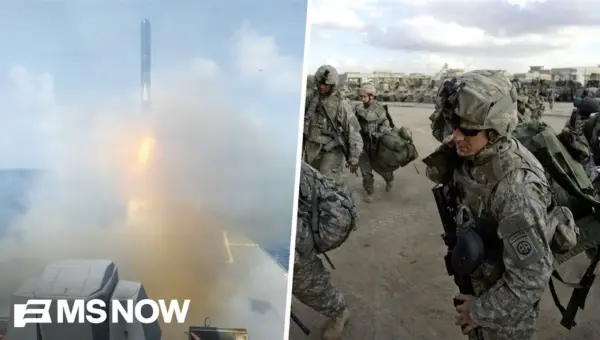
Iran Missile Strikes Injure US Troops, Raise War Concerns
Iranian missile strikes have injured U.S. service members, escalating tensions as the conflict nears one month. The attacks are raising concerns about the effectiveness of U.S. military strategy and the depletion of crucial missile stockpiles. Global oil prices have surged, impacting economies worldwide.
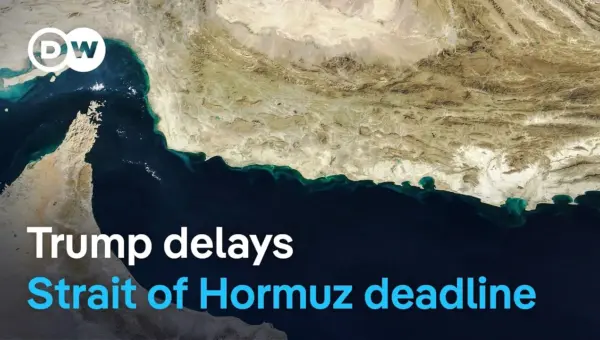
Trump Delays Iran Strike Deadline Amidst Shifting Diplomacy
President Donald Trump has extended his deadline for potential strikes on Iranian energy plants to April 6th, amid reports of U.S.-Iran diplomatic talks mediated by Pakistan. This move comes as Israel continues its strikes on Iran and the U.S. deploys additional military assets to the region. Analysts point to mixed signals, economic pressures, and strategic miscalculations as key factors shaping the evolving situation.