Seize Ships in Hormuz, Urges Analyst Amid Iran Tensions
Amidst escalating tensions in the Strait of Hormuz, analyst Gordon Chang has called for the U.S. Navy to seize ships carrying oil to China. He argues this action is necessary to counter Iran's selective obstruction of maritime traffic and to pressure Tehran. The call comes as China strategically stockpiles oil and as competition between the U.S. and China intensifies in both maritime and space domains.

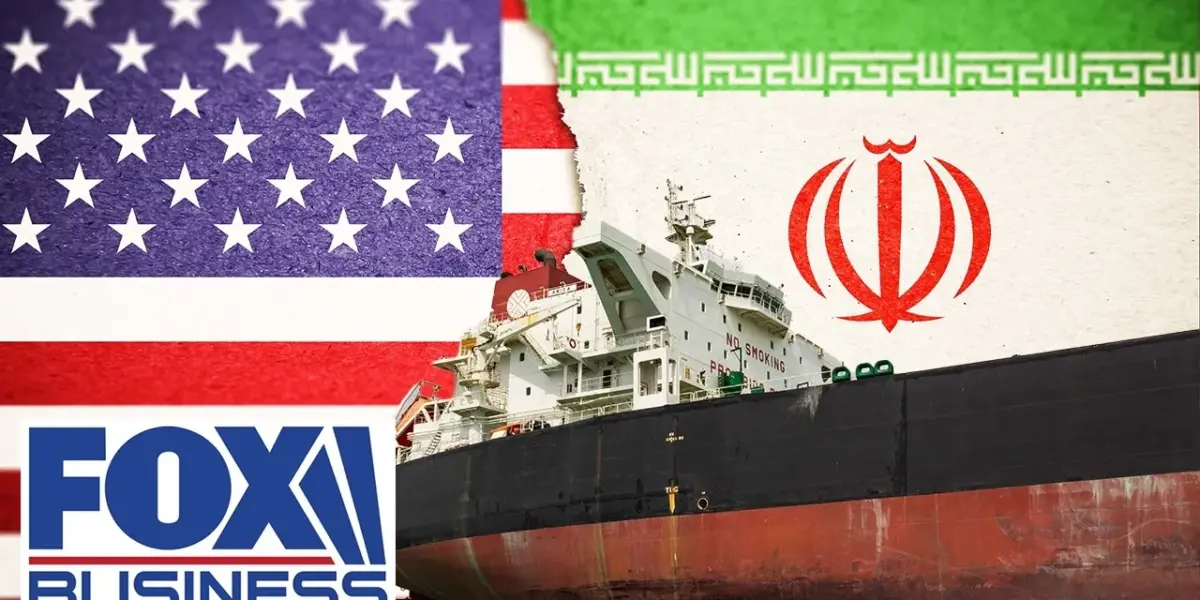
Analyst Calls for Bold US Navy Action in Strait of Hormuz
In a pointed call for decisive action amidst escalating global tensions, senior fellow at the Gatestone Institute, Gordon Chang, has urged the U.S. Navy to seize ships transporting oil to China through the Strait of Hormuz. Chang argues this firm stance is necessary to counter Iran’s selective obstruction of maritime traffic and to pressure Tehran to de-escalate its aggressive posture in the vital waterway. The remarks come as global oil prices remain volatile, with Iran reportedly channeling significant volumes of crude oil, much of it destined for China, through the strait since the conflict began.
China’s Strategic Oil Stockpiling Amidst Global Instability
The Wall Street Journal has reported that China has amassed substantial oil reserves, estimated at 1.2 million barrels, sufficient to cover approximately 100 days of imports. This strategic stockpiling comes as China’s crude oil imports saw a notable increase of nearly 16% in the first two months of 2026 compared to the previous year. A significant portion of these imports, around 1.4 million barrels per day in 2025, originates from Gulf countries and transits through the Strait of Hormuz. Chang highlighted that China’s continued purchase of Iranian oil, despite the ongoing conflict and Iran’s obstruction of other vessels, demonstrates a clear support for Tehran.
“China has supported Iran across the board just with the exception of combat troops but with that exception, this has been all-in support and Iran has only let ships going to China through the Strait and I think the U.S. Navy should actually seize those ships,” Chang stated. He elaborated, “If Iran won’t let our ships through, then why should we let China’s ships through. If we let China through, it has no incentive to put pressure on Iran to stop the war. So there’s got to be some fairness here.”
US Sends Signals to China and Allies with Taiwan Strait Transit
The geopolitical landscape is further complicated by recent U.S. military movements. A U.S. Navy aircraft entered the Taiwan Strait, a move interpreted as a significant signal to China just weeks before President Trump’s scheduled meeting with Chinese President Xi Jinping. The U.S. Seventh Fleet stated the transit “demonstrates the United States’ commitment to a free and open Indo-Pacific.” Concurrently, a new bill introduced in the House aims to bolster Taiwan’s energy supply, specifically its natural gas reserves, and safeguard the island against Chinese aggression.
Chang viewed President Trump’s actions, including the Taiwan Strait transit, as deliberate signals. “This is a pause U.S. Navy surveillance plant. It told China that we’re not afraid of angering them in the runup of the meeting between President Trump and Xi Jinping. It said to the people of Taiwan that we’ve got your back and the third signal is to people in the region, our friends and allies, that the United States is ready to defend them,” he explained. He pushed back against criticisms of depleted U.S. military stocks, asserting, “What President Trump is saying is no, the United States stands ready and this is a really important thing for the President to have done. Bravo to him.”
The Emerging Space Race: A New Frontier in US-China Competition
Beyond maritime and geopolitical tensions, the competition between the U.S. and China extends into space. China has accelerated its space program, executing over 90 orbital launches last year with ambitions to reach the moon by 2028. An estimated $92 billion was reportedly spent on Beijing’s government space program. Chang expressed concerns about the vulnerability of U.S. space assets, particularly low-earth orbit satellites crucial for military operations.
“The Chinese have been practicing dog fighting in low earth orbit. We know that they have satellites and capabilities that can take down ours. And we have been very slow in defending our assets in space. Our military is really dependent on those low earth orbits,” Chang warned. He highlighted the strategic importance of lunar control, stating, “If you can control the moon, you can control lunar space, the area between the moon and the earth. If you control cis-lunar space, you control low earth orbit and that really means this is one integrated system.” Chang noted that NASA’s Artemis 3 mission has been delayed to 2028, emphasizing that the race is not merely about reaching the moon first, but about colonization and control.
Space Vulnerabilities and Their Impact on National Security
The implications of a potential conflict in space for terrestrial security are profound. Chang cautioned that China could disable U.S. satellites, effectively blinding the Pentagon’s intelligence-gathering capabilities, which rely heavily on space-based assets for monitoring enemy movements. “We could lose our satellites in space. China could take down some of them. We do not have adequate defenses. If China does that now then our military is blinded,” he stated. The assumption that China would refrain from targeting U.S. satellites is, in his view, an insufficient defense strategy.
Looking Ahead: Navigating Complex Geopolitical and Space Challenges
As global powers navigate a complex web of maritime disputes, geopolitical signaling, and the burgeoning space race, the coming months will be critical. The upcoming meeting between President Trump and Xi Jinping, coupled with ongoing U.S. military posturing in the Indo-Pacific and the intensifying competition in space, will likely shape the future of international relations and national security. The effectiveness of U.S. deterrence strategies, particularly in the face of perceived vulnerabilities in both maritime and space domains, will be closely watched.
Source: ‘SEIZE THOSE SHIPS’: Gordon Chang calls for DECISIVE US Navy action in Strait of Hormuz (YouTube)

Related Articles


US Must Block China’s Tech Access for Security
US national security experts are raising alarms about China's access to advanced AI chips, arguing it threatens strategic advantages. This, coupled with charges against Chinese entities for fentanyl precursor sales and a ban on foreign routers, signals a growing effort to prioritize security over business ties.
Iran Blocks China Ships, Exposing Beijing’s Weak Grip
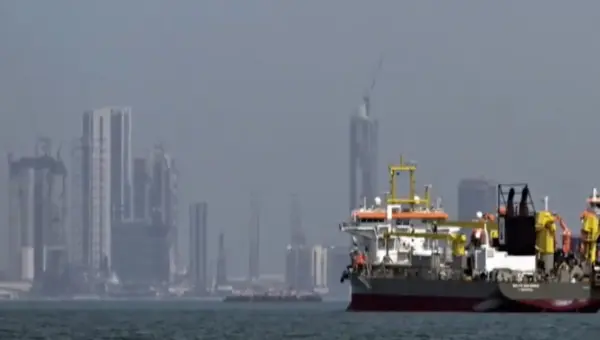
Iran's recent decision to block Chinese ships at the Strait of Hormuz is exposing the limits of Beijing's influence in the Middle East. This action is causing delays and cancellations for Chinese manufacturers, turning a perceived geopolitical win into an economic strain.
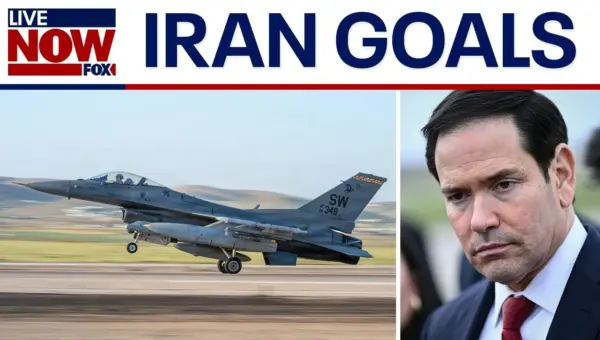
Rubio: US Can Achieve Iran War Goals Without Troops
Senator Marco Rubio outlined a strategy to counter Iran without deploying U.S. ground troops, focusing on weakening the regime and enhancing maritime security. He also criticized Cuba's economic system and expressed concerns about West Bank violence.