Trump’s Greenland Gambit Sparks Trade Tensions, Resource Hopes
President Trump's pursuit of Greenland, coupled with new tariffs on European nations, has triggered market volatility and raised concerns about escalating trade disputes. The potential acquisition highlights significant resource wealth in Greenland and Venezuela, with global markets now weighing geopolitical risks against economic opportunities.

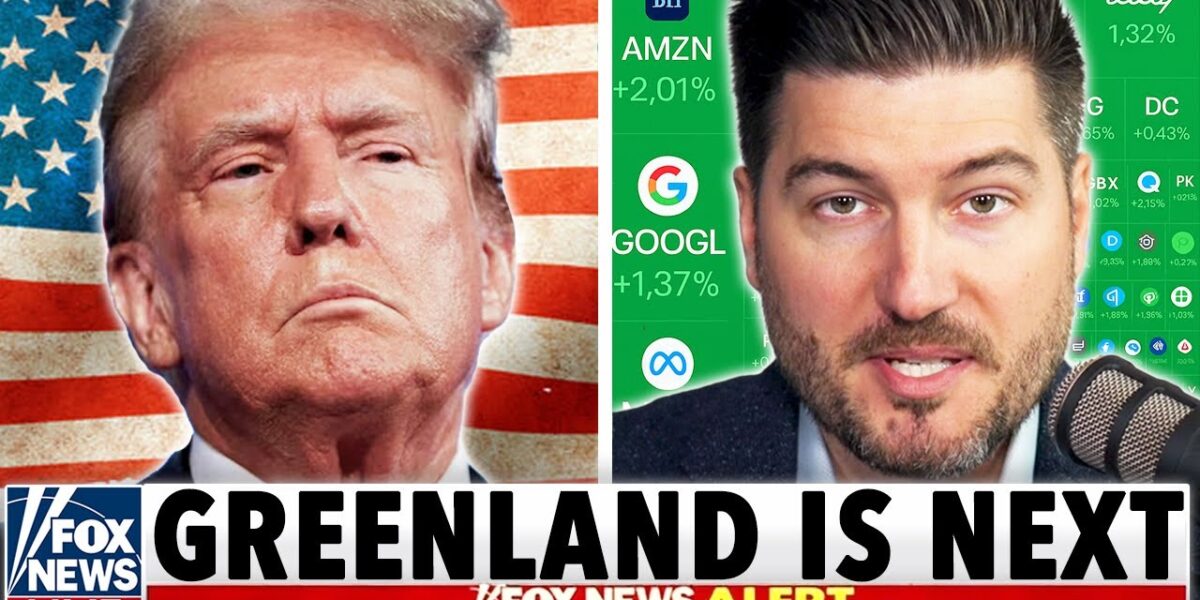
Global Markets on Edge as Trump Pursues Greenland Acquisition
In a move that has sent ripples through international markets and geopolitical circles, U.S. President Donald Trump has publicly expressed interest in acquiring Greenland. This ambitious proposal, coupled with new tariff threats against European nations, has ignited concerns over escalating trade disputes and fundamentally shifted the discourse on territorial expansion and resource control.
Tariffs and Territorial Ambitions
At the heart of the current tension is a new 10% tariff imposed by the U.S. on eight European countries. This measure is directly linked to the administration’s pursuit of Greenland, with the tariffs slated to rise to 25% by June 1st. These punitive measures are intended to remain in effect until a “complete and total purchase” of Greenland is agreed upon. President Trump has characterized Greenland as “imperative for national and world security,” suggesting a strategic rationale beyond mere economic interest, potentially encompassing defense against global rivals like Russia and China.
Greenland and Venezuela: A Geostrategic Reshaping?
The scale of the proposed acquisition is historically significant. Acquiring Greenland would add approximately 836,000 square miles to U.S. territory, a landmass comparable in size to the 1803 Louisiana Purchase. The discussion has also extended to potential U.S. control over Venezuela, which would add another 340,000 square miles. While Venezuela is a sovereign nation and its inclusion in this context is viewed as sensationalist, the combined territorial ambition, if realized, would represent the largest expansion of U.S. control in history.
Economic Underpinnings: A Treasure Trove of Resources
Beyond the strategic military positioning, the economic allure of both Greenland and Venezuela is substantial. Venezuela, despite its current economic and extraction challenges, holds an estimated 300 billion barrels of crude oil reserves, among the largest globally. The potential value of its total natural resources, including oil, minerals, and gas, is estimated in the trillions of dollars.
Greenland, often overlooked, is also a significant repository of mineral wealth. Analysts estimate its untapped resources, including rare earth elements, iron ore, graphite, zinc, copper, and gold, to be worth as much as $5 trillion. If the U.S. were to gain control over these territories, it could mean access to natural resources valued at up to $20 trillion, a figure exceeding half of the annual U.S. Gross Domestic Product (GDP).
Market Impact and Investor Concerns
The pronouncements and actions from the U.S. administration have not gone unnoticed by financial markets. Equities experienced a notable dip following the tariff announcements, although they showed signs of recovery at the time of reporting. The underlying uncertainty surrounding a potential trade war with the European Union, a bloc with which the U.S. conducts approximately $1.2 to $2 trillion in bilateral trade annually, poses a significant risk to established trade agreements and economic stability.
The volatility has extended to various asset classes. Commodities and digital assets are also reacting in real-time to the geopolitical developments. Notably, the price of gold has seen a significant surge, reaching $4,824 per ounce. This rally is partly attributed to central banks increasing their gold reserves, interpreted by some analysts as a sign of diminishing faith in fiat currencies, including the U.S. dollar, and a potential fracturing of global monetary stability.
What Investors Should Know
- Geopolitical Risk Premium: The escalating trade tensions between the U.S. and the EU introduce a significant geopolitical risk premium into the market. Investors should monitor diplomatic communications and retaliatory measures closely.
- Resource Sector Volatility: Any potential U.S. control over Greenland or Venezuela would have profound implications for global commodity markets, particularly oil and rare earth minerals. This could lead to increased volatility in related stocks and futures.
- Trade Agreement Uncertainty: The existing U.S.-EU trade relationship, valued in the trillions, is under threat. Investors exposed to companies with significant transatlantic operations should assess potential disruptions.
- Safe-Haven Assets: The rise in gold prices suggests a flight to safety. Investors may consider traditional safe-haven assets amidst heightened global uncertainty, though their performance is not guaranteed.
The Art of the Deal, or a Trade War Catalyst?
European leaders have publicly rejected President Trump’s strategy, with some EU officials contemplating the deployment of trade defense mechanisms. This response indicates a firm stance against what is perceived as an aggressive negotiation tactic. The situation draws parallels to past trade disputes, where audacious opening positions were used in an attempt to leverage favorable outcomes. However, the current context, involving territorial ambitions and significant economic stakes, carries the potential for more serious and prolonged conflict.
Long-Term Implications
While the immediate acquisition of Greenland and Venezuela by the U.S. is considered unlikely by many, the mere pursuit of such objectives has reshaped market sentiment and international relations. The long-term implications include a potential re-evaluation of global resource distribution, the future of international trade agreements, and the strategic alliances between major economic powers. The market’s reaction underscores the sensitivity of global finance to geopolitical maneuvering and the inherent value placed on strategic territories and their natural endowments.
Source: Trump's Greenland Move Changes Everything (Here's Why) (YouTube)

Related Articles
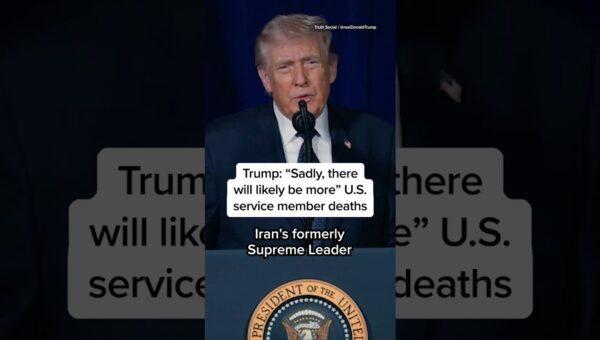
Trump Warns of More US Deaths in Escalating Conflict
Former President Donald Trump issued a somber warning on Truth Social, stating that further U.S. service member deaths are "likely" as geopolitical tensions escalate. He condemned Iran's former supreme leader, Ayatollah Ali Khamenei, and vowed retribution for fallen soldiers.


Gulf States Caught in US-Iran Crossfire, Seek Stability
Gulf states are caught in the escalating US-Iran conflict, facing violations of sovereignty and national security threats. Leaders express a strong desire for stability and economic prosperity, contrasting with the unfolding scenes of regional instability.
Geopolitical Turmoil Bolsters Bitcoin Amidst ETF Inflows
Geopolitical tensions and strong Bitcoin ETF inflows are creating a resilient market. Analysts point to exhausted sellers and the potential for capital rotation into crypto, while regulatory clarity on the Clarity Act could unlock significant institutional investment.