Cosmic Detectives: How Astronomers Grasp Universe’s Deepest Secrets
Astronomers, astrophysicists, and cosmologists employ diverse methods to study the universe, from observing distant galaxies to understanding cosmic origins. Access to powerful telescopes like JWST is competitive, requiring strong scientific proposals. Neutrinos offer early warnings for supernovae, while planetary gravity poses a significant challenge for space exploration.

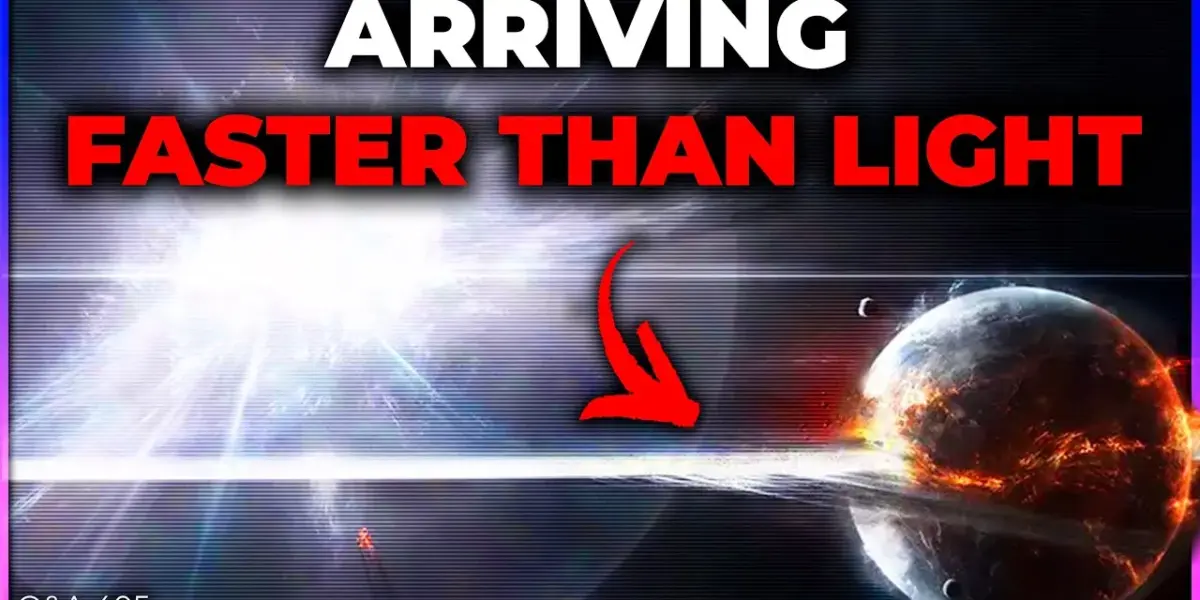
Unlocking the Cosmos: A Glimpse into Astronomical Pursuits
The universe, a vast expanse of cosmic wonders, is meticulously studied by a dedicated cadre of scientists. But what exactly defines an astronomer, an astrophysicist, or a cosmologist? While these titles often overlap, each represents a distinct, yet interconnected, approach to understanding the cosmos. From the meticulous observation of distant galaxies to the theoretical underpinnings of the universe’s birth and evolution, these scientists employ diverse methodologies to unravel its mysteries.
Defining the Cosmic Cartographers
At its core, an astronomer is an observer. These scientists focus on capturing and analyzing the light and other emissions from celestial objects – stars, galaxies, gas clouds, and exoplanets. Their work involves precise measurements of brightness, color, and position, aiming to understand the physical characteristics and behaviors of these distant entities. For instance, an astronomer might measure the light from a distant galaxy to pinpoint regions of active star formation.
Bridging observation and theory, astrophysicists delve into the fundamental forces and physical processes governing celestial objects. They explore phenomena like the intense magnetic fields around neutron stars, the energetic accretion disks surrounding black holes, and the plasma physics within nascent stars. While an astronomer might identify where jets erupt from a young star, an astrophysicist would seek to explain the underlying mechanics that cause those jets.
Cosmologists, on the other hand, tackle the grandest questions: the origin, evolution, and large-scale structure of the universe itself. Their research often centers on the Big Bang, the cosmic microwave background radiation, the distribution of galaxy clusters, and the enigmatic nature of dark matter and dark energy. They seek to understand how these components have shaped the universe’s history and its ultimate fate.
Beyond these broad categories, specialized fields thrive. Planetary scientists, for example, extend the principles of geology, atmospheric science, and oceanography to other worlds. Studying the geology of Mars or the atmosphere of Venus falls under their purview. This specialization allows for deep dives into specific celestial bodies, complementing the broader cosmic perspectives of astronomers, astrophysicists, and cosmologists.
The Rigors of Observation: Securing Telescope Time
Accessing the universe’s most powerful observational tools, such as the Hubble Space Telescope and the James Webb Space Telescope (JWST), is a competitive endeavor. These facilities, along with major ground-based observatories, are free for use by any scientist globally. However, demand consistently outstrips supply, leading to a rigorous proposal and review process.
Astronomers must submit detailed scientific proposals outlining their research objectives, the necessity of using a specific telescope, and the expected scientific return. Committees then evaluate these proposals based on scientific merit, the efficiency of the proposed observations, and the potential for groundbreaking discoveries. Proposals requesting less observation time are generally more likely to be approved than those requiring extensive periods. Furthermore, observatories optimize schedules by grouping observations of celestial objects that are close to each other in the sky, minimizing the time lost to telescope slewing.
Remarkably, the opportunity to propose observations is not limited to credentialed academics. Citizen scientists and amateurs who can present a compelling scientific case can also apply for telescope time. This open access ensures that innovative ideas, regardless of the proposer’s formal affiliation, have a chance to be explored. The JWST, for instance, is currently in its fifth cycle of observations, far exceeding its initial projected operational lifespan of 10 years and likely capable of operating for around 20 years, a testament to its advanced engineering and the scientific community’s ingenuity.
Cosmic Messengers: Neutrinos and Supernovae
The detection of neutrinos from distant supernovae offers a unique glimpse into stellar death throes and provides an early warning system for cosmic events. Neutrinos, subatomic particles with very little mass, interact extremely weakly with matter, allowing them to escape dense environments that trap light and other radiation. This property is crucial for their ability to reach Earth hours or even minutes before the visible light from a supernova.
When a massive star collapses under its own gravity, it triggers a cataclysmic explosion known as a supernova. The inner core implodes, generating an immense flux of neutrinos. These elusive particles stream outwards almost unimpeded, while the shockwave and radiation produced by the explosion must battle through the star’s dense outer layers. This journey can take hours, giving the neutrinos a critical head start. Detectors like the Supernova Early Warning System (SNEWS) on Earth are designed to catch this neutrino flash, alerting astronomers to an impending supernova and allowing them to orient telescopes for optimal observation of the main event. This system is currently effective for supernovae within a few hundred to a thousand light-years of Earth, with proposals to extend its range across the Milky Way.
The speed of neutrinos, while slightly less than the speed of light (often exceeding 99.9999% of c), is sufficient to provide this early warning. Their ability to pass through light-years of lead without significant interaction highlights their unique nature. In fact, the outward pressure from neutrinos generated during the core collapse is thought to be a key factor in driving the supernova explosion itself, preventing the core from collapsing directly into a black hole. Earth is bombarded daily by trillions of neutrinos from the Sun, most passing through us unnoticed, underscoring the challenge and ingenuity required to detect the rare interactions that signal distant cosmic events.
Planetary Gravity: A Cosmic Ladder or a Prison?
The gravitational pull of a planet plays a significant role in a civilization’s ability to explore space. Theoretically, a gravitational limit exists when the energy and propellant required to escape a planet’s gravity well exceed the planet’s own mass. This concept is rooted in the rocket equation, which dictates the relationship between propellant mass, payload mass, and achievable velocity.
Earth, with its relatively moderate gravity and thick atmosphere, is remarkably well-suited for rocketry. We can launch tens of thousands of kilograms into orbit using powerful rockets like the Saturn V. A planet with twice Earth’s gravity would still be launchable, but with significantly reduced payloads – perhaps only a few hundred kilograms. As gravity increases further, the challenge intensifies. At three times Earth’s gravity, the feasibility of launching substantial payloads becomes increasingly difficult, and at ten times Earth’s gravity, escaping would require propellant equivalent to the mass of the entire universe.
This gravitational constraint raises a poignant question about extraterrestrial life: could civilizations be trapped on planets with gravity too high to overcome? Such civilizations might develop advanced thought and communication but remain forever confined to their home world, unable to participate in interstellar endeavors. While Earth’s gravity is challenging, it is surmountable, allowing us to reach orbit, mine asteroids, and potentially climb the cosmic ladder to other worlds. The prospect of being unable to escape one’s own planet, however, remains a somber consideration in the search for life beyond Earth.
Cosmic Expansion and Gravitational Waves
The universe’s expansion presents a fascinating perspective: from any point in the cosmos, all other galaxies appear to be receding. This is not because galaxies are actively moving away from a central point, but rather because space itself is stretching. If one were to travel to a distant galaxy, the same phenomenon would be observed in reverse – our own Milky Way would appear to be moving away at great speed.
Gravitational waves, ripples in spacetime caused by cataclysmic events like the collision of black holes, are another profound aspect of cosmic physics. While detected by sensitive instruments like LIGO and Virgo, these waves are incredibly weak by the time they reach Earth. The interferometers measure minuscule distortions in their 10-kilometer arms, requiring immense precision. To experience a gravitational wave directly and be harmed by it, one would need to be extraordinarily close to the source, such as the immediate vicinity of colliding black holes. At such proximity, the intense radiation and tidal forces would be far more destructive than the gravitational wave itself, which would stretch and compress matter, but in a way that would be lethal only at extreme closeness.
The universe continues to reveal its secrets, from the elusive nature of neutrinos to the fundamental forces shaping galaxies and the very fabric of spacetime. Each discovery, whether through the keen eye of a telescope or the detection of subtle cosmic whispers, brings humanity closer to understanding its place in the grand cosmic tapestry.
Source: Superfast Neutrinos, Types of Astronomers, Gravitational Limits for Planets | Q&A 405 (YouTube)

Related Articles

NASA Pivots: Mars Nuclear Probe, Moon Base Ahead
NASA is pivoting its exploration strategy, prioritizing a nuclear-powered Mars probe and accelerating plans for a moon base. The International Space Station's future is uncertain, with a shift towards commercial platforms. Meanwhile, new telescope data reveals overmassive black holes in dwarf galaxies and captures stunning images of Saturn and the Crab Nebula.


Dark Matter Defies Gravity, Forming Fuzzy Clouds Instead of Stars
Dark matter, which outweighs all visible matter, surprisingly does not collapse under gravity to form stars or black holes. Instead, it forms vast, diffuse clouds around galaxies, baffling scientists with its unique behavior. Understanding this cosmic enigma is key to comprehending the universe's structure and evolution.
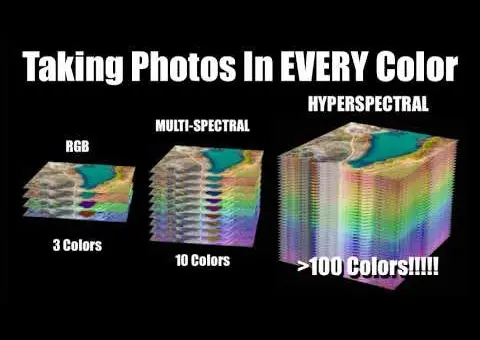
New Satellites Capture ‘Impossible’ Colors from Space
New hyperspectral satellites are capturing images with hundreds of color bands, revealing details invisible to the human eye and traditional cameras. This advanced technology builds on a 200-year legacy of spectral analysis, enabling unprecedented insights into Earth's resources and environment.