Russia’s Donbas Obsession: What’s Left of Ukraine’s Key Region?
Russia's persistent focus on Ukraine's Donbas region, framed as "liberation," has led to devastating destruction and loss of life. Despite the immense cost, Ukraine remains determined to hold onto the territory, a stance driven by its strategic, economic, and symbolic importance to national identity.


Donbas Remains Epicenter of Brutal Ukraine Conflict
Since the full-scale invasion in February 2022, the Donetsk Oblast, commonly known as part of Ukraine’s Donbas region, has been the unyielding epicenter of the most intense fighting in the ongoing war. From the initial devastating siege of Mariupol to the protracted and bloody battles for Bakhmut, Avdiivka, Chasiv Yar, and Vuhledar, and extending into 2025 with further clashes in areas like Prosk and Konstantinovka, the region has borne the brunt of Russia’s military ambitions. The Kremlin has repeatedly invoked the narrative of “liberating the Donbas” as a primary justification for its full-scale war, particularly after its initial objectives of “denazifying” and “demilitarizing” Ukraine proved unachievable within the first month of the invasion.
The Grim Reality of “Liberation”
Having personally witnessed the unfolding events, the term “liberation” in the context of the Donbas takes on a grim and devastating meaning. Village, town, and city have fallen one after another, not to a restoration of normalcy, but to an erasure of their very existence. Thousands of Ukrainian citizens, many of whom are Russian-speaking residents of the Donbas, have been “liberated” from their lives, their homes, and their loved ones. The human cost of this protracted conflict, waged under the guise of liberation, has been catastrophic.
What Remains of the Donbas?
Despite the immense destruction and the heavy price paid, the question remains: what is left of the Donbas? After enduring years of conflict, shelling, occupation, and displacement, the region is a shadow of its former self. The once-thriving industrial heartland of Ukraine has been scarred by relentless warfare. Key infrastructure has been decimated, cities lie in ruins, and the population has been decimated by casualties, displacement, and emigration. The social fabric has been torn apart, and the economic viability of the region has been severely compromised.
Ukraine’s Unyielding Stance
Amidst this devastation, Ukraine continues to hold onto what remains of the Donbas with a fierce determination. The question then becomes: what is it about this ravaged region that makes it so impossible for Ukraine to relinquish in exchange for peace? The answer is multi-faceted, encompassing strategic, economic, historical, and symbolic dimensions.
Strategic Importance
The Donbas holds significant strategic value for Ukraine. It is a crucial industrial and manufacturing hub, historically vital for the nation’s economy. Control over this territory is essential for Ukraine’s territorial integrity and its long-term security. Ceding the Donbas would not only represent a massive territorial loss but would also cripple Ukraine’s potential for future economic recovery and military self-sufficiency. Furthermore, allowing Russia to fully annex and control the Donbas would provide Russia with a land bridge to Crimea, further consolidating its control over the peninsula and potentially opening new avenues for further aggression.
Economic Engine
Historically, the Donbas has been the industrial backbone of Ukraine, rich in coal, steel, and heavy manufacturing. While much of this infrastructure has been damaged or destroyed, the potential for future reconstruction and economic revival remains a key consideration. For Ukraine, regaining and rebuilding this economic engine is vital for its post-war recovery. For Russia, the Donbas represents a potential economic asset, albeit one that would require immense investment to restore, and a means to integrate Ukrainian industry into its own struggling economy.
Symbolic and National Identity
Beyond the tangible assets, the Donbas is deeply intertwined with Ukraine’s national identity and historical narrative. The region’s struggle against Russian encroachment has become a potent symbol of Ukrainian resilience and sovereignty. Allowing Russia to seize and absorb this territory would be seen as a profound betrayal of the sacrifices made by countless Ukrainians and would embolden Russia’s revisionist ambitions regarding Ukrainian statehood. For many Ukrainians, the Donbas is not just land; it is an integral part of their nation that must be defended at all costs.
The Cost of “Peace”
The “peace” offered by Russia, predicated on territorial concessions, is a peace that Ukraine finds unacceptable. It is a peace that would legitimize aggression, reward conquest, and leave Ukraine vulnerable to future threats. The international community largely supports Ukraine’s position, recognizing that a peace settlement must be based on the principles of international law, including respect for sovereignty and territorial integrity. The ongoing conflict, therefore, continues not because Ukraine is unwilling to negotiate, but because the terms of peace demanded by Russia are fundamentally incompatible with Ukraine’s survival as a sovereign nation.
Looking Ahead
As the conflict grinds on, the fate of the Donbas remains a central and tragic element of the war. The international community will continue to watch closely the military developments on the ground, the diplomatic efforts, and the resilience of the Ukrainian people. The ability of Ukraine to defend its remaining territory and the long-term implications for regional stability and international order will be shaped by the outcomes in this embattled Ukrainian region.
Source: Why Russia so desperately wants Ukraine's Donbas (YouTube)

Related Articles

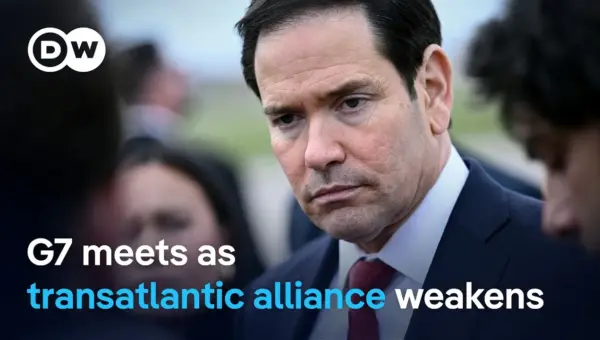
G7 Allies Clash Over Iran War Strategy, Urge Focus on Russia
G7 foreign ministers met in Paris, revealing deep divisions over the U.S. war with Iran. European allies urged the U.S. to pressure Russia, linking its actions to the conflict and fearing support for Ukraine will wane.

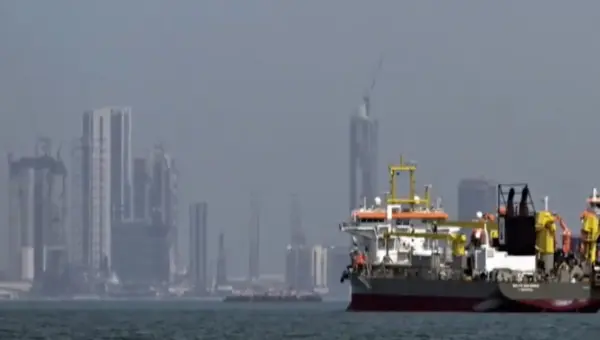
Iran Blocks China Ships, Exposing Beijing’s Weak Grip
Iran's recent decision to block Chinese ships at the Strait of Hormuz is exposing the limits of Beijing's influence in the Middle East. This action is causing delays and cancellations for Chinese manufacturers, turning a perceived geopolitical win into an economic strain.
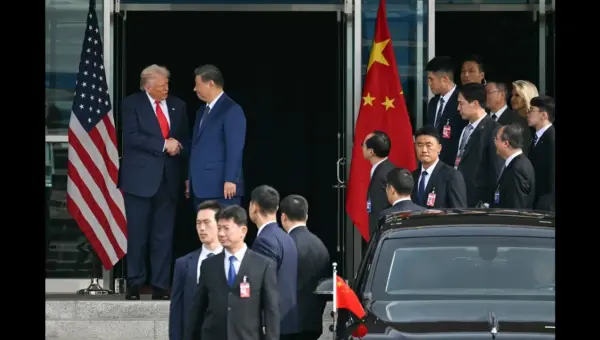
Trump’s “Walk Away” Tactic Signals Tougher Stance on China
Retired Air Force Brigadier General David Stillwell believes President Trump's strategy of being willing to walk away from negotiations puts pressure on China. This tactic, combined with US global actions and strengthened alliances, signals a more assertive American foreign policy.