Senate to Debate Trump’s ‘Save America Act’ Amidst Fierce Opposition
The Senate is set to debate President Trump's 'Save America Act' next week, a bill proposing sweeping changes to US voting systems. While Republicans champion the act for election integrity, Democrats and voting rights groups warn it could disenfranchise millions by imposing strict voter ID and proof of citizenship requirements.

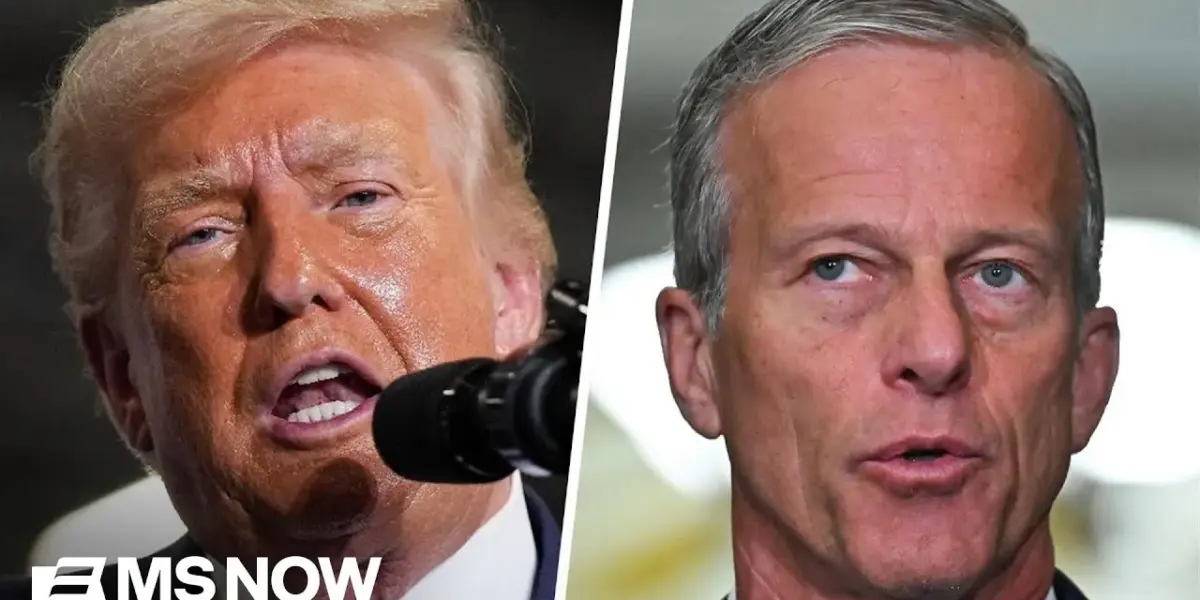
Senate to Debate Trump’s ‘Save America Act’ Next Week
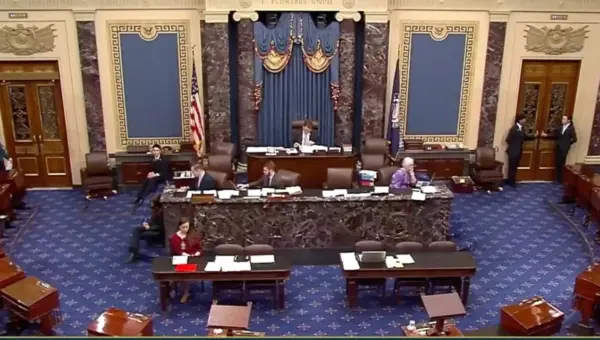
Capitol Hill is set to become the focal point of a significant political battle next week as Senate Majority Leader John Thune announced that the chamber will take up President Trump’s proposed “Save America Act.” The legislation, aimed at overhauling America’s voting systems, has ignited a firestorm of controversy, with voting rights groups decrying it as a move that would erect unnecessary hurdles for everyday Americans. This development comes as President Trump has declared he will withhold support for all other legislation until the “Save America Act” is passed, intensifying the pressure on lawmakers.
Key Provisions and Republican Push
The “Save America Act” centers on two primary tenets: mandatory voter identification nationwide and the requirement of proof of citizenship to vote. While some states currently have voter ID laws, this bill would implement them across all 50 states. The proof of citizenship requirement would necessitate documents such as a passport or birth certificate for voter registration.
Senate Republicans have been vocal in their support for the bill, viewing it as crucial to their electoral prospects in the upcoming midterm elections. Speaking from a recent Republican retreat, lawmakers expressed a desire to see this legislation passed swiftly. Senate Majority Leader John Thune’s decision to bring the bill to the floor is seen as a positive development for the party, though its path to becoming law remains fraught with challenges.
Democratic Opposition and Concerns
Democrats have voiced strong opposition to the “Save America Act,” arguing that its provisions would disproportionately disenfranchise certain segments of the population. Their concerns are twofold:
- Accessibility of Documents: Critics argue that not all Americans possess readily accessible passports or original birth certificates. This could create significant barriers for individuals seeking to register to vote.
- Impact on Specific Groups: Particular concern has been raised regarding the potential impact on married women, whose legal name may differ from the one on their birth certificate, adding an extra layer of complexity to the verification process.
“Democrats have said that they are concerned that these two parts, these two tenets could make it more difficult for individuals to register to vote,” reported congressional reporter Michael Schnell. “For example, not everybody may have a passport and not everybody may have a hold of their original birth certificate.”
Statistical Realities and Expert Analysis
Legal experts and election analysts contend that the problems the “Save America Act” purports to solve are statistically negligible. Professor James Sample of Hofstra University Law stated unequivocally, “Statistically the answer to that question is unequivocal and clear. No, the Save America Act purports to solve a problem that we do not have. Non-citizen voting is beyond vanishingly rare. It is statistically almost zero.”
Sample further elaborated on the practical implications of the bill:
“This is not a voter I .D. bill. Voter I .D. polls well, which is why that’s what they emphasize. This is a reregistration and show your papers bill that is DESIGNED TO PRODUCE CHAOS. THE CHAOS IS AN END IN ITSELF, BECAUSE THAT END, IN TURN, BECOMES A MEANS FOR THE EXECUTIVE TO ASSERT CONTROL IF THE ELECTION OUTCOMES ARE NOT TO THEIR LIKING.”
The professor highlighted alarming statistics regarding document access: “21 million individuals lack ready access to the documents that would be necessary. 146 million American citizens do not have passports, and 69 million women in America have a married name that does not match the name on their birth certificate.” He also pointed out that the bill’s requirements could necessitate in-person re-registration for almost any change, such as an address update, a process currently used by only 5% of voters.
Political Strategy and Obstacles
The Republican push for the “Save America Act” is seen by some as a strategic move to shift the political discourse. “I think that they look at this as an opportunity to shift the conversation from a number of fronts where the things aren’t, the topics of discussion are not favorable,” explained John Yang. “It’s a way to shift the discussion… to what they perceive to be one of their strengths.” The emphasis on voter ID, which polls favorably, is a key element of this strategy.
However, the legislative path forward is blocked by significant procedural and political hurdles. The bill requires 60 votes to pass the Senate, and with unified Democratic opposition, securing the necessary bipartisan support appears highly improbable. Furthermore, attempts to alter Senate filibuster rules to bypass the 60-vote threshold have not garnered sufficient support among Republican senators.
The Path Forward
Despite the formidable obstacles, Senator Thune’s commitment to bringing the “Save America Act” to the Senate floor ensures a robust debate on election reform. While proponents see it as a vital step to secure election integrity, opponents view it as a deliberate attempt to suppress votes and sow chaos. The coming week will be critical in determining whether this contentious legislation can overcome partisan divides and procedural roadblocks, or if it will remain a point of contention in the ongoing political landscape.
Source: Thune: Senate will take up Trump's 'SAVE America Act' next week (YouTube)

Related Articles

Voter ID: Common Sense or Suppression?
A growing debate surrounds voter ID laws, with proponents calling them a common-sense measure against fraud and opponents fearing voter suppression. Many countries and U.S. states already require ID to vote.
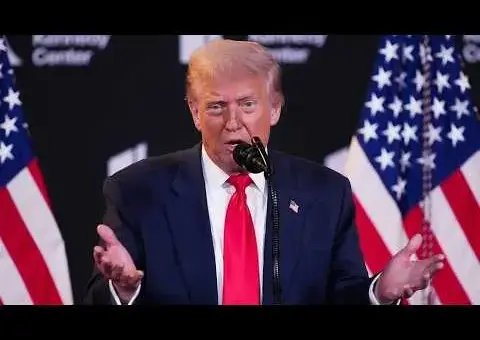
Trump Leveraged Airport Chaos for Voter ID Push
Donald Trump's decision to pay TSA agents was revealed to be a tactic to leverage airport chaos for his voter ID agenda. Despite having the authority to act sooner, he allegedly prolonged travel disruptions to pressure for the "Save America Act," a measure critics argue is voter suppression.
Senate Rejects Voter ID Bill: A Deep Dive into the Divide
The U.S. Senate recently voted down a proposed amendment requiring photo ID to vote, splitting strictly along party lines. Republicans argued for election security, while Democrats raised concerns about voter suppression. This failure highlights deep divisions on election laws.