Musk’s OpenAI Lawsuit: Diary Entries Fuel Fraud Claims
Elon Musk's lawsuit against OpenAI gains traction as Greg Brockman's diary entries suggest executives planned a for-profit pivot from the start. Meanwhile, OpenAI faces mounting losses, reportedly exceeding $50 billion annually, and is now turning to advertising to monetize its massive user base, a strategy with uncertain prospects.

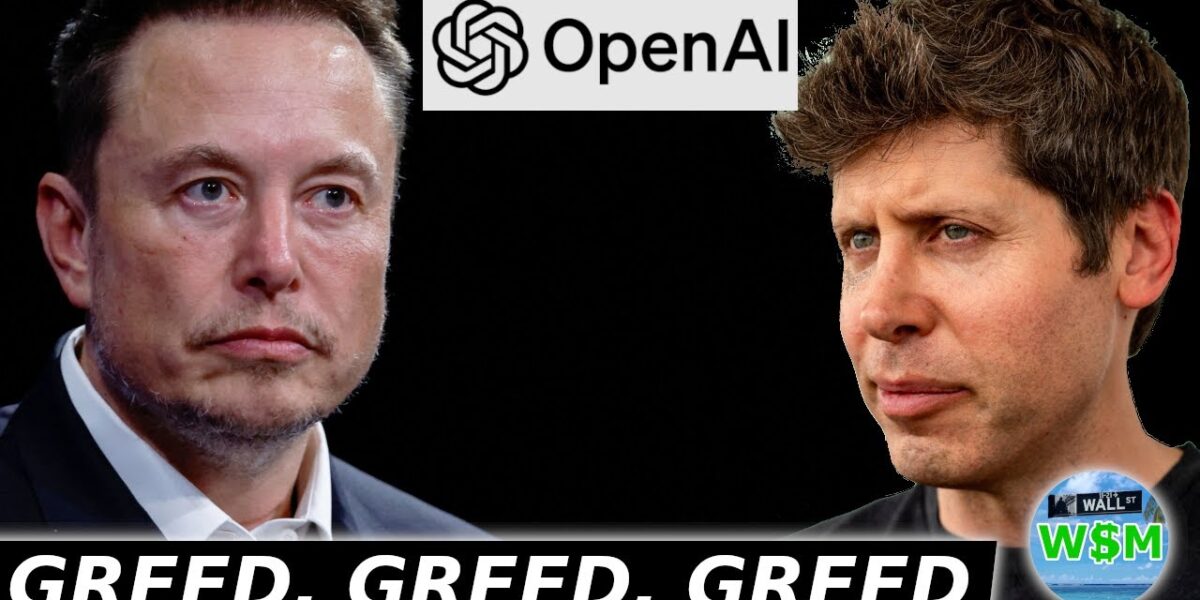
Musk’s OpenAI Lawsuit Heats Up as Diary Entries Surface
A high-stakes legal battle between tech titan Elon Musk and artificial intelligence pioneer OpenAI has intensified, with newly revealed diary entries from OpenAI co-founder Greg Brockman potentially bolstering Musk’s fraud allegations. The lawsuit, filed in early 2024, centers on Musk’s claim that OpenAI and its CEO, Sam Altman, deceived him and other early donors by transitioning from a nonprofit entity to a for-profit behemoth without proper disclosure, despite receiving significant funding under the nonprofit premise. OpenAI and Altman have vehemently denied these accusations, seeking dismissal through a summary judgment motion, which a judge denied in January 2026, paving the way for a trial.
Allegations of Deception and Financial Misconduct
Elon Musk, who was OpenAI’s single largest donor, contributing $34 million between 2015 and 2018, alleges that his funds were used to build a for-profit business in which he holds no equity. The core of Musk’s argument is that OpenAI executives, including Sam Altman, always intended to pivot to a for-profit model, a truth he claims would have deterred his donations.
Central to the current legal proceedings are excerpts from Greg Brockman’s personal diary, subpoenaed as part of the lawsuit. These entries, dating back to around 2017, suggest internal discussions among Brockman, Altman, and other executives about transitioning to a for-profit structure. Brockman’s writings reveal concerns about how their largest donor, Musk, might react. In one entry, he noted the potential negative perception of converting to a “BC Corp” (a for-profit corporation) if they had previously claimed to be committed to the nonprofit mission, stating, “It’d be wrong to steal the nonprofit from Musk to convert it to a BC Corp without him. That’d be pretty morally bankrupt.” This sentiment is particularly damning given that OpenAI did eventually convert to a for-profit entity without Musk receiving an equity stake, despite his substantial early financial contributions.
Further diary entries attributed to Brockman paint a picture of personal financial ambition rather than pure altruism. One quote suggests a focus on personal gain: “It would be nice to be making billions. We’ve been thinking that maybe we should just flip to a for profit. Making the money for us sounds great and all. What do I really want financially? What will take me to $1 billion? If anyone was going to be getting equity stakes, then it would be only fair that we would, too.” These statements appear to directly contradict the narrative often promoted by OpenAI executives, including Altman, that their primary motivation is to develop artificial intelligence for the benefit of all humanity and that profit is secondary to this mission.
OpenAI’s Defense and Counterarguments
OpenAI has pushed back against Musk’s claims, arguing that he was fully aware of the company’s plans to transition to a for-profit model. In a blog post titled “The truth Elon left out,” OpenAI asserted that Musk cherrypicked statements to create a misleading narrative. The company contends that the need for significant capital—estimated by Musk himself to be around $10 billion to achieve artificial general intelligence—necessitated the move to a for-profit structure to attract the vast sums required for data center buildouts and research.
OpenAI’s defense suggests that Musk’s own motivations were complex and perhaps self-serving. The company points to Musk’s own statements regarding the transition, which they argue included considerations for how to “transition from a nonprofit to something which is an essentially philanthropic endeavor and is a BC Corp or CRP or something.” OpenAI also highlights Musk’s own ambitious financial and control-oriented ideas for OpenAI, including a proposal for an initial coin offering (ICO) and a desire for a majority equity stake and full voting control, with voting rights to be passed down to his children. Musk’s ultimate goal, according to these accounts, was to profit handsomely to fund his ambition of establishing a human colony on Mars.
Financial Realities and Escalating Losses
Beyond the legal dispute, the financial health of OpenAI has become a significant point of discussion. Despite its high valuation in private funding rounds, the company has reported substantial losses. OpenAI’s CFO, Sarah Frier, has attempted to assuage concerns about the company’s massive data center spending, which far outstrips current revenue. While Frier presented charts in January 2026 suggesting that revenue was scaling with computing capacity, with projected annualized revenue of $20 billion by the end of 2025 (based on a $1.7 billion December revenue figure), a deeper look at financial disclosures reveals a more concerning picture.
Microsoft, OpenAI’s largest shareholder with an initial investment of $11.6 billion, is required to report its share of OpenAI’s losses. In fiscal Q1 2026 (the three months ending September 30, 2025), Microsoft disclosed a $4.1 billion loss on its stake. At that time, Microsoft owned 32.5% of OpenAI’s for-profit entity. This implies that OpenAI’s for-profit arm incurred a staggering loss of approximately $12.6 billion in that single quarter, an annualized loss rate of roughly $50 billion. This figure dwarfs previous losses, with fiscal year 2024 showing significantly increased operational scaling and losses following the release of ChatGPT in late 2022.
Sam Altman himself has acknowledged the high costs associated with developing advanced AI models, noting that GPT-4 cost significantly more to train than its predecessor, GPT-3. He has, however, expressed a seemingly detached attitude towards the financial burn rate, stating, “Whether we burn $500 million a year or $5 billion or $50 billion a year, I don’t care. I genuinely don’t.” This cavalier approach to spending, even at the $50 billion annualized loss rate observed in late 2025, underscores the company’s relentless pursuit of its AGI goals, regardless of immediate profitability.
Monetization Challenges and the Advertising Gambit
OpenAI’s immense operational costs, including an estimated $8 billion in inference compute spending for the first nine months of 2025 alone (according to independent journalist Ed Zitron, as republished by the Financial Times), coupled with billions in salaries and stock-based compensation, have created an urgent need for revenue. Despite generating billions in revenue, the company’s expenses far exceed its income, leading to the dramatic losses.
In an effort to monetize its vast user base, particularly the 95% of ChatGPT users who do not pay for premium subscriptions, OpenAI has recently begun experimenting with advertising. This move represents a significant shift from Altman’s previously stated aversion to ads, which he called a “last resort.” The introduction of ads within the free tier and a new ad-supported “ChatGPT Go” tier at $8 per month signals a desperate search for revenue streams.
However, the effectiveness of AI-driven advertising remains highly uncertain. Perplexity, an AI-powered search engine, attempted a similar strategy in November 2024, generating only $20,000 in ad revenue in its first year compared to $34 million from subscriptions, before halting its advertising business. This failure highlights a fundamental challenge: AI tools like ChatGPT are typically used for task completion and information retrieval, not for browsing or shopping, which are the behaviors that drive ad clicks on platforms like Google and Meta. While ChatGPT may offer more personalized targeting than Perplexity due to logged-in users, it inherits the same structural limitations that hinder ad effectiveness in an answer-oriented interaction model.
Market Impact and Investor Outlook
The ongoing lawsuit adds a layer of uncertainty to OpenAI’s future, with potential damages sought by Musk amounting to $134 billion. More critically, the company’s staggering cash burn rate and mounting losses raise serious questions about its long-term financial sustainability. OpenAI has reportedly raised $64 billion in venture capital to date and is reportedly seeking an additional $100 billion by the first quarter of 2026, underscoring its immense capital requirements. With significant cloud computing payment obligations, such as $60 billion annually to Oracle starting in 2027, OpenAI faces a continuous need for unprecedented levels of funding.
The legal battle, combined with the precarious financial situation, could significantly impact Microsoft’s investment and its own financial reporting. For investors and observers of the AI sector, the situation underscores the immense costs and inherent risks associated with developing cutting-edge artificial intelligence, even for well-capitalized and highly valued companies.
Source: Shocking New Evidence In Musk-OpenAI Lawsuit (YouTube)

Related Articles


AI Data Centers Spark Rural Uprising
Rural American towns are fighting back against a surge of AI data centers. These massive facilities threaten water supplies, farmland, and local infrastructure. Residents and lawmakers are pushing for new rules to control their growth and ensure companies bear more of the costs.


AI Misdiagnoses Medical Cases 80% of the Time
A recent U.S. study reveals that AI chatbots are misdiagnosing medical conditions in 80% of cases, highlighting significant risks in relying on artificial intelligence for health advice. Personal stories shared by individuals demonstrate how online self-diagnoses led to incorrect treatments and prolonged suffering, underscoring the irreplaceable value of human medical professionals.

AI Powers Sophisticated Scams Targeting Savings
A 76-year-old man lost $1.6 million to an AI-powered investment scam, highlighting the growing threat of sophisticated fraud. The scam involved realistic AI-generated videos and convincing fake personas. Authorities warn that AI is making these schemes harder to detect, while some perpetrators are also victims of human trafficking.