Iran Escalates Conflict, Halts Oil Flow Through Strait of Hormuz
Iran has escalated its conflict, launching intense missile operations and effectively halting oil flow through the Strait of Hormuz. The U.S. military is increasing strikes while international efforts, including a large oil reserve release, aim to stabilize global prices amidst growing economic and political concerns.


Iran Escalates Conflict, Halts Oil Flow Through Strait of Hormuz
The ongoing war between Iran and its adversaries has entered its 13th day, marked by Iran’s most intense military operations since the conflict began. Overnight, Iran launched advanced ballistic missiles targeting Tel Aviv and Haifa in Israel. Simultaneously, the U.S. military has intensified its strikes, with U.S. Central Command reporting the elimination of 16 Iranian mine-layers and multiple naval vessels near the Strait of Hormuz, a critical chokepoint for global oil transit.
Strait of Hormuz Under Siege: Global Oil Supply Threatened
The Strait of Hormuz, through which approximately 20% of the world’s oil typically passes, has become the focal point of the escalating Middle East conflict. Over the past 24 hours, three more oil tankers were attacked, signaling Iran’s effective halt of supplies through the vital waterway. A British maritime monitoring agency confirmed three ships were hit in separate incidents near the Strait, including a Thai bulk carrier struck by an unknown projectile in the Persian Gulf.
Keir Simmons, NBC News Chief International Correspondent, reporting from Dubai, described the situation on the ground: “The UAE has managed to stop, most frankly, of the missiles and drones that are targeted on this city and on this country. But the UAE has suffered 50% of the attacks, and that is having an impact on the psychology of the place, even if mostly there are people wounded. But but not many fatalities.” Simmons also noted the attacks on cargo ships and tankers off the coast of Iraq, stating, “There are reports of unmanned boats filled with explosives sent towards these ships. And that is all about, as you say, this battle over the Straits of Hormuz and whether the US is going to be capable of reopening that very narrow, narrow passageway in places that is just 20 nautical miles wide.” He highlighted the economic impact, noting that $1.5 billion of oil normally passes through the Strait daily, with hardly anything getting through currently.
International Response and Economic Fallout
In an effort to stabilize soaring global oil prices, the International Energy Agency (IEA) has agreed to release 400 million barrels of oil from member countries’ reserves. The U.S. Department of Energy confirmed that 172 million barrels of this release will come from the Strategic Petroleum Reserve. However, this move has so far failed to significantly drive down oil prices, which briefly touched $100 a barrel again, underscoring the growing economic and political ramifications of the war.
Melanie Zanona, NBC News Capitol Hill Correspondent, explained the timeline for the oil release: “According to the Department of Energy, it’s going to take 120 days in order to deliver based on planned discharge rates. So it could be actually some time before we see an impact on prices.” Zanona also touched on President Trump’s remarks at a rally in Kentucky, where he addressed the rising cost of oil and assured that the conflict would end quickly, leading to lower prices.
U.S. Military Actions and Accountability
Colonel Steve Warren, NBC News Military Analyst, provided insights into the U.S. military’s actions and the complexities of accountability. Regarding a February 28th strike on an elementary school in Iran that reportedly killed over 170 people, Warren stated, “These investigations take time because there are so many people involved in the targeting process.” He explained that if gross negligence or major incompetence is determined, punishments could range up to court-martials, and careers could be ruined. If intent is found, potential legal consequences could follow.
On the effort to reopen the Strait of Hormuz, Colonel Warren asserted, “Air power alone won’t do it. We’ll have to put U.S. Naval vessels on patrol inside that Strait to give those captains those skippers confidence that they’re going to be safe.” He elaborated that the Strait is currently closed due to perceived danger by ship captains, a psychological effect of Iran’s smaller strikes rather than a physical blockade.
Congressional Scrutiny and War Costs
Lawmakers are seeking greater transparency regarding the war’s costs. Defense Department officials informed a Senate Appropriations Subcommittee that the estimated cost for the first six days of the war was $11.3 billion. Democratic lawmakers are calling for a full accounting of expenditures and public hearings, a move met with resistance from Republicans who argue the administration has been transparent.
Severe Weather Across the U.S.
Beyond the international conflict, a powerful storm system swept across the United States, bringing severe weather from the Southeast to the Mid-Atlantic. Tornado watches were in effect, with reports of strong thunderstorms, damaging winds, and flooded roads. More than 200,000 people were left without power from Texas to New York following at least 16 reported tornadoes. Tragically, two people were killed in Indiana when a tornado destroyed their home. NBC News correspondent Maggie Vespa reported from Lake Village, Indiana, describing the devastating scene of a home completely destroyed, with the wreckage of the couple’s lives scattered around.
Looking ahead, meteorologist Angie Lassman noted the continuation of robust thunderstorms across the Southeast and a mix of rain and snow expected in the Northeast. Winter alerts remain in effect for parts of the Northern Plains, with snow and strong winds anticipated. Millions across the country are bracing for potential wind gusts of 40-70 mph, raising concerns about downed branches and trees.
Looking Ahead
As the conflict in the Middle East continues to disrupt global oil markets and the U.S. grapples with the economic and political fallout, attention remains fixed on the Strait of Hormuz. The effectiveness of the international oil release and the potential for further U.S. naval intervention to secure the vital shipping lane will be critical developments to watch. Domestically, the nation continues to contend with severe weather, with ongoing cleanup efforts and forecasts indicating continued challenging conditions across various regions.
Source: This Morning’s Top Headlines – March 12 | Morning News NOW (YouTube)

Related Articles

G7 Allies Clash Over Iran War Strategy, Urge Focus on Russia
G7 foreign ministers met in Paris, revealing deep divisions over the U.S. war with Iran. European allies urged the U.S. to pressure Russia, linking its actions to the conflict and fearing support for Ukraine will wane.
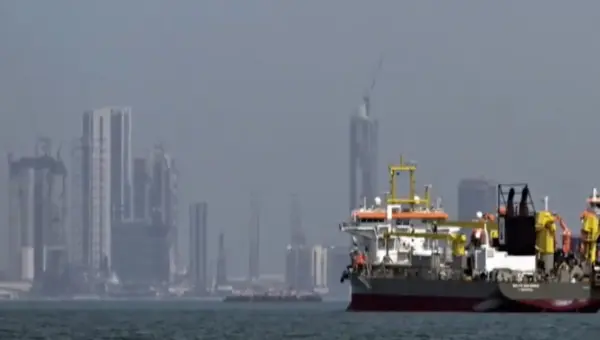
Iran Blocks China Ships, Exposing Beijing’s Weak Grip
Iran's recent decision to block Chinese ships at the Strait of Hormuz is exposing the limits of Beijing's influence in the Middle East. This action is causing delays and cancellations for Chinese manufacturers, turning a perceived geopolitical win into an economic strain.
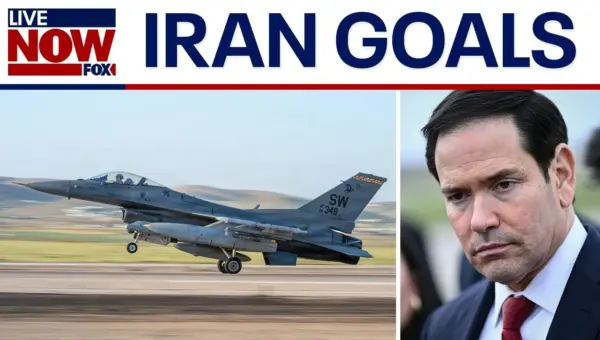
Rubio: US Can Achieve Iran War Goals Without Troops
Senator Marco Rubio outlined a strategy to counter Iran without deploying U.S. ground troops, focusing on weakening the regime and enhancing maritime security. He also criticized Cuba's economic system and expressed concerns about West Bank violence.