Trump’s War Rhetoric Under Fire Amidst Escalating Middle East Conflict
Amidst escalating Middle East tensions, former President Trump's downplaying of the conflict as a "little excursion" draws criticism for trivializing war and misrepresenting reality. Experts stress the need for honesty and transparency with the public regarding the true costs and objectives of military engagement.

Middle East Conflict Intensifies as Iran Targets Shipping and Infrastructure
The Middle East is experiencing a significant escalation of conflict, with Iran launching increased attacks on shipping traffic and energy infrastructure. U.S. officials report that coordinated American and Israeli strikes have severely degraded Iran’s air defenses. Despite this, Iran continues to deploy missiles and drones throughout the region. New footage from Bahrain depicts firefighters battling a massive blaze at a fuel storage facility following an Iranian assault. Iraq has been compelled to halt oil port operations due to deadly attacks on two foreign oil tankers. Iran also targeted a container ship off the coast of Dubai.
Global Oil Markets React to Intensified Conflict
The escalating tensions have sent shockwaves through global oil markets, with prices surging past $100 a barrel at one point. This occurred even after a coalition of over 30 countries pledged to release strategic reserves to stabilize market conditions. The volatility underscores the delicate balance of global energy supplies and the significant impact of regional instability.
Trump’s Conflicting Statements on the Conflict
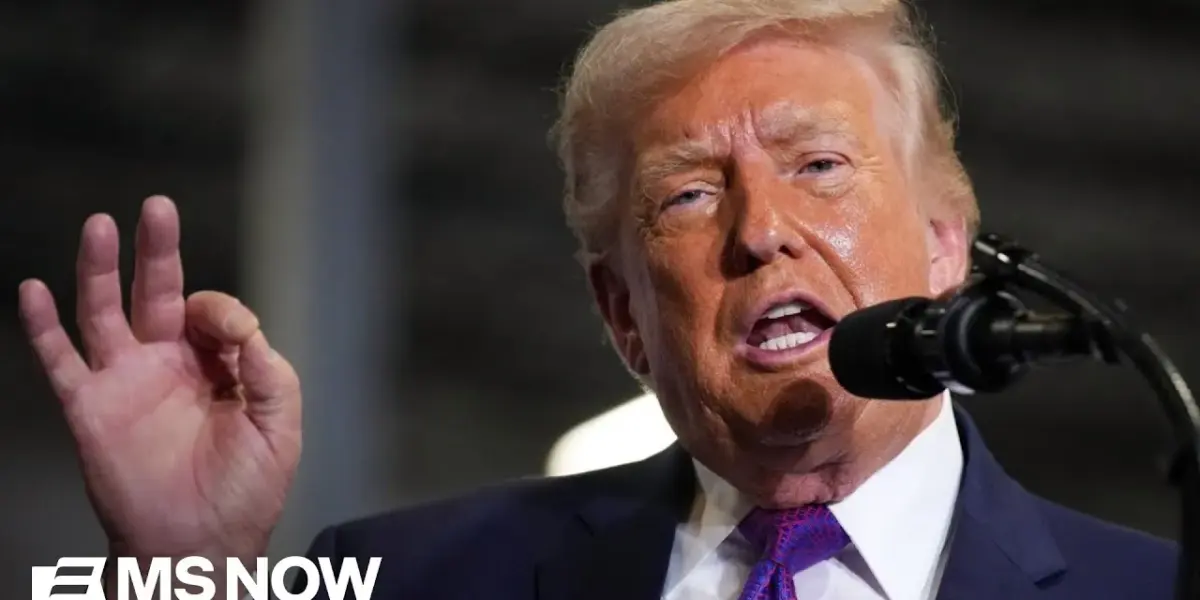
Amidst the escalating crisis, former President Donald Trump has made statements that appear to downplay the severity of the conflict while simultaneously boasting about the capabilities of the U.S. military. Speaking in Ohio and Kentucky, Trump referred to the military actions as a “little excursion” and an “excursion that will keep us out of a war.” He asserted that the U.S. military’s performance was “unbelievable” and “way ahead of schedule,” suggesting the conflict was already won and that oil prices were falling rapidly.
“We had to take this little couple of weeks, few weeks of excursion. But it’s been incredible. Our military is unbelievable, the job they’re doing. I would say, to put it mildly, way ahead of schedule… The market is holding up well. Prices are coming down very substantially. Oil will be coming down.”
However, when pressed on the discrepancy between calling it an “excursion” and a “war,” Trump acknowledged it was “both.” He stated, “It’s an excursion that will keep us out of a war and the war is going to be I mean, for them it’s a war. For us, it’s turned out to be easier than we saw it.” He also claimed victory in “Operation Epic Fury,” a name he reportedly chose from a list of 20 options, stating, “We won. We won the bet in the first hour it was over.”
Criticism of Trump’s War Messaging
Critics argue that Trump’s rhetoric trivializes the realities of war and fails to adequately inform the public. The transcript highlights concerns that this approach is a form of “sales pitch” that distorts the truth, particularly when oil prices are demonstrably above $100 a barrel and images of ongoing conflict persist. The piece draws parallels to historical figures like Winston Churchill and Franklin D. Roosevelt, who were known for their blunt honesty with the public during times of crisis.
The Disconnect Between Rhetoric and Reality
Commentators point out that while Trump is correct in identifying the Iranian regime as a long-standing source of terror and acknowledging the U.S. military’s effectiveness in combat, the assertion of victory is premature. The ongoing casualties, with reports of 147 Americans injured, and the potential for prolonged engagement, including the possibility of more troops being deployed, contradict the narrative of a swift and decisive win. The transcript questions the objectives and the true cost of the conflict, asking why service members have died or been injured, and why the conflict might extend for weeks or involve further U.S. involvement.
“But the idea that we’ve won, we haven’t. The idea that this is an excursion and we’re going to just zoom on back home, not so. And again. They lost people, and people who died when people are injured. Well, that’s another thing that way, what I just see as sort of a, we know the I don’t think the people who died, but you just see a little simply, 147 Americans have been injured in this war thus far.”
Historical Parallels and the Importance of Public Trust
The discussion draws parallels to historical conflicts, such as the first Gulf War and the Iraq War, where initial military successes did not necessarily translate into long-term geopolitical stability. The concept of the “enemy gets a vote” is emphasized, meaning that a conflict is not over until all parties involved agree to its conclusion. The transcript also references the historical precedent set by Weinberger and Powell, who advocated for war to be “sold” to the American public and Congress before military action commences, underscoring the importance of public support and clear communication.
The New York Post is cited for urging the Trump team to “lift the fog of the Iran War for the U.S. public,” calling for regular, clear, and concrete updates on the progress of military operations. The article suggests that a public that feels it is being honestly informed is more likely to be patient than one that feels deliberately kept in the dark.
The Geopolitical Stakes and Long-Term Implications
Beyond immediate military objectives, the broader geopolitical implications are being debated. Experts question whether winning individual battles against the Iranian military will lead to the desired geopolitical changes. The transcript notes that the Iranian regime has a history of actions designed to inflict maximum damage on U.S. interests, particularly concerning oil markets and global stability. The analogy of the 1979-1980 Iran hostage crisis is invoked, where the regime strategically used the prolonged captivity of Americans to humiliate President Carter and influence U.S. politics.
There is a concern that Iran is employing similar tactics now, by targeting oil markets and potentially prolonging the conflict to influence future U.S. elections. The Pentagon is reportedly preparing for a conflict that could last 100 days or more, indicating a recognition of the protracted nature of the struggle. The difficulty of declaring victory while the current regime remains in power, especially with the potential for a more hard-line successor, is also a significant challenge.
The Need for Transparency and Honesty
The core of the critique centers on the need for transparency and honesty from leadership. The transcript argues that the president must be truthful with the American people about the reasons for engagement, the sacrifices being made by service members, and the potential duration and outcomes of the conflict. Failure to do so risks eroding public trust and support, making it harder to navigate the complexities and potential long-term consequences of the ongoing hostilities.
Looking Ahead: Navigating Uncertainty
As the situation in the Middle East continues to evolve, the focus will remain on the clarity and honesty of leadership communication. The public and international observers will be watching closely to see if the administration can effectively articulate its objectives, manage expectations, and provide a transparent account of the unfolding events. The ultimate success of U.S. involvement may hinge not only on military prowess but also on the ability to maintain public confidence through truthful engagement.
Source: Joe: Trump can't bend reality when it comes to war; he needs to be honest with the public (YouTube)

Related Articles
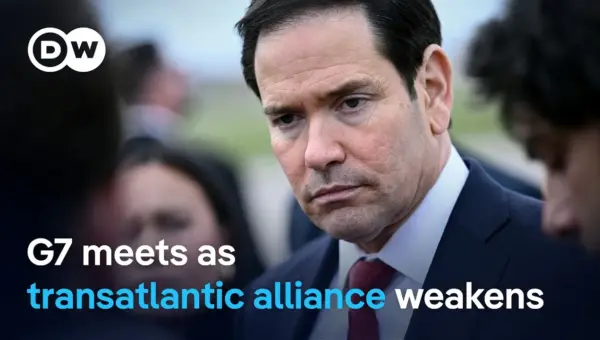
G7 Allies Clash Over Iran War Strategy, Urge Focus on Russia
G7 foreign ministers met in Paris, revealing deep divisions over the U.S. war with Iran. European allies urged the U.S. to pressure Russia, linking its actions to the conflict and fearing support for Ukraine will wane.

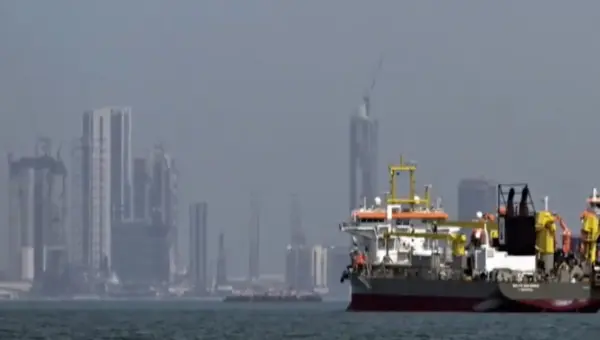
Iran Blocks China Ships, Exposing Beijing’s Weak Grip
Iran's recent decision to block Chinese ships at the Strait of Hormuz is exposing the limits of Beijing's influence in the Middle East. This action is causing delays and cancellations for Chinese manufacturers, turning a perceived geopolitical win into an economic strain.
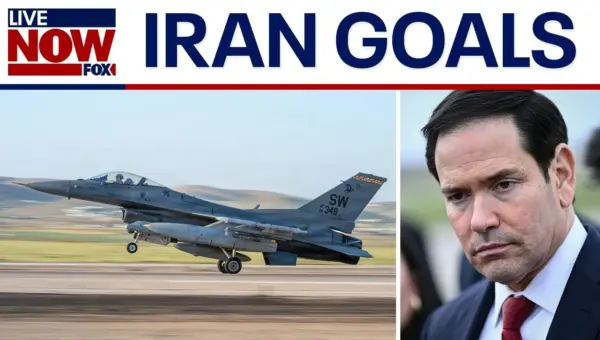
Rubio: US Can Achieve Iran War Goals Without Troops
Senator Marco Rubio outlined a strategy to counter Iran without deploying U.S. ground troops, focusing on weakening the regime and enhancing maritime security. He also criticized Cuba's economic system and expressed concerns about West Bank violence.