France Eyes Nuclear Shield: Europe’s Trust in US Falters
France's proposal for a European nuclear shield highlights a growing distrust in U.S. security guarantees. This move could trigger widespread nuclear proliferation across the continent, echoing Europe's turbulent history.

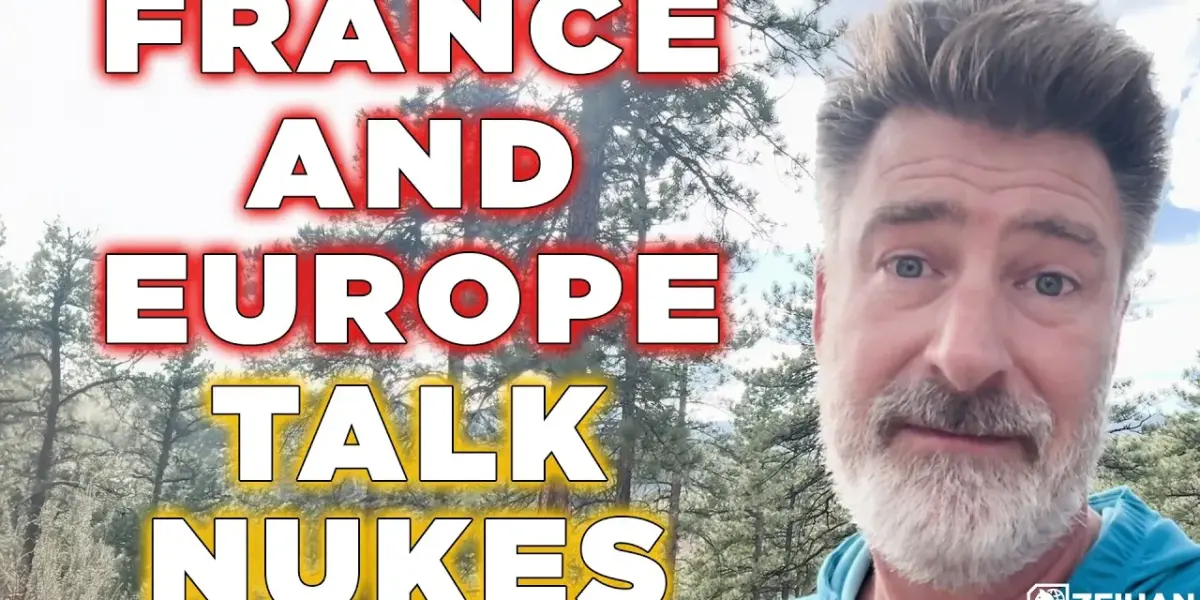
France Eyes Nuclear Shield: Europe’s Trust in US Falters
In a significant geopolitical shift, France, the sole nuclear power within the European Union following Brexit, is proposing to expand its nuclear deterrent to offer a missile shield for the entire bloc. This initiative, spearheaded by French President Emmanuel Macron, emerges from a growing European disillusionment with the United States’ commitment to its allies, a sentiment amplified by recent geopolitical events.
The Eroding Transatlantic Bond
The underlying impetus for this French proposal, as analyzed by geopolitical strategist Peter Zeihan, stems from a profound loss of confidence in the United States. The incident involving Greenland earlier this year served as a stark wake-up call for European nations. Zeihan points to the U.S. willingness to threaten its most loyal allies with military intervention for a strategically insignificant territory as a harbinger of what might occur when vital interests, such as a nuclear threat, are at stake. This perceived unreliability has triggered urgent discussions across Europe about establishing independent security frameworks.
A Multi-pronged European Security Strategy
The European response to this perceived vacuum in U.S. security guarantees is multifaceted. Zeihan identifies three primary avenues:
- Enhanced Independent Military Capabilities: European nations are looking to significantly bolster their own military forces, reducing reliance on the United States.
- Defense Fusion with Ukraine: A strategic integration of European defense establishments with Ukraine’s is being considered. This would leverage Ukrainian technological innovation with European manufacturing prowess to forge a new style of warfare that could sideline both the U.S. and Russia.
- A Nuclear Shield: The French proposal for a unified nuclear deterrent falls into this category.
Challenges to France’s Nuclear Ambitions
While the idea of a French-led nuclear shield is gaining traction, Zeihan highlights significant hurdles to its feasibility. Firstly, the technical barriers to developing nuclear weapons are surprisingly low. Any European nation possessing a nuclear power plant, of which there are many, could, with relative ease, produce fissile material like plutonium. A one-gigawatt nuclear power plant, for instance, generates enough waste plutonium annually to construct approximately a dozen nuclear weapons using 1940s technology. This technical accessibility, coupled with the U.S.’s apparent laxity in enforcing non-proliferation treaties, means that the primary obstacle is not technology, but rather a European reluctance to proliferate.
The second, and perhaps more significant, challenge lies in the issue of thresholds. Zeihan illustrates this with a hypothetical scenario: if Estonia, a small nation under Russian attack, were to face a catastrophic leadership vacuum, and the sole remaining authority—a deputy education minister—were to call upon France to launch a nuclear strike against Moscow, what would the French response be? The unlikelihood of France unilaterally committing to such a drastic escalation is high. This points towards a more probable outcome: widespread nuclear proliferation across Europe.
The Specter of Proliferation
Instead of a centralized French nuclear umbrella, Zeihan predicts a surge in independent nuclear deterrents. While European nations might collaborate on conventional military assets like fighter jets, tanks, and drones, the ultimate decision-making power over national survival, particularly in the face of existential threats, will likely compel individual countries to develop their own nuclear capabilities. Nations such as Finland, Sweden, Romania, Poland, and Germany, already possessing the technical wherewithal, are prime candidates to pursue their own deterrents in the coming years, potentially joined by smaller states as well.
Historical Echoes and Future Uncertainties
This potential cascade of nuclear proliferation is deeply rooted in Europe’s tumultuous history. Zeihan reminds us that while Europe has historically been at odds with Russia, it has also been a continent rife with internal conflict and animosity between its own nations. The post-World War II era, characterized by U.S. occupation and the establishment of security alliances like NATO, imposed a period of relative peace and forced cooperation. However, with the perceived weakening of NATO’s guarantees, Europe is being compelled to confront its historical tendencies toward internal division.
The prospect of multiple European nations possessing nuclear weapons raises profound questions about regional stability. The absence of a unified command structure and the differing national interests and historical grievances could create a far more volatile security landscape than the one currently managed, however imperfectly, by NATO. The decision-making processes, national pride, and potential for miscalculation in a multi-polar nuclear Europe present a daunting challenge.
Why This Matters
The potential shift in European security architecture, moving away from U.S. reliance towards independent, and potentially nuclear, capabilities, has far-reaching implications. It signifies a fundamental reordering of global power dynamics and a testament to the shifting trust in long-standing alliances. For the United States, it signals a potential loss of influence in a region it has long considered a cornerstone of its foreign policy. For Russia, it presents a more complex and potentially more dangerous neighborhood. For Europe, it is a gamble—an attempt to secure its future by embracing a dangerous but, in their view, necessary form of self-reliance, fraught with the historical specter of internal conflict.
Implications, Trends, and Future Outlook
The trend towards greater European strategic autonomy is undeniable. Macron’s proposal, while ambitious, is a symptom of this broader movement. The technical feasibility of nuclear proliferation, combined with a perceived decline in U.S. security guarantees, creates a fertile ground for such developments. The future outlook suggests a Europe grappling with the complex legacy of its own history, potentially armed with new and independent deterrents. The success or failure of such a transition will hinge on Europe’s ability to manage its internal rivalries and to navigate the perilous path of nuclear deterrence without succumbing to the very conflicts that have historically plagued the continent.
The fundamental issue is a loss of confidence in the United States. When you see the U.S. willing to threaten its allies for a useless piece of property, you have to ask what they’ll do when something important is on the line.
Source: Why Would Europe Trust France with ALL the Nukes? || Peter Zeihan (YouTube)

Related Articles


Trump’s Iran Claims: Shocked or Deluded by War Games?
Donald Trump claimed surprise over Iran's actions in the Strait of Hormuz, but experts suggest retaliation was inevitable. Military war games likely predicted such a scenario, raising questions about the advice given to the President.

Israel’s Strategy Against Iran Revealed
Israel's strategy to counter Iran's nuclear ambitions and regional influence centers on containment, utilizing a mix of covert military actions, intelligence operations, and diplomatic pressure. Analysts highlight the growing urgency due to Iran's nuclear advancements, while also noting the persistent risk of escalation in the volatile Middle East.


Israel Eyes Lebanon Buffer Zone: A Political Ploy?
Israel's military operations in southern Lebanon aim to create a buffer zone and pressure Hezbollah, according to expert Yazid Sayigh. He argues the strategy is more political than military, echoing historical tactics. The ongoing conflict could destabilize Lebanon further, while Hezbollah fights for survival.