Musk Unveils Digital Optimus: AGI for the Desktop
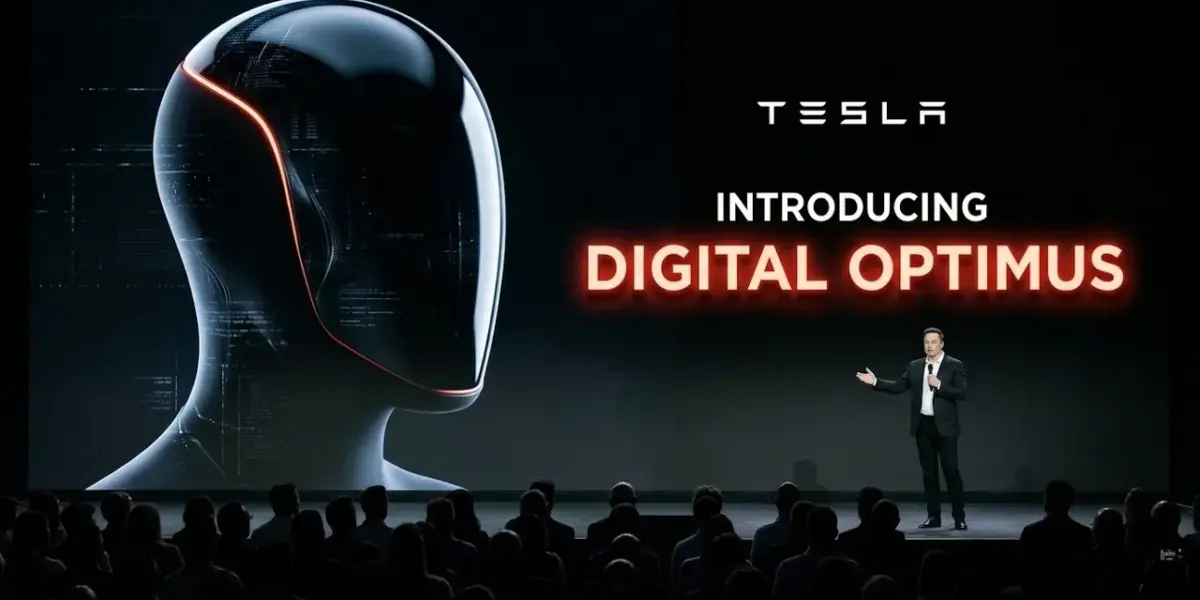
Elon Musk unveils Digital Optimus, a new AI initiative aiming for AGI by enabling computers to perform human-like tasks. Leveraging real-time video processing and a unique system architecture, the project integrates with Tesla's physical Optimus robot to cover both digital and physical work. However, the announcement follows reports of internal struggles and potential pivots.

Musk Unveils Digital Optimus: AGI for the Desktop
Elon Musk has once again captured the tech world’s attention with a bold vision for Artificial General Intelligence (AGI), this time through a project dubbed Digital Optimus, formerly referred to as Macrohard. This ambitious initiative aims to create an AI capable of performing human-like tasks on a computer, potentially emulating the functions of entire companies.
The Macrohard/Digital Optimus Concept
The concept, initially hinted at with the deliberately provocative name Macrohard (a playful inversion of Microsoft), centers on an AI that can interact with a computer screen, keyboard, and mouse to perform office-style work. This includes tasks like data entry, spreadsheet management, and customer service.
Musk explained the system’s architecture by drawing a parallel to Daniel Kahneman’s “Thinking, Fast and Slow.” The Digital Optimus system is conceptualized with two components:
- System 1 (Fast): This is the real-time, reactive part, likened to the hands-on interaction with a computer. It processes the last few seconds of screen activity and the user’s input (keyboard/mouse movements) to react instantly. This component reportedly runs on Tesla’s $650 AI4 chip, the same hardware used in their self-driving cars.
- System 2 (Slow): This is the cognitive, contextual part, represented by Grok, Musk’s AI chatbot. Grok provides the understanding of the world, context, and overall goals, directing the System 1 component on what actions to take. It acts like a navigation system (e.g., Google Maps) guiding the ‘driver’ (Digital Optimus).
Musk’s claim is that Macrohard could emulate the functions of entire software companies, a feat he states no other company can currently achieve. The announcement generated significant buzz, with the initial tweet garnering millions of views.
A New Approach to AI Agents
What sets Digital Optimus apart is its processing method. Unlike many current AI agents that operate on discrete screenshots (a process akin to stop-motion animation: click, look, think, repeat), Digital Optimus is designed to process continuous, real-time video streams of the screen. This approach, similar to how Tesla’s self-driving system processes live camera feeds, could theoretically lead to faster and more natural interactions.
Tesla’s extensive experience in training AI on over 10 billion miles of driving data from its fleet provides a strong foundation for this real-time video processing capability. The cost-effectiveness is also a key consideration: the fast, reactive processing runs on relatively inexpensive on-desk hardware, while the more computationally intensive ‘thinking’ by Grok is accessed only when needed, optimizing resource usage.
The Embodied AGI Vision
The Digital Optimus announcement is deeply intertwined with Musk’s broader AGI ambitions, particularly his concept of “embodied AGI.” While many envision AGI as a purely digital entity, Musk’s plan integrates both physical and digital manifestations:
- Physical Optimus: The humanoid robot designed for physical labor in factories and warehouses. Tesla is reportedly converting a factory line to produce up to one million Optimus robots annually.
- Digital Optimus: The software agent designed to handle all computer-based tasks and digital interactions.
Musk describes Digital Optimus internally as the “superset of everything except physical Optimus,” suggesting that together, these two aspects of Optimus aim to cover the full spectrum of human work, both physical and digital. Crucially, both systems leverage the same core hardware (Tesla’s AI4 chip) and AI approach, processing real-time video and utilizing reinforcement learning, albeit in different environments.
This integrated approach fuels Musk’s assertion that Tesla will be among the first to achieve AGI, potentially in a humanoid form. The potential for a distributed supercomputing network is also staggering. With over 5 million Tesla vehicles on the road, each equipped with an AI4 chip, Musk envisions using parked vehicles as a vast computational resource for training and running AI agents. This network, potentially comprising millions of vehicles, could offer a scale of computing power unmatched by competitors.
Challenges and Controversies
Despite the grand vision, the Macrohard/Digital Optimus project faces significant hurdles and has been mired in controversy. Reports from Business Insider, citing internal sources, suggest that the Macrohard project at XAI had stalled, suffered from leadership chaos, and seen its team significantly depleted. The project, initially announced in August of last year, reportedly shuffled leaders and struggled to achieve scale, with several key engineers departing.
The timeline of events adds to the intrigue. Business Insider published a report detailing the project’s struggles at XAI on the same morning Musk announced Digital Optimus as a joint XAI and Tesla initiative. This has led some to speculate that the announcement may represent an emergency pivot or rebranding after the XAI version faltered, rather than the culmination of a long-standing plan.
Furthermore, an XAI engineer, Suliman Guri, who discussed the project and the use of Tesla vehicles for computing power on a podcast, was reportedly fired shortly thereafter, adding another layer of drama to the project’s development.
Why This Matters
The potential implications of a successful Digital Optimus are profound. If realized, it could revolutionize how work is done, automate vast swathes of digital labor, and significantly impact industries reliant on data processing, customer service, and administrative tasks. The integration with physical robots like Optimus points towards a future where AI seamlessly bridges the digital and physical realms.
However, the path forward is uncertain. The project’s history of internal challenges, leadership changes, and the apparent shift from XAI to Tesla raise questions about its readiness and viability. While competitors like Anthropic (Claude Co-work) and OpenAI are already shipping AI agents capable of autonomous computer tasks, Macrohard/Digital Optimus is still largely a vision.
The ambition is undeniable, and the technical approach of real-time video processing and a distributed computing network is innovative. Yet, the gap between Musk’s ambitious pronouncements and the project’s demonstrated progress remains substantial. Whether Digital Optimus becomes a groundbreaking reality or another in a line of ambitious, yet unfulfilled, promises is yet to be determined.
Source: Introducing Digital Optimus: Elon Musk’s Bold New AGI Vision (YouTube)

Related Articles
OpenAI Unveils ‘Spud’ Model, Shifts Focus to AGI Deployment
OpenAI is reportedly preparing to launch a new AI model codenamed 'Spud,' signaling a strategic shift towards AGI deployment and a unified AI platform. The company is phasing out its Sora video generation project to focus resources on this new model and an integrated super app. Meanwhile, a renowned mathematician has collaborated with AI on complex proofs, highlighting AI's growing role in scientific discovery.

New AI Models Spark Urgency, Face Tough Benchmark Test
OpenAI and Anthropic are reportedly developing powerful new AI models, but a new benchmark, ARC AGI 3, reveals significant gaps in AI's abstract reasoning abilities compared to humans. The benchmark challenges the notion that AGI has already been achieved, highlighting the complexities and risks in the current AI development landscape.


Claude Co-work Unlocks AI Agents with New Projects Feature
Claude Co-work has launched a new 'Projects' feature, simplifying the use of advanced AI agents. This system allows users to organize tasks and contexts into separate project folders, enhancing AI interactions and personalizing outputs like news briefings. A Claude Plus subscription is required, with referral codes offering free trial periods.