US Policy Shift on Iran War Sparks Global Uncertainty
US politician and veteran Adrian Bonenberger criticizes the lack of a clear strategy in the US approach to the Iran conflict, warning of escalation risks and public disinterest. He draws parallels to the Ukraine war and emphasizes the importance of active citizenship, drawing lessons from Ukraine.

US Policy Shift on Iran War Sparks Global Uncertainty
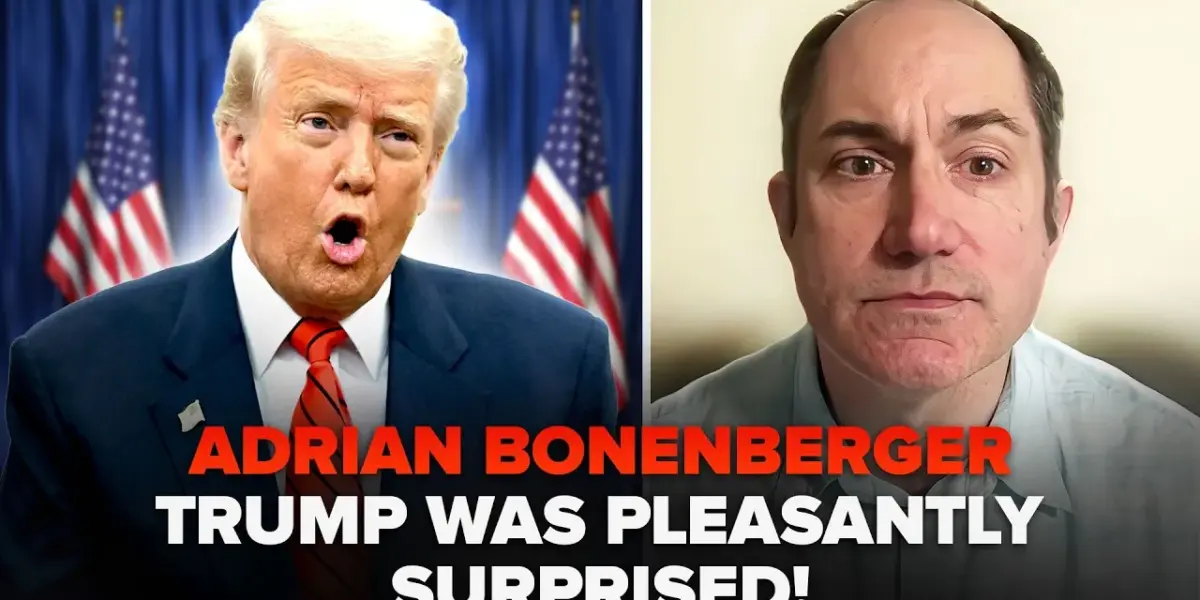
In a recent interview, Adrian Bonenberger, a US Army combat veteran and independent candidate for Governor of Connecticut, discussed the evolving and often contradictory explanations surrounding the United States’ involvement in the conflict with Iran. Bonenberger, speaking from his perspective as a politician and military veteran, highlighted the confusion and lack of a clear strategy that he believes is plaguing the American approach to the conflict, potentially drawing parallels to the early stages of Russia’s invasion of Ukraine.
Shifting Justifications for Military Action
Bonenberger noted the rapid succession of different stated objectives for the military campaign against Iran, leaving both the public and potentially the military itself uncertain about the ultimate goals. “It’s very difficult to say because we hear a different plan every two days or so,” Bonenberger stated. He recounted earlier justifications, including the destruction of Iran’s nuclear capabilities, regime change, and most recently, unconditional surrender. Another plausible explanation he offered was that the US backed Israel’s actions due to Israel being a key ally, and a desire to preempt Iranian retaliation against American targets.
However, the effectiveness of these objectives remains questionable. “If the war is to destroy their nuclear capabilities, probably it’s going pretty well. I think we’ve we’ve really set them back a long way,” Bonenberger conceded. “If it’s to promote regime change, it’s not going well because… a campaign from the air to force a regime, an entrenched regime to change is never effective.” The ambiguity of the war’s purpose, he argued, makes it difficult to assess its progress or success.
Risk of Escalation and ‘Boots on the Ground’
A significant concern raised by Bonenberger is the potential for the conflict to escalate, particularly the risk of deploying ground troops. He drew a parallel to Russia’s miscalculations in Ukraine, suggesting that a lack of a clear end-state can lead to an unprepared military and a prolonged, costly engagement. “If the end state is dismantling their nuclear capacity, we can drop bombs and probably make it really difficult for them for another year to to rebuild all of their capacity. We can do that with bombs. Regime change or unconditional surrender. Obviously, yeah, there is a risk that we’ll end up putting boots on the ground. And once we put boots on the ground, um, those that can be expanded very quickly,” he warned.
Bonenberger emphasized the immense commitment required for a ground invasion, including congressional approval and potentially years of fighting, with a significant human cost. “thousands or tens of thousands of American soldiers are going to die as a result of that. Is it worth it for us? I don’t think so.” While he acknowledged the existential threat Iran poses to Israel, he questioned whether it was an issue that warranted direct, large-scale American military intervention.
American Public Opinion and Political Divisions
Public sentiment in the United States appears to be largely unsupportive of a protracted and costly war with Iran. Bonenberger shared his observations from conversations with dozens of Americans, none of whom, in his experience, supported regime change or a large-scale conflict. While some supported efforts to curb Iran’s nuclear capabilities or back Israel, the high cost of war, especially after recent prolonged engagements like the one in Afghanistan, weighs heavily on public opinion.
He also noted the confusion among even staunch supporters of former President Donald Trump, who had campaigned on a platform of avoiding new wars. The shifting justifications for the Iran conflict have left many struggling to articulate a clear rationale for support. “Trump keeps changing the message, and it’s just four times in one week, it’s it makes them feel dumb, which they don’t like,” Bonenberger observed. This lack of a unified, popular message, he argued, is a poor foundation for initiating military action.
Iran’s Strategic Response and Regional Implications
Bonenberger highlighted Iran’s strategic response to the escalating tensions, suggesting that Tehran is leveraging regional discontent to its advantage. He pointed to Iran’s actions, such as targeting neighboring states, as a calculated move to make allies of the US and Israel feel the repercussions of the conflict. “Iran is calculating, hey, if you’re gonna burn us to the ground, then we’re going to make sure that everybody else in the region feels it, too, and feels that there’s a price to pay for allying with Israel and the United States,” he explained.
This strategy, he believes, is designed to probe the resolve of the United States and its allies, daring them to commit to a ground invasion. “They’re saying, ‘Do you have the guts to go boots on the ground?’ And uh, you know, frankly, the Americans really just don’t have much appetite for that right now.” The instability in the Strait of Hormuz, a critical chokepoint for global energy supplies, has already led to rising oil and gas prices, benefiting Russia and undermining efforts to isolate Moscow.
Ukraine’s Potential Benefit and the Future of US-Ukraine Relations
Addressing the potential impact on Ukraine, Bonenberger suggested that a swift and efficient replacement of the Iranian regime with a moderate, Western-aligned government could benefit Kyiv. Such a scenario would likely discredit Iran’s support for Russia. However, he cautioned that the more probable outcome of regime collapse in the Middle East is chaos, potentially leading to even more extremist factions or prolonged instability, as seen in Libya, Iraq, or Syria. This regional instability, he noted, is not in Ukraine’s or America’s interest.
Regarding US-Ukraine relations, Bonenberger expressed skepticism about Ukraine’s ability to leverage its technological capabilities, such as drone interceptors, to gain favor with the current US administration, particularly under Donald Trump. He characterized Trump as a “personalist” who is deeply loyal to those who have earned his favor, citing Trump’s continued loyalty to Putin. Conversely, he noted that Ukrainian President Zelenskyy has faced significant challenges in maintaining a positive relationship with Trump.
Bonenberger also lamented the perceived disparity in the cost and manufacturing of military technology between the US and Ukraine, highlighting Ukraine’s innovative and cost-effective approach to drone production as a stark contrast to American manufacturing. He concluded by emphasizing his belief in the shared values between Americans and Ukrainians, stating, “Ukrainians are mostly like Americans. They’re citizens. They’re people who are exercising their rights… Ideologically, culturally, temperamentally, they are Americans.” He questioned why the US was not providing more robust support to Ukraine, regardless of technological exchanges.
The Core of Democratic Citizenship
Bonenberger’s campaign for Connecticut Governor is rooted in his experiences in Ukraine, particularly his observations on the power of decentralization and the importance of active citizenship. He believes that the Ukrainian people’s willingness to defend their rights and freedoms offers a valuable lesson for Americans.
“What I saw in Ukraine was a country filled with citizens who understand… that they have rights and they are free and they’re willing to fight for them. And I wanted to bring some of that mentality over to the United States before it’s too late,” he stated.
He argued that the US Constitution, particularly the Bill of Rights, was established with the understanding that active participation, including service in a militia or state guard, is integral to democratic citizenship. He contrasted this with a system of “privileges” that can be revoked, emphasizing that true citizenship is based on inalienable rights. Bonenberger expressed concern that both major US political parties have, in his view, eroded this understanding by treating certain rights as privileges, thereby undermining the foundation of democracy.
Looking Ahead
The evolving situation in the Middle East, particularly the US approach to the Iran conflict, remains a critical point of observation. The potential for further escalation, the impact on global energy markets, and the long-term strategic implications for both the US and its allies will continue to be closely watched. Concurrently, the steadfastness of Ukraine and its ability to maintain international support, alongside the internal political dynamics within the US regarding foreign policy, will shape future geopolitical landscapes.
Source: ⚡️Unexpected turn in the war in Ukraine! US changed everything. Putin is urgently preparing Plan B (YouTube)

Related Articles

Trump Halts Iran Strikes Amid Stalled Diplomacy
President Trump announced a pause on planned strikes against Iran, citing productive talks, though Iran denies negotiations occurred. Reports also suggest a potential U.S. ground operation on Iran's Hark Island. The situation raises concerns about international support for Ukraine and potential shifts in U.S. foreign policy.


Americans Rally for Democracy Amidst War and Economic Woes
Thousands of Americans are participating in "No Kings" rallies nationwide, demanding accountability from leaders and drawing parallels to historical movements that spurred significant change. The protests occur amidst a controversial war with Iran, economic uncertainty, and a partial government shutdown. Organizers emphasize solidarity, joy, and the power of collective action in defending democracy.

US Official Claims Iran War Could End Soon; Expert Skeptical
Despite US envoy Steve Woff's optimism about imminent talks and a swift end to the conflict with Iran, expert Aaron David Miller expresses significant doubt. Miller argues that a lack of shared urgency and fundamental miscalculations by the US administration make a quick resolution unlikely.